
AI chatbots and search engines often struggle with misinformation, sometimes generating inaccurate aka hallucinated answers when they lack sufficient data.
To fix this, Google is upgrading its Retrieval-Augmented Generation (RAG) model, a cutting-edge AI technique that enhances response accuracy by retrieving real-world information before generating an answer.
This upgrade helps AI recognize when it lacks enough context to answer a question, reducing hallucinations and improving reliability.
But what exactly is RAG, and how is Google using it? Let’s break it down.

What Is the RAG Model?
The Retrieval-Augmented Generation (RAG) model is an advanced AI technique that improves the accuracy of responses by incorporating external data retrieval.
Instead of solely relying on pre-trained knowledge, RAG pulls in real-time information from various sources to ensure answers are fresh, relevant, and accurate.
Let’s look at how it works:
First, the AI retrieves relevant documents or data from external sources, ensuring it has the most current and accurate information available.
Then, it augments its understanding by incorporating the retrieved data into its existing knowledge base, refining its ability to generate a well-informed response.
Finally, the AI generates an answer that blends both the retrieved information and its pre-trained knowledge, producing a response that is more accurate and contextually relevant than a model relying solely on pre-existing data.
This method reduces outdated or incorrect answers and makes AI-generated responses more reliable.
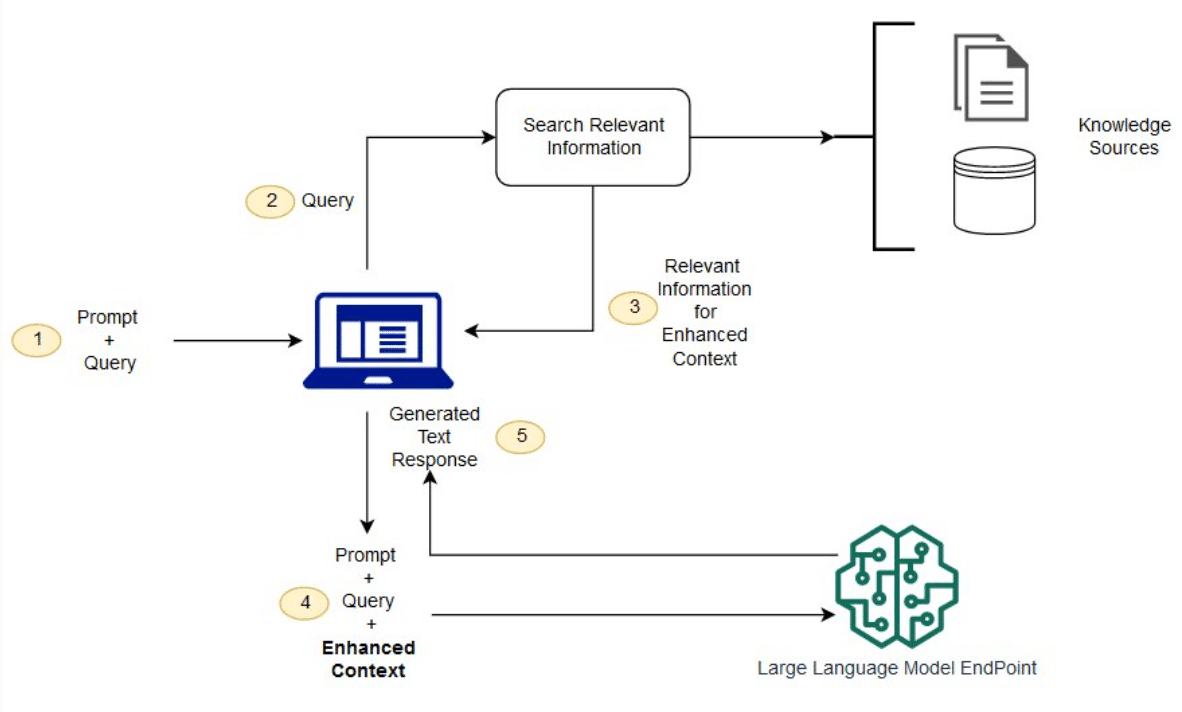
(Image Source: https://aws.amazon.com/what-is/retrieval-augmented-generation/)
How Google Is Using RAG
Google has been at the forefront of AI advancements, and its researchers have recently introduced a major upgrade to the RAG model. Their focus? Reducing AI hallucinations—the tendency of AI to fabricate information when it lacks enough data.
Google’s improvements to RAG include:
- Sufficient Context Detection: The AI now assesses whether the retrieved information contains all necessary details before answering.
- Selective Generation: If the retrieved data is incomplete, the AI can now recognize this and decide to abstain from answering instead of making up information.
- Sufficient Context Autorater: This new tool classifies whether the AI has enough information to proceed with an answer or needs more context.
- Confidence-Based Responses: Google’s system now evaluates confidence scores to determine whether an answer should be generated or withheld.
Why This Matters for AI Users
This update means AI-powered tools will be much more useful for everyday users. Search results will be more reliable, as Google will now prioritize well-structured and complete information. No more vague or misleading AI-generated answers!
If you use chatbots like Google’s Gemini, you’ll notice fewer frustrating responses. AI assistants will now know when they don’t have enough information, so they’ll either provide a well-supported answer or simply admit they don’t know. This is a big step forward in making AI a more trustworthy assistant.
Businesses will also benefit. Customer service chatbots and AI-generated content tools will provide clearer, more accurate responses. That means fewer misunderstandings, better customer interactions, and more efficient workflows.
The Problem of AI Hallucinations—And Google’s Fix
AI has a bad habit of bluffing. Google’s research found that when AI lacks enough information, it still tries to guess—and it actually gets it right 35-65% of the time.
While that may sound impressive, it also means AI gets it wrong up to 65% of the time—which is a problem, especially in areas like healthcare, finance, and legal advice.
To fix this, Google introduced sufficient context signals that ensure AI only answers when it has reliable data.
This means less misinformation and more trust in AI content, making AI safer and more effective for research, decision-making, and everyday use.
What’s Next for RAG and AI?
Google’s advancements in RAG could set a new industry standard for AI-generated content.
Other AI developers, including OpenAI and Anthropic, may follow suit by refining their own retrieval-based models.
In the future, AI systems will likely become even more selective in their responses, reducing misinformation across search engines, chatbots, and digital assistants.
Beyond search and chatbots, the applications of an improved RAG model extend to personalized AI tutors, content recommendation engines, and AI-assisted research tools.
As AI advances, we can anticipate increasingly sophisticated methods to filter and prioritize credible information, ensuring users receive fact-based responses with minimal errors.
How You Can Benefit from RAG Improvements
Let’s look at how these RAG improvements can make AI more useful and trustworthy in your daily life.
- Use AI More Confidently: With fewer hallucinations, you can rely on AI-powered tools for research and decision-making without second-guessing every response.
- Optimize Your Content for AI: If you’re a content creator, ensure your articles provide complete and structured information to stay relevant in AI-driven search results and improve your visibility online.
- Always Fact-Check AI Responses: Even with improvements, verifying AI answers is always a smart practice, especially when dealing with sensitive or high-stakes topics.
Key Takeaways
- RAG helps AI retrieve, process, and generate more accurate responses, reducing misinformation.
- Google’s new update helps AI recognize when it lacks enough context, preventing it from guessing.
- The Sufficient Context Autorater helps AI decide whether to answer or abstain.
- This upgrade improves search results, chatbot accuracy, and AI-generated content, making them more reliable.
- AI is becoming more self-aware, leading to smarter, more trustworthy responses across industries.

Dileep Thekkethil
AuthorDileep Thekkethil is the Director of Marketing at Stan Ventures, where he applies over 15 years of SEO and digital marketing expertise to drive growth and authority. A former journalist with six years of experience, he combines strategic storytelling with technical know-how to help brands navigate the shift toward AI-driven search and generative engines. Dileep is a strong advocate for Google’s EEAT standards, regularly sharing real-world use cases and scenarios to demystify complex marketing trends. He is an avid gardener of tropical fruits, a motor enthusiast, and a dedicated caretaker of his pair of cockatiels.
