
When Google rolled out its September 2023 Helpful Content Update (HCU), websites worldwide were hit with big changes in traffic and rankings. Now, new insights from SEO expert Glenn Gabe shed light on what’s actually happening to these sites months later.
Out of nearly 400 sites Gabe’s been tracking, only 22% have shown a 20% or higher lift in traffic after Google’s August 2024 core update. And here’s the kicker—almost none of them have fully recovered.

Let’s dig into why these “gains” are so modest, what it means for site owners, and what you can do if your site’s been hit hard.
What’s Really Going On?
Google’s HCU was intended to reward helpful, user-focused content and penalize sites that use low-value or heavily SEO-optimized strategies.
The idea is to clear up the search industry, making it more useful for real people. But the reality? Only 22% of sites Gabe tracked have shown any significant improvement in traffic, and even those gains are nowhere near their pre-2023 levels.
I’ve been asked several times over the past week to run the visibility numbers for the ~400 HCUX sites I’ve been tracking since the September Helpful Content Update. As we know, a number of those sites did surge with the August core update, but were still down big-time compared… pic.twitter.com/u2Ar0M9cD9
— Glenn Gabe (@glenngabe) November 5, 2024
Some sites saw short-lived traffic spikes that quickly dropped back down, leaving site owners frustrated and wondering if real recovery is possible.
The majority of sites Gabe studied showed almost no improvement, a sobering sign that Google’s standards for “helpfulness” aren’t easy to meet.
In fact, a full recovery—meaning getting back to pre-update traffic—is so rare that Gabe calls it an “anomaly.”
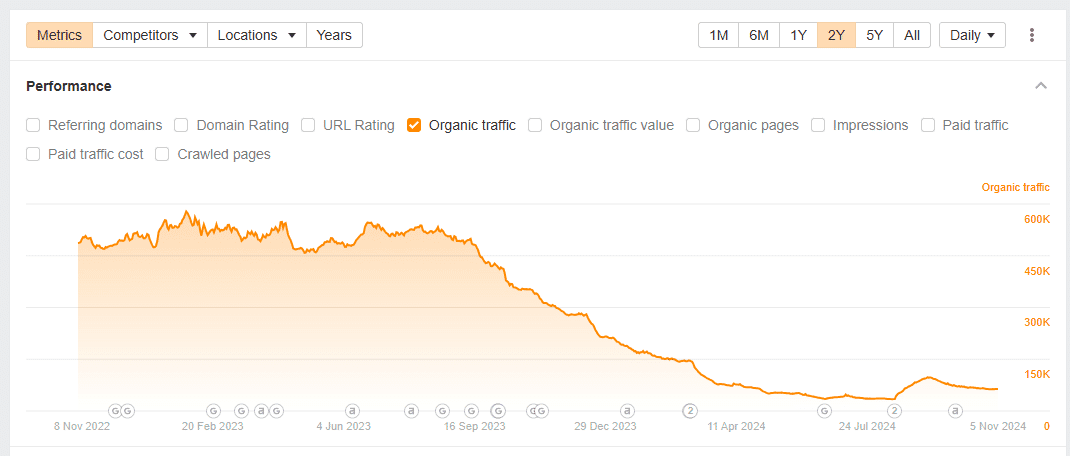
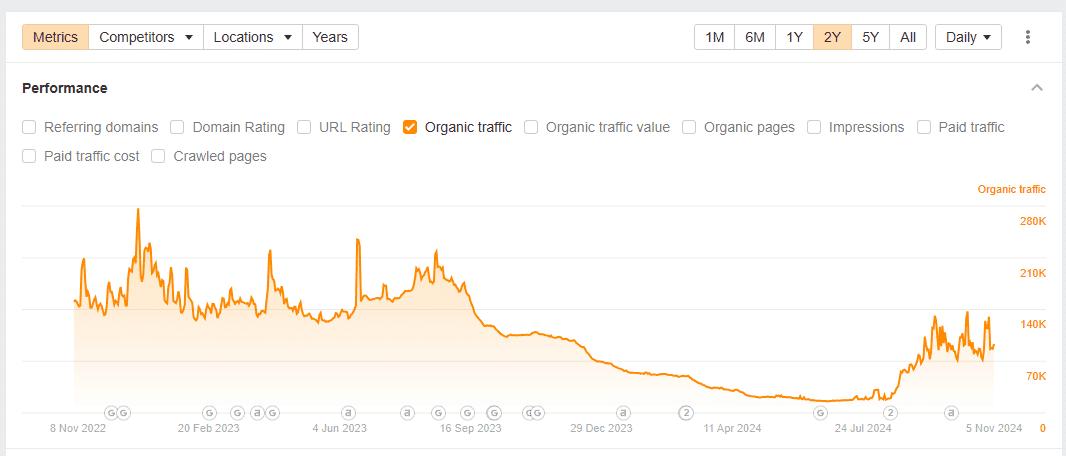
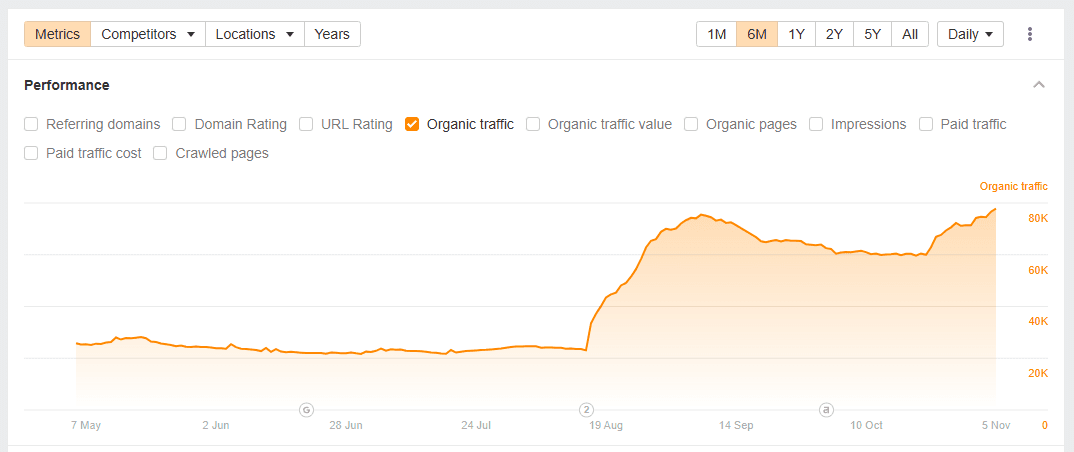
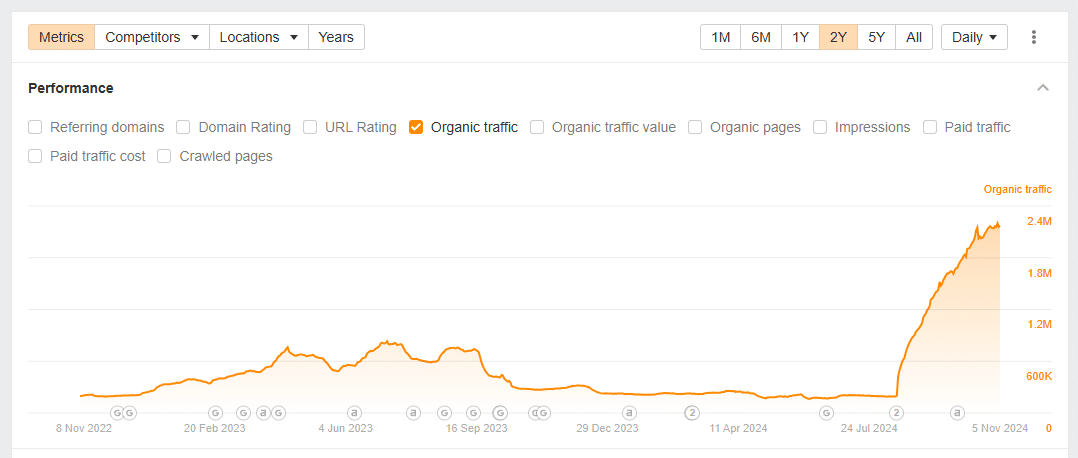
For most of the “lucky” 22%, the gains were “relative”—they saw a boost, but only compared to the initial traffic drop-off after the HCU. Many sites that were hit have either plateaued or continued to struggle.
Why Only 22% Saw Some Gains
So why are only 22% of sites showing even partial recovery? Gabe notes that while Google’s August 2024 core update seemed to help some sites, it didn’t restore traffic to pre-HCU levels for most.
The improvement appears to be more of a nudge than a full-fledged comeback. Sites that saw any lift mostly experienced an initial traffic increase, followed by another drop. This suggests that Google’s standards for high-quality, user-oriented content aren’t changing—and they’re hard to meet consistently.
Full recovery is an “anomaly,” Gabe explains, with the core update providing modest relief at best.
Sites with partial recoveries are only seeing a portion of their old traffic, a sign that Google isn’t forgiving low-value content anytime soon.
Simply put, if you’re a site owner and you’ve only seen slight gains since the HCU, Google’s message is clear: moderate progress doesn’t mean you’re back in the game.
Google’s Standards Aren’t Getting Any Easier
To make things more uncertain, Google hasn’t promised any future adjustments to allow “recovery” for sites hit by the HCU.
If your site’s been struggling to regain traffic, this can feel like you’re stuck in a holding pattern. Google’s message is essentially: “Improve your content, or stay where you are.” For most site owners, that means a lot more work ahead.
Lessons from Google’s Recent Strategy
Here are a few pointers from Google’s recent strategy.
User-First Content is Essential
Google’s update shows, yet again, that user-focused content is the path forward. Content needs to be genuinely helpful, engaging, and well-researched. Relying on keyword-stuffed, SEO-focused writing won’t cut it. Sites that ignore this may never see meaningful recovery.
Quality Matters Over Quantity
Sites that pump out a lot of content without paying attention to quality saw their rankings drop the hardest. Google wants high-quality content—so much so that it’s better to publish less if it means focusing on depth and accuracy.
Consistent Content Reviews
Content that’s “helpful” today might not be helpful a year from now. Google’s algorithms prioritize relevance and freshness, so sites need to update or retire old content that no longer meets high standards.
Consistency Across Your Site is Key
One low-quality page can bring down the rankings of an entire site. Google doesn’t just look at individual pages but evaluates a website as a whole, so every page needs to meet Google’s quality criteria.
Playing the Long Game
It’s hard work, but recovering from an update like the HCU takes time. Site owners who are patient and willing to make ongoing improvements in content quality are more likely to see gradual progress.
How Did We Get Here?
Since its early days, Google has been moving toward prioritizing high-quality, user-centered content over SEO tricks and keyword strategies.
From the Panda update in 2011, which targeted thin, low-value content, to Penguin update, which went after link manipulation, Google has kept tightening its standards.
The HCU is simply the latest in a long line of updates designed to make search results more useful for users—and less gameable by publishers.
Each major Google update has brought frustration and anxiety for site owners, but one thing’s clear: sites that adapt and improve are the ones that survive.
Just as with Panda and Penguin, the HCU’s victims will need to evolve or risk being left behind.
What Does This Mean for the Future?
For sites hit by the HCU, it’s adapt-or-lose. If Glenn Gabe’s findings are any indication, most won’t see substantial recovery unless they make serious changes.
While it’s true that 22% of sites tracked have seen partial lifts, the vast majority are still struggling to regain relevance and traffic. The lesson? Google’s algorithm updates aren’t going to let up anytime soon, and content needs to be genuinely valuable to users.
If you’re wondering what to expect, remember that Google has always pushed the search landscape toward higher quality. Site owners need to stay on top of these changes, produce great content, and keep refining their strategies.
It’s hard to say exactly where Google’s algorithm is heading next, but we can safely bet it’ll keep rewarding sites that put users first.
Tips for Recovering Site Owners
For those whose sites are still struggling post-HCU, here are a few actionable steps:
Audit Content Quality Regularly: Look at your existing content with fresh eyes. Identify pages that could be improved, updated, or removed entirely if they don’t add value.
Prioritize Depth Over Quantity: Focus on creating fewer but more valuable pieces. Thoughtful, comprehensive content will perform better in the long run than shallow, repetitive posts.
Engage Real Experts: Google values expertise. If your content is expert-authored, well-researched, and accurate, it’s more likely to satisfy the update’s “helpfulness” criteria.
Keep Up with Algorithm Changes: Google’s updates are relentless. Stay informed on trends, user needs, and Google’s evolving standards to make sure you’re not falling behind.
Key Takeaways
- A limited number of sites showed relative recovery but are far from pre-HCU levels.
- Content solely designed to boost SEO will struggle to recover in this new search landscape.
- One poor-quality page can bring down an entire site’s standing on Google.
- Google’s standards will only become more demanding, and quality is the key to gradual progress.
- Google’s algorithm now strongly favors helpful, relevant content that meets user needs over SEO tricks.

Dileep Thekkethil
AuthorDileep Thekkethil is the Director of Marketing at Stan Ventures, where he applies over 15 years of SEO and digital marketing expertise to drive growth and authority. A former journalist with six years of experience, he combines strategic storytelling with technical know-how to help brands navigate the shift toward AI-driven search and generative engines. Dileep is a strong advocate for Google’s EEAT standards, regularly sharing real-world use cases and scenarios to demystify complex marketing trends. He is an avid gardener of tropical fruits, a motor enthusiast, and a dedicated caretaker of his pair of cockatiels.
