
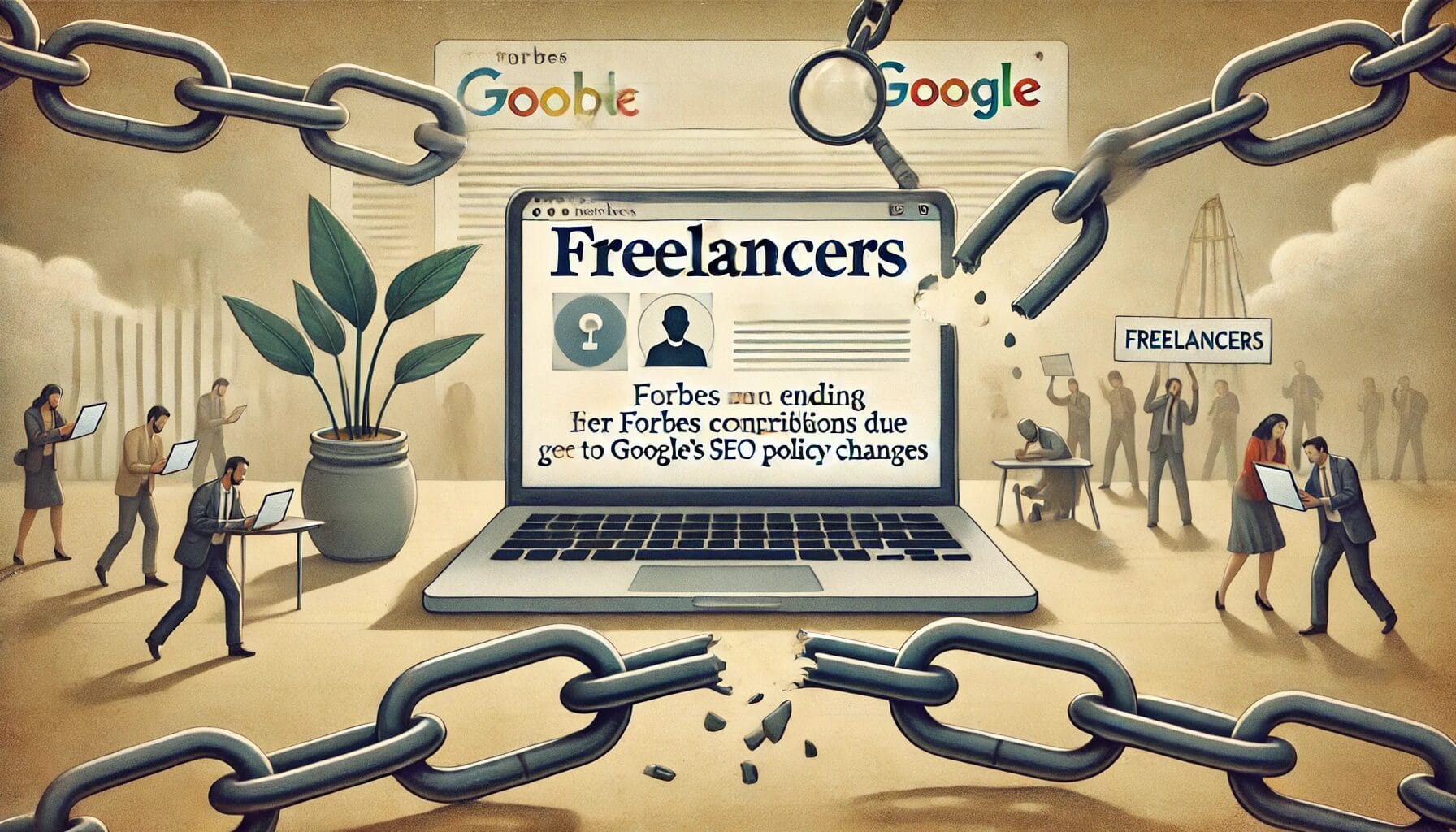
Forbes has announced a major shift in its content strategy, ceasing the use of freelancers for certain stories, including its widely read “Forbes Vetted” product review section. This move, attributed to Google’s updated SEO policies, has sent ripples through the freelance journalism community and beyond.
Why Did Forbes Make This Move?
The decision stems from Google’s intensified measures against “site reputation abuse,” which is often linked to practices known as “parasite SEO.” This involves publishing irrelevant or excessive third-party content under a trusted brand name to boost search rankings.
In recent months, Google’s updated policies have scrutinized such tactics more closely, emphasizing the importance of first-party content—content created directly by the publisher.
According to a writer named Cassandra Brooklyn, Forbes attributed the shift directly to Google’s stance on such content. However, the company has remained tight-lipped, declining multiple requests for official comment. The lack of transparency has left contributors scrambling for clarity about the extent and duration of these changes.
How Does This Affect Freelancers?
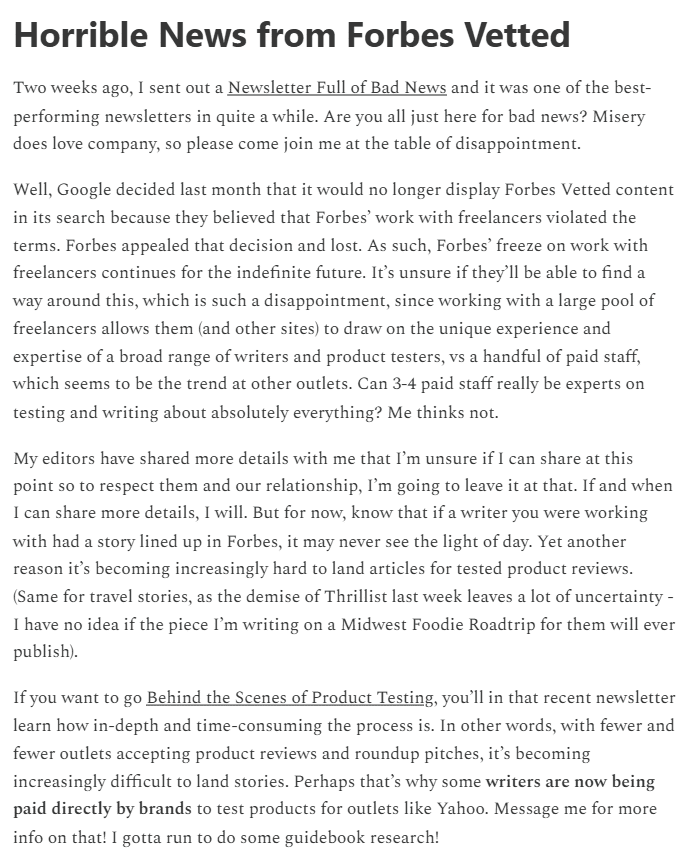
Freelancers who relied on Forbes as a steady source of income are now facing an uncertain future. The product review section, “Forbes Vetted,” was known for offering competitive rates, often paying contributors up to $3,000 per article.
Writers would test products, conduct interviews, and undergo rigorous editorial processes to produce high-quality reviews. Now, some of these articles may be reworked or entirely rewritten by Forbes’ in-house staff.
An affected freelancer shared that they put a lot of time and effort into creating detailed, well-researched reviews, and it is disappointing to think that their work might be replaced by staff-written versions.
What Does This Mean for the Industry?
Forbes’ decision reflects a much larger transition in digital publishing. Many outlets rely heavily on freelance writers to produce content, but the tightening of Google’s SEO rules may force other publishers to reevaluate their strategies.
Affiliate-driven content—like product reviews that earn commissions through reader purchases—is particularly vulnerable under Google’s updated rules, which prioritize transparency and authenticity.
Similarly, Forbes Advisor, a key part of Forbes’ affiliate marketing operation, recently received a Google penalty, which caused a sharp drop in its search rankings. The penalty likely stems from aggressive SEO tactics that may have violated Google’s site reputation abuse policies, further emphasizing the importance of aligning content practices with Google’s evolving guidelines.
This shift could indicate a trend in which publishers rely less on freelance content and focus more on first-party contributions to align with changing SEO standards.
How Freelancers Can Adapt
As industries transform, freelancers must be prepared to adapt to keep their competitiveness intact. Here are some strategies:
Stay Informed on SEO Trends: Grasping Google’s latest guidelines enables you to customize pitches for publishers.
Broaden Income Sources: Explore opportunities across various platforms to prevent becoming overly dependent on one outlet.
Create a Personal Brand: Develop your expertise in a niche to draw direct clients.
Enhance Skills: Concentrate on delivering high-quality, original content that aligns with publishers’ needs needs.
What’s Next for Forbes?
Forbes faces challenges in this transition. Rewriting freelance content in-house is resource-intensive and may slow down its publishing schedule. However, this move is likely an attempt to safeguard its search rankings and maintain credibility with readers.
Key Takeaways
- Forbes has stopped hiring freelancers for its product review section, citing changes in Google’s SEO policies.
- The decision targets “parasite SEO” practices, which involve using third-party content to manipulate search rankings.
- Freelancers now face fewer opportunities and must adapt to a shifting industry landscape.

Dileep Thekkethil
AuthorDileep Thekkethil is the Director of Marketing at Stan Ventures, where he applies over 15 years of SEO and digital marketing expertise to drive growth and authority. A former journalist with six years of experience, he combines strategic storytelling with technical know-how to help brands navigate the shift toward AI-driven search and generative engines. Dileep is a strong advocate for Google’s EEAT standards, regularly sharing real-world use cases and scenarios to demystify complex marketing trends. He is an avid gardener of tropical fruits, a motor enthusiast, and a dedicated caretaker of his pair of cockatiels.
