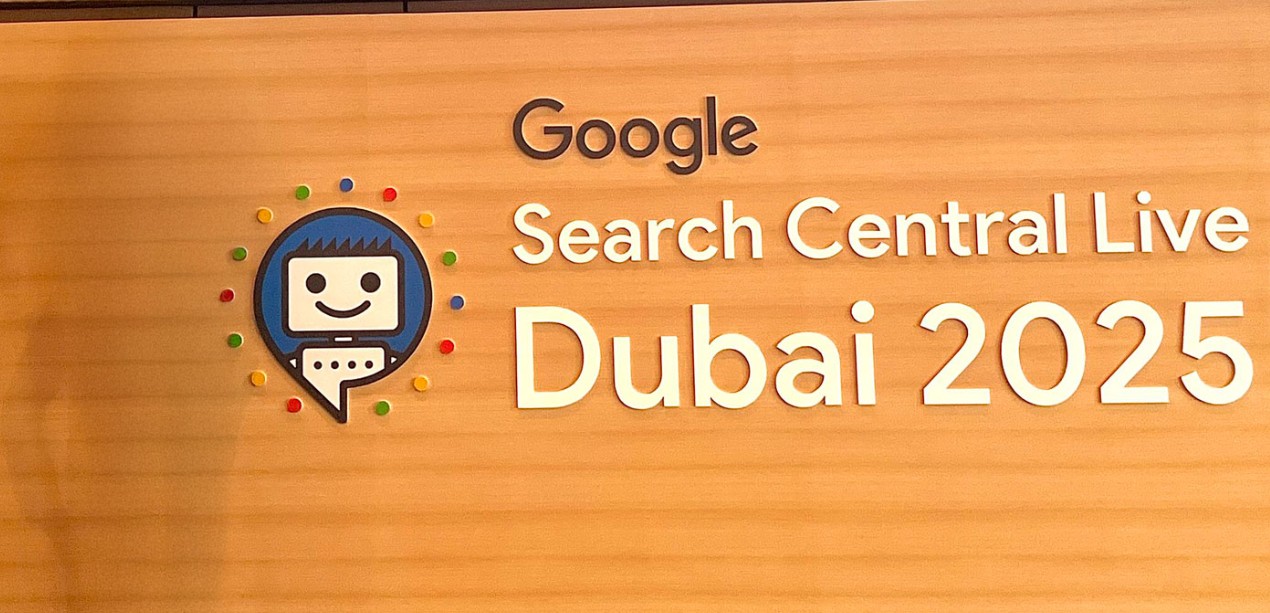
At the Google Search Central Live Dubai 2025, Google once again reminded the SEO community of a crucial truth that many still overlook.
If your site is struggling to rank, it is not your backlinks, canonical tags. And not, even the cleanest site migration won’t save you.
According to Google, “links, site moves, or technical SEO won’t fix your rankings if your website has overall quality issues.”
And this is important because for many SEOs and website owners still chasing algorithm “quick fixes,” this statement cuts through the noise.
What Happened at Google Search Central Live Dubai 2025?
For the first time, Google’s Search Central Live made its way to the Middle East, gathering hundreds of SEO professionals, webmasters, developers, and digital strategists.
The event, held in Dubai, became a hub of knowledge sharing, where Google’s experts, including John Mueller and Martin Splitt, walked attendees through the intricacies of how search truly works in 2025.

Throughout the sessions, several recurring themes emerged: content authenticity, technical precision and user-centric quality.
But among them, one particular slide caught the attention of everyone, sparking discussions across LinkedIn and SEO forums.
The slide, shared by Shahid Maqbool on LinkedIn, boldly stated:

“Links / site-moves don’t solve quality issues.”
“Technical SEO doesn’t fix quality issues (but it’s good for other things!).”
This was not just a passing remark, it was a statement of direction for where Google Search is headed.
So, let’s see why did Google need to repeat something it’s already said before?
Why Did Google Emphasize This Again?
You might be wondering, has not Google been saying this since the Helpful Content Update and every subsequent Core Update?
Yes, they have. But the repetition is intentional.
The truth is, despite years of algorithm updates and transparency, many SEO professionals still default to technical or link-based solutions whenever their rankings drop. Site traffic down? Build more backlinks.
Pages not indexed? Optimize your internal linking. Rankings fluctuating? Move the site or restructure URLs.

Google’s statement from Dubai directly challenges this mindset.
The message is simple yet powerful:
Even the best technical foundation can’t mask low-value, poorly written, or irrelevant content. Google’s ranking systems, especially post-2023, are increasingly designed to evaluate content depth, originality, and user satisfaction, not just traditional SEO signals.
What Exactly Is “Quality” in Google’s Terms?
Now, that’s the big question, what does Google mean by quality?
From an SEO perspective, “quality” goes beyond error-free HTML or well-optimized meta tags. According to Google’s Search Quality Evaluator Guidelines, quality is a combination of expertise, trust, originality, and usefulness.
Let’s break it down:
- Expertise: Does the content come from someone who knows the subject deeply?
- Trustworthiness: Does the page (and website) demonstrate reliability and authority?
- Relevance: Does it genuinely answer the search intent behind a query?
- Engagement: Do users stay, read, interact, and find the experience satisfying?
If your website misses the mark in these areas, no amount of backlinks or schema markup can make up for it.
Martin Splitt reportedly mentioned during the Dubai session that Google’s crawlers and ranking systems now rely on “multi-layered quality checks”, combining signals from user behavior, semantic understanding, and E-E-A-T (Experience, Expertise, Authoritativeness, Trustworthiness) metrics.
How Does This Affect Technical SEO Strategies?
Google did not say technical SEO is useless. In fact, it reaffirmed its importance but only as a supporting framework.
Think of technical SEO as the skeleton of your site, it gives structure, speed, and visibility. But the heart of your site? That’s still your content.
John Mueller clarified that technical excellence can improve accessibility, ensure that crawlers can index your content efficiently, and enhance usability. However, if what is inside those pages is not useful or credible, Google won’t prioritize it for a period.
So while Core Web Vitals, mobile responsiveness, and structured data still matter immensely, they aren’t “ranking rescue tools.” They work only when paired with quality signals that reflect value.
What About Site Moves and Backlink Campaigns?
Another myth Google shattered at the Dubai event was the belief that site migrations or new domains can give a “fresh start” to a struggling site.
As Google’s representatives explained, a site move does not erase your site’s quality history. Your existing content and its reputation that moves along with it.
In other words, if your old domain struggled due to thin or duplicate content, simply shifting it to a new URL won’t fool Google. The search algorithms are built to identify content fingerprints, meaning poor quality follows you unless it is genuinely improved.
Similarly, backlinks, though still part of Google’s ranking ecosystem, no longer carry the same weight as they once did.
If your content lacks originality or does not serve user intent, even a flood of high-quality links can’t override those core quality deficiencies.
What Can SEO Professionals Learn from This?
Let’s see how SEO professionals and content creators should interpret this shift.
1. Shift Focus from Fixing to Improving
Stop treating SEO like a patchwork process. A dip in rankings is not always a sign of broken links or crawl errors, it is often a reflection of user dissatisfaction.
Before tweaking meta tags or disavowing backlinks, revisit your content strategy. Ask yourself:
- Does this content genuinely help users?
- Is it unique, insightful, and well-researched?
- Would I trust this content if I were the reader?
2. Prioritize E-E-A-T
Google’s evaluators look for authenticity and authority. This means highlighting author bios, citing credible sources, and demonstrating real-world expertise are no longer optional and they are essential.
3. Don’t Abandon Technical SEO, Align It
Yes, technical SEO remains a must. But instead of chasing perfection in site speed scores, align your technical optimization to enhance user experience with faster loads, intuitive navigation and mobile-first layouts.
4. Forget Quick Fixes
Google’s updates are designed to detect manipulation. No amount of short-term fixes will replace genuine quality improvements. SEO in 2025 is about long-term sustainability.
Voices from the Event: What Attendees Had to Say
The Dubai event was not just about Google’s presentation, it was also about community reflection.
Attendee Afifa Ansari described it as “an inspiring day filled with innovation and forward-thinking discussions.”
Asma Ramadan highlighted how the event deepened understanding of how search is evolving beyond keywords and into understanding meaning.
And Ahmet Yilmaz, who attended the session by John Mueller and Martin Splitt, noted:
“I expected a general overview, but they went deep into how Google understands pages, not just how it indexes them. The takeaway — SEO is more about humans than algorithms now.”
What This Means for the Future of SEO
If there is one thing the Dubai event made clear, it’s this: the SEO landscape is maturing.
Google’s search systems are becoming less mechanical and more intuitive. Instead of just measuring keywords, they now interpret context, authority, and genuine value.
So if you’ve been relying on technical tricks or backlink-driven strategies, it’s time to evolve. The key to ranking success in 2025 lies in:
- Investing in expert-driven content
- Building user-first experiences
- Using technical SEO as a facilitator, not a crutch
In short: SEO is not just about pleasing crawlers anymore, it is about satisfying real people.
You Can’t “Fix” Quality – You Have to Build It
If your rankings dropped today, would your first instinct be to hunt for crawl errors, or would you review your content strategy?
Google’s message from Dubai couldn’t be clearer: Stop patching, start improving.
Quality is not something you fix with technical adjustments; it’s something you earn through consistency, expertise, and user trust.
As one of the most shared takeaways from the event stated:
“You can’t fix poor quality with better SEO. You fix SEO by improving quality.”
And perhaps, that’s the truest form of optimization there is.
Key Takeaways / TL;DR
- Google reaffirmed at Search Central Live Dubai 2025 that links, site moves, or technical SEO won’t fix quality issues.
- “Quality issues” refer to low-value content, poor user experience, or lack of trust and originality.
- Technical SEO is still important, but only as a supporting factor and it can’t replace valuable content.
- Site migrations don’t erase poor content reputations; quality signals follow across domains.
- The best fix for ranking drops? Audit your content, not your sitemap.
- Ultimately, Google ranks value, not vanity metrics.

Dileep Thekkethil
AuthorDileep Thekkethil is the Director of Marketing at Stan Ventures, where he applies over 15 years of SEO and digital marketing expertise to drive growth and authority. A former journalist with six years of experience, he combines strategic storytelling with technical know-how to help brands navigate the shift toward AI-driven search and generative engines. Dileep is a strong advocate for Google’s EEAT standards, regularly sharing real-world use cases and scenarios to demystify complex marketing trends. He is an avid gardener of tropical fruits, a motor enthusiast, and a dedicated caretaker of his pair of cockatiels.
