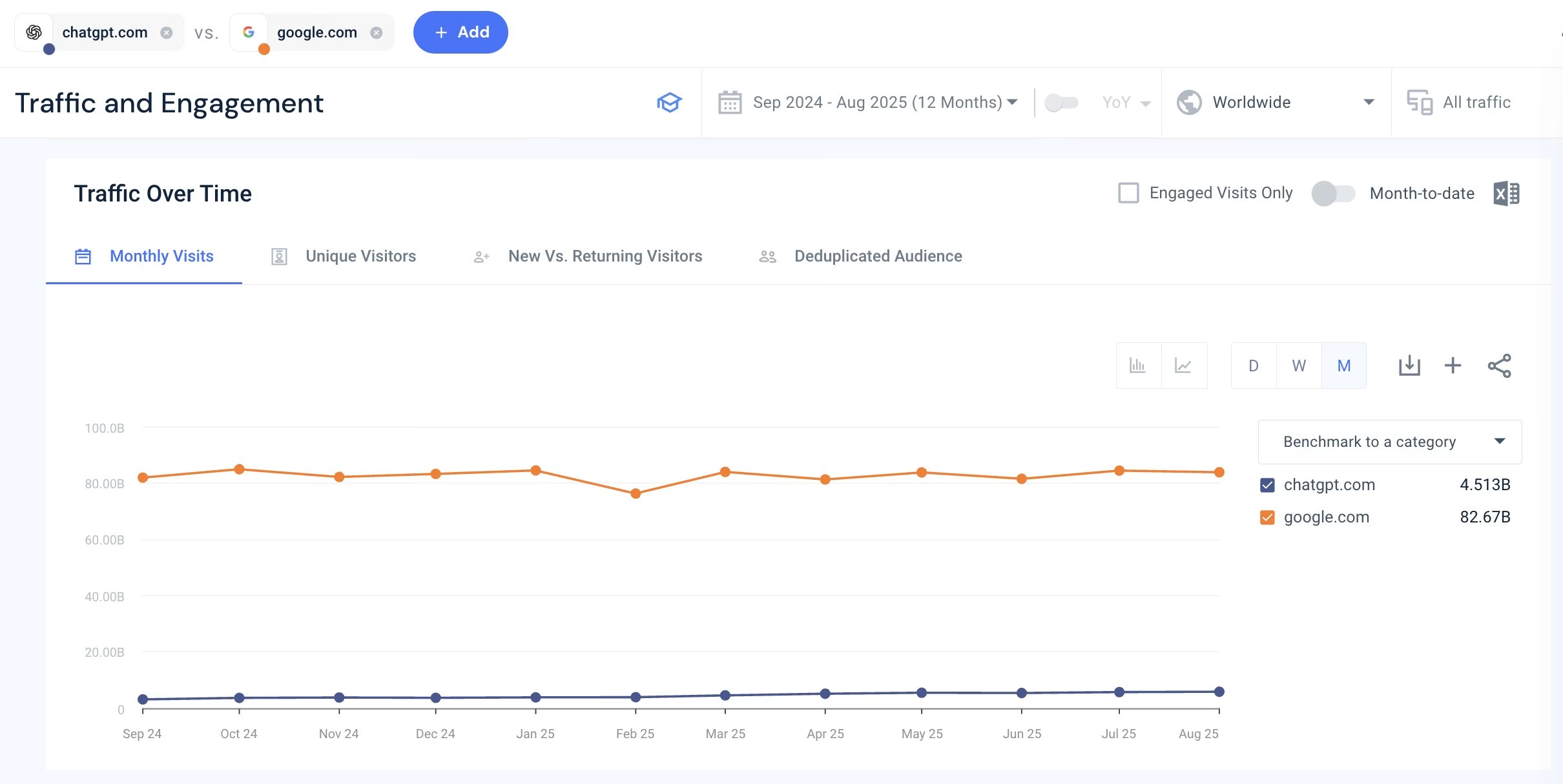
Aleyda Solis’ post on X says SEO isn’t dead, pointing to data that shows Google pulling nearly 84 billion visits in August while ChatGPT managed about 5.8 billion.
Every so often, someone declares SEO dead. A decade ago, it was social media that was supposed to end it. Then came voice search. Before that, people said Google’s algorithm updates would kill the industry. And now, large language models are the latest to be called SEO’s executioner.
Aleyda Solis’s tweet cut through the noise with hard numbers.
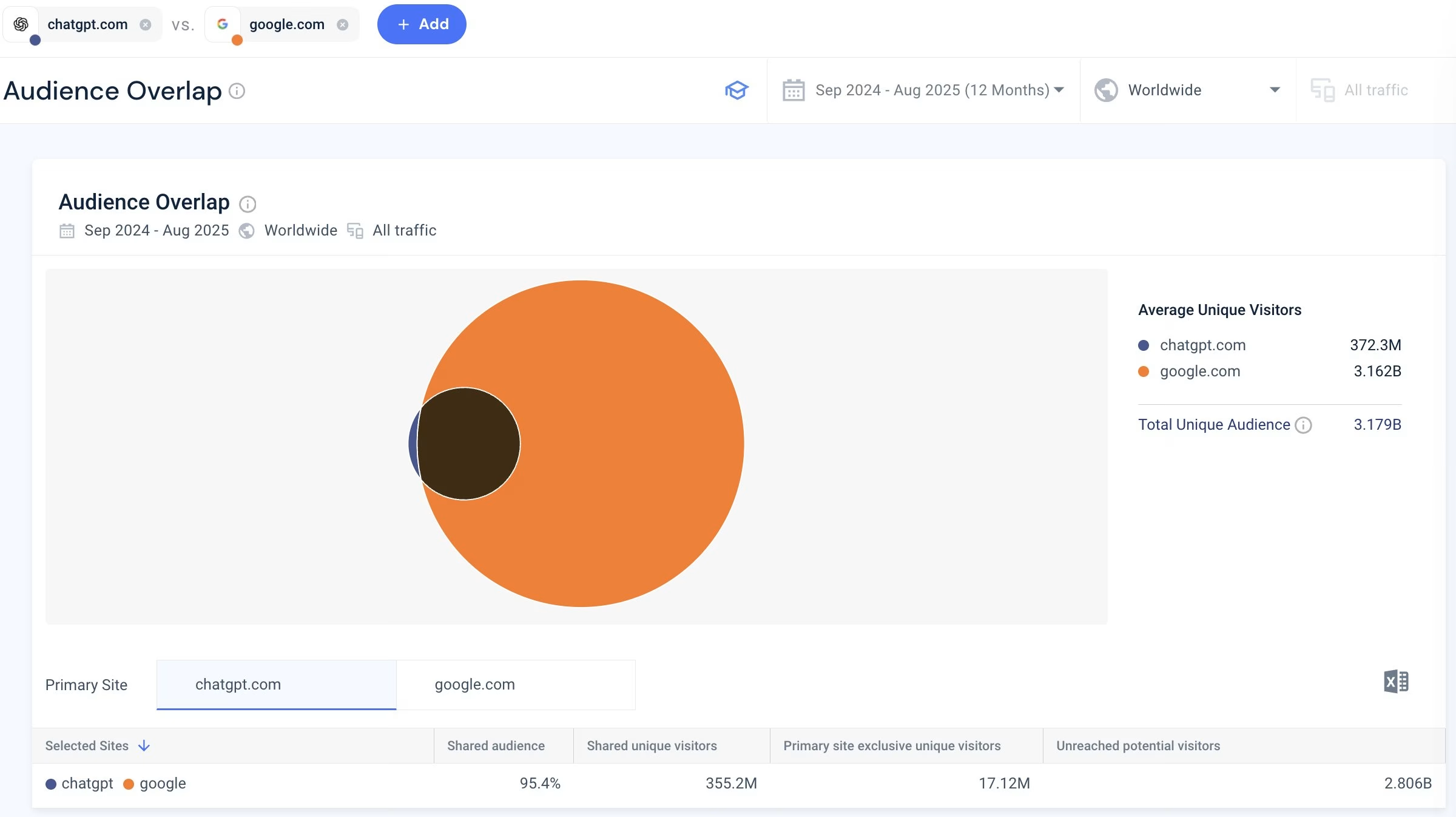
In August, Google logged nearly 84 billion visits. ChatGPT drew around 5.8 billion. And almost all of those ChatGPT users also went to Google.
For websites, the financial side tells the same story, that is, AI referrals are barely noticeable compared to revenue from search engines.
At Stan Ventures, those numbers mirror what we see every day, managing SEO for clients around the world. Search traffic is still the main driver of business growth. AI tools are interesting, but they’re not replacing the role of search. They’re adding another layer to how people look for information.
Key Data Points from Aleyda Solis
- Google still dominates search traffic. In August, Similarweb measured 83.8 billion visits for Google compared to ChatGPT’s 5.8 billion. ChatGPT is growing, but nowhere near overtaking search.
- Users overlap, they don’t switch. About 95 percent of ChatGPT’s audience also visited Google. People use both tools side by side, not as substitutes.
- Revenue comes from SEO, not AI. According to the SEOFOMO AI Search Optimization Survey, less than 5 percent of site revenue is tied to LLM referrals. More than half still comes from SEO.
- AI still depends on the web. LLMs pull in real-time information from external sources, including Google and Bing APIs, whenever fresh data is needed.
- The basics of SEO still matter. Crawlability, indexability, relevance, and authority (EEAT) remain the foundation, even as tactics shift for new platforms.
Why AI still leans on Search
A crucial technical point often overlooked in the debate is that modern LLMs reach outside their static models for live facts when needed.
Recent reporting indicates that some AI services use external search, including scraped or API-fed results, to ground time-sensitive answers.
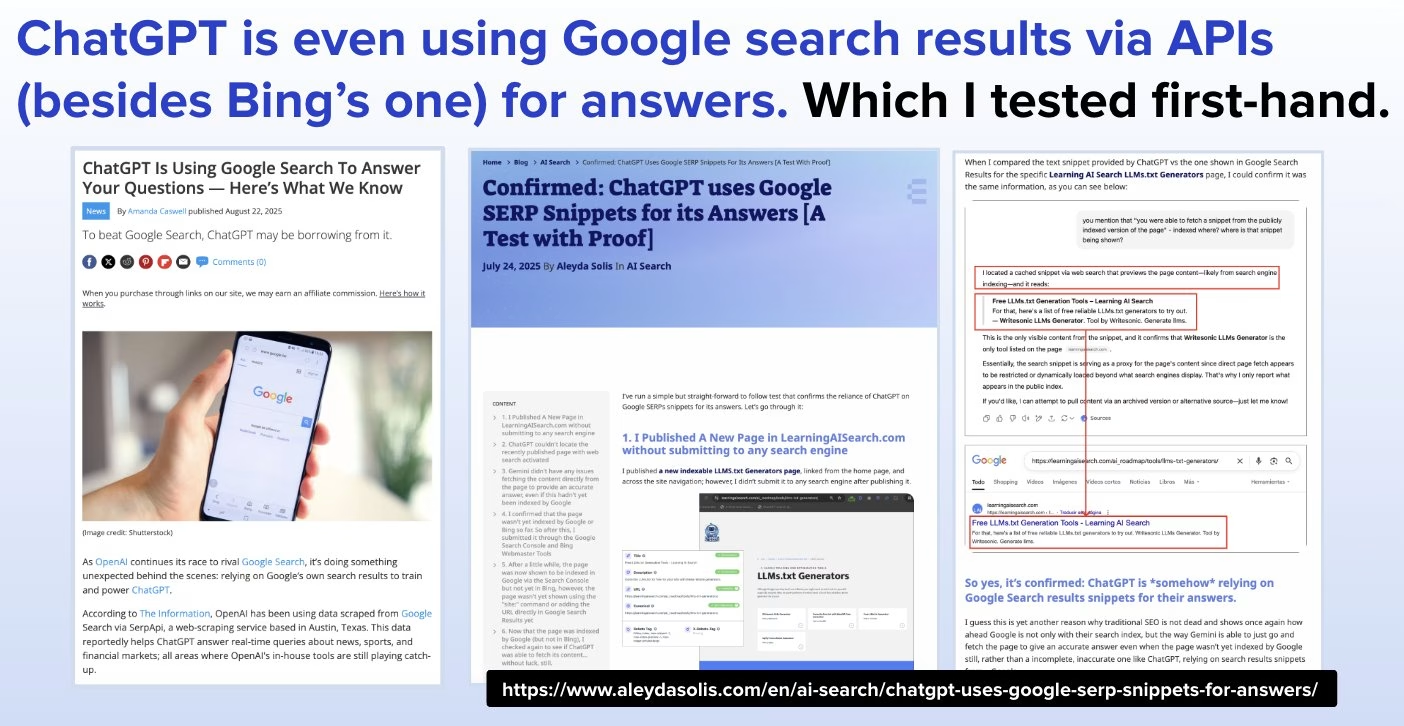
In other words, these chat tools often rely on web content to provide current facts. That makes the job of making accurate, discoverable content more valuable, not less. If an LLM references your site as the source for a current fact, that can create clicks, citations, or new kinds of downstream traffic.
For site owners, this means that creating discoverable, well-structured content remains essential. AI models surface what they can find. If your site publishes accurate, fact-based information, it has a chance to be referenced or cited within AI-generated answers.
What’s Shifting in SEO
The fundamentals of SEO still matter. But where those efforts show up is expanding. Instead of focusing exclusively on search engine results pages, businesses now need to consider multiple interfaces, including traditional search, AI-powered answers, video platforms, and social discovery.
Practical Playbook for People Running Sites
This is where the conversation becomes practical. Below are steps you can start implementing within the next ninety days.
- Audit how your pages present facts. For time-sensitive pages, include clear publish dates, update notes, and short fact boxes that summarize the key points. This makes it easy for machines and humans to verify and reuse your content.
- Add structured data where it improves clarity. Use schema.org for articles, FAQs, product details, and events. Structured data helps machine readers pick up facts and cite them cleanly.
- Measure assisted conversions. Set up multi-touch attribution that captures assisted traffic from AI referrals, social sources, and direct visits. Compare those assisted conversions to last-click metrics.
- Create short, machine-friendly summaries for core pages. Write 50 to 150 word summaries that highlight the most verifiable facts. Store them at the top of long guides so they are easy for automated systems to extract.
- Map content to discovery channels. Identify the top three platforms where your audience searches and tailor a lightweight optimization plan for each. That might mean short captions and tags for TikTok, keyword-rich titles for YouTube, and clean metadata for search engines.
- Run a small experiment. Create two pages with identical content. Use one to focus on clean structured data and short summaries. Leave the other as-is. Compare referral traffic and click-throughs from AI answers and search engines over 30 days.
- Keep monitoring the data sources. Watch Similarweb, StatCounter, and industry surveys to see how user behavior shifts over time. That data informs realistic planning.
The Bottom Line
LLMs aren’t killing SEO; they’re expanding what search and discovery mean. The idea that “SEO is dead” is overblown, just like it was when social, voice, and mobile shifted the landscape.
Marketers who succeed focus on making content genuinely helpful, clear, and easy to find. SEO isn’t going away; it’s evolving, and those who adapt will stay ahead.
As Aleyda Solis put it:
“If you’ve been doing SEO for a while, you know how search platforms and user behavior are always shifting. The SEO I do now has nothing to do with what I started with back in 2007… and I remember how some were saying SEO was dying already back then.”
Key Takeaways
- AI tools are growing, but search is still dominant.
- Google logged nearly 84 billion visits in August.
- AI referrals contribute only a fraction of revenue.
- AI answers lean on optimized web content.
- SEO remains the cornerstone of online visibility.

Dileep Thekkethil
AuthorDileep Thekkethil is the Director of Marketing at Stan Ventures, where he applies over 15 years of SEO and digital marketing expertise to drive growth and authority. A former journalist with six years of experience, he combines strategic storytelling with technical know-how to help brands navigate the shift toward AI-driven search and generative engines. Dileep is a strong advocate for Google’s EEAT standards, regularly sharing real-world use cases and scenarios to demystify complex marketing trends. He is an avid gardener of tropical fruits, a motor enthusiast, and a dedicated caretaker of his pair of cockatiels.
