
Google’s dominance in the global search market is on the brink of a significant decline. According to recent statistics, the tech giant’s market share is projected to fall below 80% by September 2024.
Market Dynamics Shift
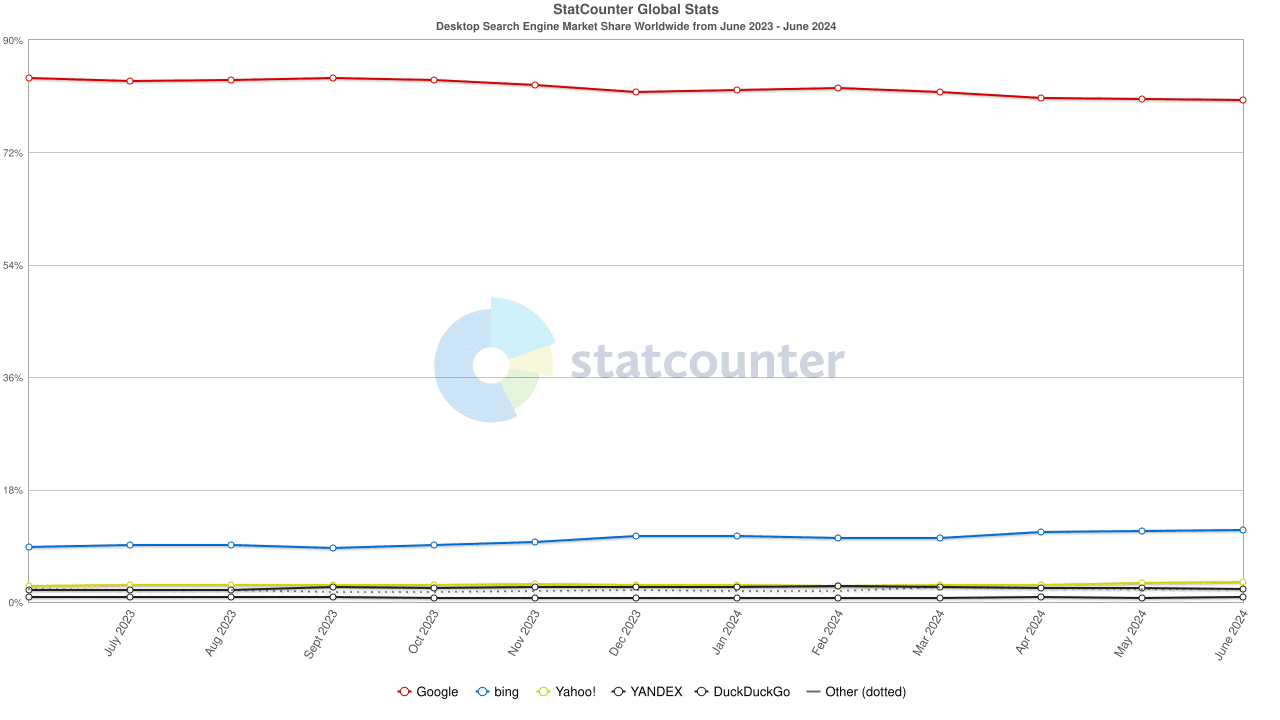
On July 5, 2024, Charles Floate, tweeted a striking update. He shared a graph from StatCounter, depicting Google’s declining search market share, which stood at 81.63% in June 2024.
Google is on track to hit below an 80% worldwide search market share by September! That is a HUGE loss in just a year, where Bing has been the main replacement so far… pic.twitter.com/veUpxb1Kwu
— Charles Floate 📈 (@Charles_SEO) July 5, 2024
The data suggests a continuous downward trend, with projections indicating that Google’s share will dip below the 80% mark by September 2024.
Floate emphasized that this represents a substantial loss for Google within just a year, marking a pivotal moment in the search engine market.
The graph shared by Floate illustrates the gradual erosion of Google’s once unassailable market share. Notably, Google’s desktop search market share was 84.73% in June 2023.
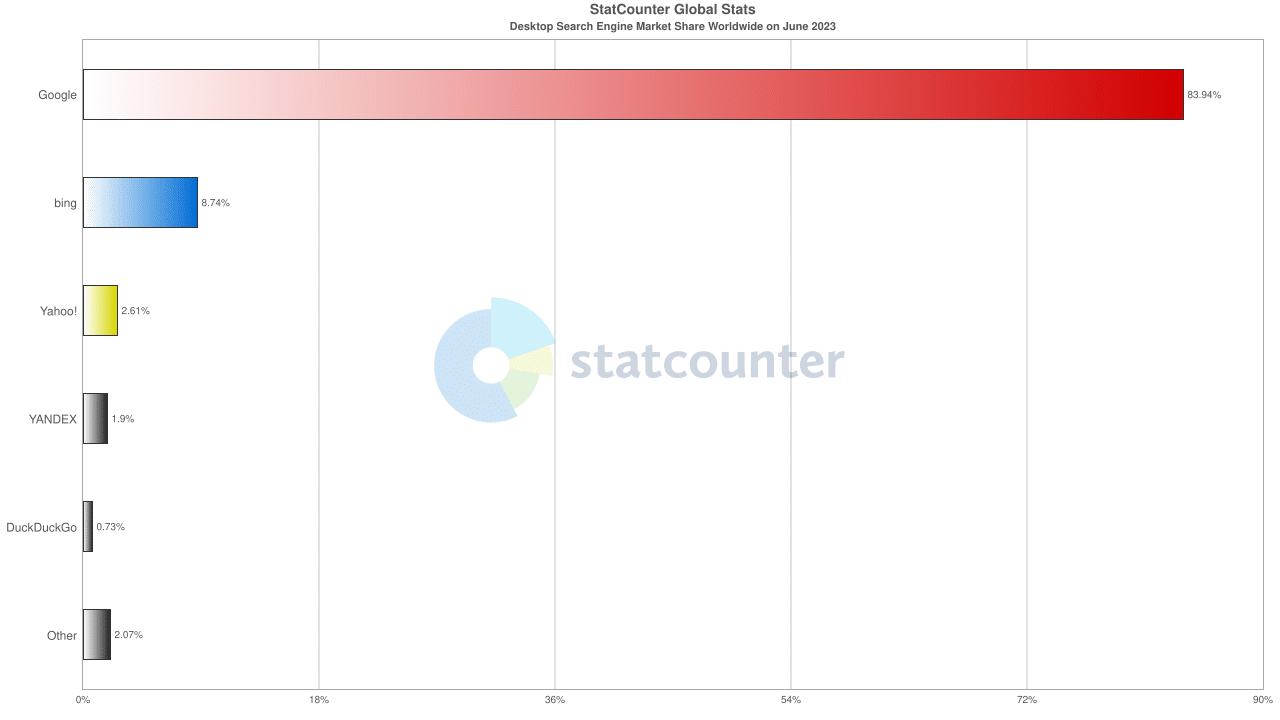
As Bing and other competitors gain traction, the search landscape is becoming more fragmented, offering users more options and fostering a competitive environment that could spur innovation and improvements in search technology.
Implications for Digital Marketing
This decline in Google’s market share carries significant consequences for advertisers, website owners, and SEO professionals. Advertisers who have relied heavily on Google AdWords might need to rethink their strategies.
With Bing and other search engines becoming more popular, advertising budgets might be spread across multiple platforms, making the market more competitive and diverse.
SEO professionals will need to adopt a broader approach to search engine optimization. Focusing solely on Google is no longer sufficient.
SEO efforts must now encompass Bing and other emerging search engines. Understanding the unique algorithms, ranking factors, and user preferences of each platform will be essential for maintaining and improving website visibility and rankings across the board. This holistic approach will ensure that businesses remain competitive.
A Brief History of Search Engines
Google has been the top search engine for over a decade. Since it started in 1998, it quickly became the most popular choice for searching the web. Competitors like Yahoo and Bing have struggled to catch up. However, Bing has been making steady progress in recent years.
Microsoft’s search engine has improved through better integration with Windows and Edge, and continuous advancements in search algorithms and user experience.
Bing’s success can be attributed to its investments in artificial intelligence and partnerships with organizations like OpenAI. These advancements have made Bing a more attractive option for users and advertisers.
Here is a brief history of Search Engines
Future Predictions and Opportunities
If Google’s market share declines, we can expect more competition and innovation in the search engine industry. This is good news for users, who will benefit from better search experiences as each platform tries to outdo the other in terms of accuracy, relevance, and features.
For businesses, this shift opens up new opportunities. Emerging search engines and tech companies might find a more receptive market as users explore alternatives to Google.
Additionally, the increasing variety in the search market could lead to more balanced regulation, as authorities worldwide have criticized Google’s near-monopoly for stifling competition.
How To Adapt: Practical Steps For Businesses And Digital Marketers
Here are some practical steps to adapt to these changes:
Diversify SEO Efforts:
- Optimize your website for multiple search engines, not just Google.
- Understand and implement the best practices for Bing and other emerging platforms.
- Monitor search engine performance regularly to stay updated on trends and algorithm changes.
Reevaluate Advertising Strategies:
- Consider allocating a portion of your advertising budget to Bing Ads and other platforms.
- Experiment with different ad formats and placements to identify what works best on each search engine.
- Track and analyze the performance of your ads across various platforms to maximize ROI.
Stay Informed:
- Keep up with industry news and updates from reliable sources.
- Participate in webinars, conferences, and forums to learn from experts and peers.
- Leverage analytics tools to gain insights into user behavior and preferences across different search engines.
Key Takeaways
- Google’s search market share is projected to fall below 80% by September 2024, marking a significant decline.
- Bing and other search engines are gaining ground, challenging Google’s dominance.
- This shift has implications for advertisers, SEO professionals, and businesses, necessitating a broader approach to digital marketing.
- The evolving landscape presents new opportunities for innovation and competition, benefiting users with improved search experiences.
- Adapting to these changes requires diversifying SEO efforts, reevaluating advertising strategies, and staying informed about industry trends.

Dileep Thekkethil
AuthorDileep Thekkethil is the Director of Marketing at Stan Ventures, where he applies over 15 years of SEO and digital marketing expertise to drive growth and authority. A former journalist with six years of experience, he combines strategic storytelling with technical know-how to help brands navigate the shift toward AI-driven search and generative engines. Dileep is a strong advocate for Google’s EEAT standards, regularly sharing real-world use cases and scenarios to demystify complex marketing trends. He is an avid gardener of tropical fruits, a motor enthusiast, and a dedicated caretaker of his pair of cockatiels.
