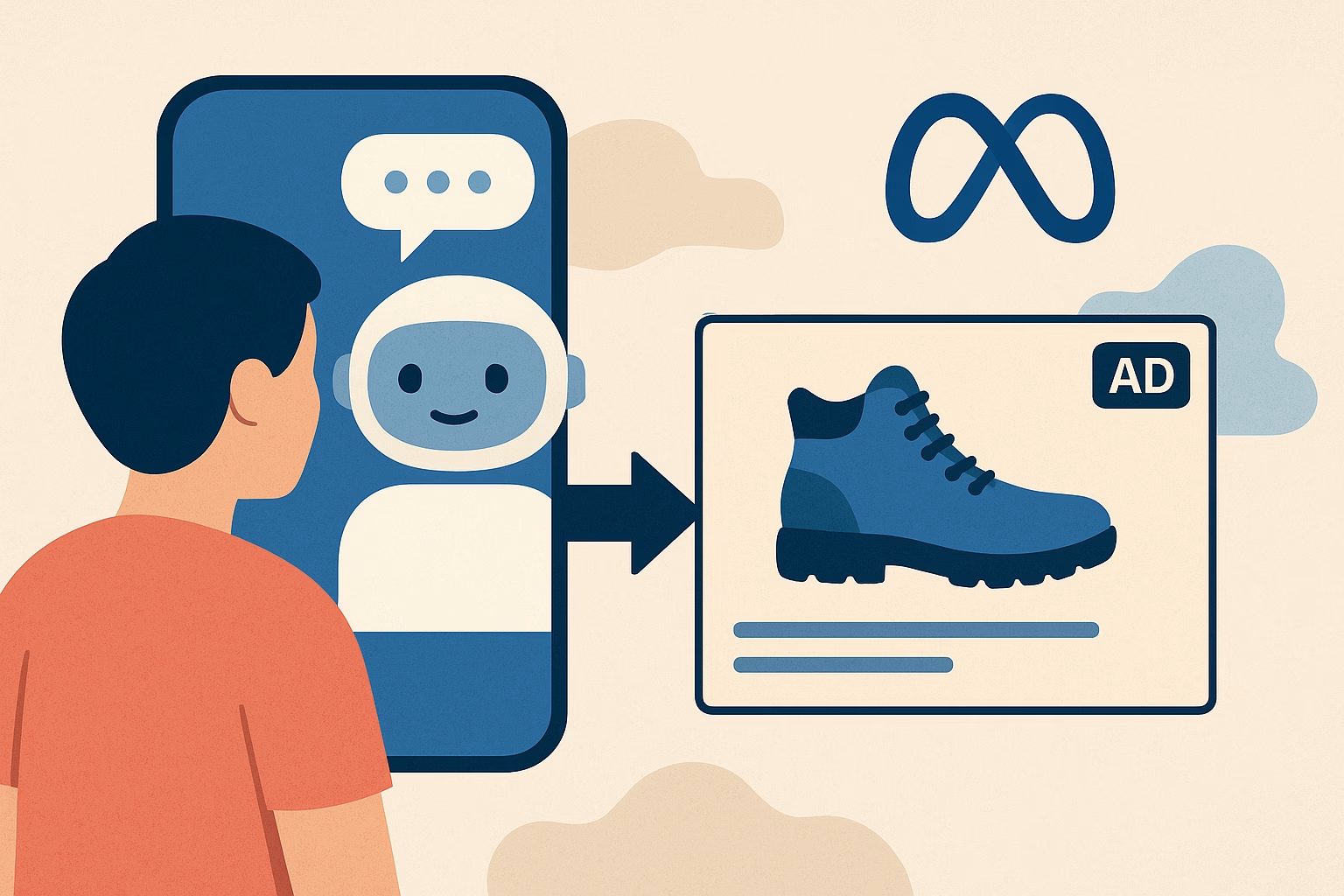
Starting December 16, Meta will begin using conversations you have with its AI tools to fuel the ads you see on Facebook and Instagram. The change applies almost everywhere, except for the European Union, the UK, and South Korea, where privacy laws stop the practice. There is no way to opt out.
Meta’s artificial intelligence assistant has become part of daily life for millions. People turn to it to brainstorm recipes, help plan trips, or even just to kill time with idle conversation.
According to the company, more than a billion people chat with Meta AI every month, often for much longer than you might expect.
Now, those conversations are about to have a second life.
Instead of staying between you and the chatbot, snippets of your interactions will be used to help advertisers reach you more effectively.
If you’ve been talking to Meta AI about training for a half marathon, don’t be surprised when sportswear ads appear on your Instagram feed.
Meta’s privacy policy will officially update on December 16, with users receiving notifications beforehand.
This new rule stretches across the company’s growing list of AI products, from chatbots to Ray-Ban smart glasses and creative tools like the Imagine image generator.
Why Meta Wants Your Chat Data
Ads are everything for Meta. They are the lifeblood of the business and the reason services like Facebook and Instagram remain free.
The company already has detailed profiles built on what you like, who you follow, and what you search for. Adding AI chats into the mix gives Meta something advertisers crave even more: context.
Likes and clicks show patterns. Conversations reveal intent. If someone tells Meta AI they’re considering buying a mountain bike, that’s a stronger advertising signal than a casual like on a cycling page. Advertisers want to know not only who you are, but also what’s on your mind right now.
A spokesperson for the company said, “If a user chats with Meta AI about hiking, they may later see ads for hiking gear.”
Where the Data Comes From
The changes go far beyond a single chatbot. Meta plans to use AI-generated signals from across its ecosystem:
- Ray-Ban smart glasses: Voice commands, photos, and videos analyzed through AI could feed into ad profiles.
- Vibes, Meta’s new AI-driven video feed: What you watch here may later influence the ads you encounter.
- Imagine, the AI image tool: Even your creative prompts could become clues for ad targeting.
As long as you’re logged into the same Meta account across these products, the data can connect back to you.
What Meta Promises to Leave Alone
Meta insists that some boundaries remain in place. The company says it will not use AI conversations about sensitive topics ( like religion, politics, health, sexual orientation, ethnicity, or philosophical beliefs) for ad targeting.
Still, critics question how the system will reliably sort “sensitive” from “non-sensitive” conversations.
Human speech is messy, and AI chats don’t always fit neatly into categories. Will a conversation about running that mentions health conditions really be excluded? That remains an open question.
Free Isn’t Really Free
There’s an old saying in tech – if you’re not paying for the product, you are the product. Meta’s latest move is a reminder of how that bargain works.
So far, its AI tools have been free to use, but they’re not free to run. Behind the curtain are massive server costs, research teams, and ongoing development.
Now, instead of charging users, Meta will cover the expense by making its ads even more profitable.
Other companies are heading in similar directions.
OpenAI has introduced a marketplace inside ChatGPT where it takes a cut of purchases. Google is preparing to weave ads into its AI-driven search product. Big Tech’s experiment with “free” AI is starting to look less like a gift and more like a trade.
Why This Matters
The decision could reshape how people interact with AI.
Chatbots feel different from social networks because they mimic private, one-on-one conversations.
You might share things with Meta AI that you’d never post publicly. That intimacy is precisely what makes this new data source so valuable and controversial.
Privacy advocates worry that normalizing this practice will blur the line between genuine assistance and hidden surveillance.
Advertisers, meanwhile, see opportunity – more precise targeting, less wasted spending, and the chance to connect with people at exactly the right moment.
Regional Limits and Legal Barriers
The rollout is global, but it’s not universal. Stronger privacy protections in the European Union, the UK, and South Korea block companies from using AI chat data this way. In those countries, Meta’s plans are halted at the border.
Elsewhere, the absence of strict privacy laws leaves billions of users without the same shield. In the United States, where federal privacy legislation remains stuck in political gridlock, Meta can move forward unchallenged.
The Bigger Picture
Meta says it has “no plans imminently” to insert ads directly inside AI chat products. But CEO Mark Zuckerberg has already hinted that it could happen someday.
Just think of chatting with an AI assistant about a vacation, and seeing hotel promotions embedded directly into the conversation. Today’s update looks like a test run for that kind of future.
What You Can Do
Since there’s no opt-out, your choices are limited. But you’re not powerless. Here are a few steps worth considering:
- Think before you type: Remember that even casual chats could influence ads later.
- Check your account settings: While you can’t block ad targeting entirely, you can restrict how much Meta uses other data sources.
- Stay informed: Watch for the notification about the December 16 policy update and read the fine print.
- Consider alternatives: If privacy is a priority, explore AI products backed by companies with stronger user protections.
- Push for stronger laws: Ultimately, meaningful change may require updated privacy legislation.
Key Takeaways
- Meta will start using AI chat and product data for targeted ads on December 16.
- The policy applies almost everywhere, but not in the EU, UK, or South Korea.
- Data from chatbots, glasses, video feeds, and AI image tools will be collected.
- Sensitive categories like religion and health are off-limits, at least in theory.
- There is no opt-out option for users.

Zulekha
AuthorZulekha is an emerging leader in the content marketing industry from India. She began her career in 2019 as a freelancer and, with over five years of experience, has made a significant impact in content writing. Recognized for her innovative approaches, deep knowledge of SEO, and exceptional storytelling skills, she continues to set new standards in the field. Her keen interest in news and current events, which started during an internship with The New Indian Express, further enriches her content. As an author and continuous learner, she has transformed numerous websites and digital marketing companies with customized content writing and marketing strategies.
