Raptive, which manages ad sales for thousands of independent publishers, has filed a major lawsuit accusing Google of secretly manipulating ad auctions to underpay websites for years. The case claims Google used insider data and hidden programs to tilt the market, costing publishers billions.
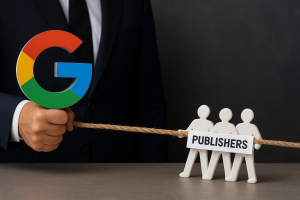
Raptive filed the suit in the U.S. District Court for the Southern District of New York on October 17, 2025, alleging Google’s advertising empire has been running on what it calls “deceptive and illegal” practices.
The complaint accuses Google of exploiting its dominance in ad technology, acting at once as the auctioneer, the exchange, and even a buyer, to quietly game ad sales in its favor.
Raptive says Google ran secret programs that manipulated the prices advertisers paid and publishers earned, allowing Google to take a bigger cut from every ad sold.
What Raptive Says Google Did
Raptive’s complaint points to a series of programs with internal Google names that sound almost fictional: Project Bernanke, Minimum Bid to Win, and Enhanced Dynamic Allocation.
Each, according to the lawsuit, was part of a larger effort to bend auction results.
The suit says Project Bernanke let Google use inside information from past bids to outsmart rival exchanges and win impressions at artificially low prices.
Minimum Bid to Win allegedly set thresholds that forced competitors to overpay or lose. And Enhanced Dynamic Allocation gave Google’s exchange special access to publisher inventory, allowing it to undercut other buyers while appearing competitive.
Raptive says Google never disclosed these systems to publishers, even while claiming to operate “fair, transparent auctions.”
The Alleged Damage
The accusation is that Google’s internal systems let it pay publishers less than they deserved. Raptive argues this wasn’t a one-off issue but a pattern of self-dealing that pulled billions from the publishing ecosystem over several years.
According to the complaint, publishers lost significant revenue without realizing why, while Google profited from both sides of the market, the advertisers buying the space and the publishers selling it.
Raptive is seeking billions in damages, plus additional penalties under U.S. antitrust law, which could triple the total payout if the court finds Google guilty of monopolistic behavior.
Why This Case Matters
Ad revenue is the backbone of survival for many publishers. If the lawsuit’s claims hold up, it suggests years of lost income for the very businesses that keep the internet’s content alive, the news sites, blogs, and niche platforms that rely on fair ad competition.
The lawsuit also fits into a larger pattern.
The U.S. Department of Justice and several state attorneys general have filed their own suits against Google over similar practices.
Together, these cases represent a growing pushback against how Google’s control of the ad supply chain affects everyone from major media outlets to small creators.
What Could Happen Next
Antitrust lawsuits move slowly, and Google’s legal team is known for fighting hard.
Outcomes could include a settlement, new transparency rules, or even court-ordered changes to how Google’s ad exchange operates. But this case has real teeth; it seeks not just money but structural changes to break what Raptive calls a “rigged market.”
If Raptive wins, it could trigger broader reforms across the ad industry and finally give publishers a clearer view of how their inventory is priced and sold.
What Publishers Can Do Right Now
While the case moves forward, Raptive’s filing serves as a wake-up call. Publishers and advertisers can take steps to protect themselves today:
- Audit your ad setups. Check whether features like Enhanced Dynamic Allocation are active and whether they affect revenue.
- Use multiple ad exchanges. Don’t rely entirely on one provider — competition can reveal pricing gaps.
- Save your data. Keep detailed auction logs and revenue reports in case they become relevant later.
- Review contracts. Look for clauses that limit transparency or block you from comparing exchange performance.
- Join forces. Trade groups and collective actions can strengthen bargaining power for small publishers.
The Bigger Picture
Whether or not Raptive wins, this lawsuit shines a harsh light on how much control Google holds over online advertising. The case echoes what many publishers have suspected for years — that the system might be working against them in ways they couldn’t see.
It also signals that publishers are done accepting hidden mechanisms that decide their income. As more lawsuits surface, the ad industry may finally face the kind of scrutiny that forces lasting change.
Key Takeaways
- Raptive says Google manipulated ad auctions using secret programs that gave it an unfair advantage.
- The alleged result: publishers were paid less, while Google profited from both sides of the transaction.
- The lawsuit demands billions in damages and claims Google violated antitrust laws.
- If Raptive wins, the case could reshape how digital ads are bought and sold.
- Publishers can act now by auditing, diversifying, and documenting their ad operations.

Zulekha
AuthorZulekha is an emerging leader in the content marketing industry from India. She began her career in 2019 as a freelancer and, with over five years of experience, has made a significant impact in content writing. Recognized for her innovative approaches, deep knowledge of SEO, and exceptional storytelling skills, she continues to set new standards in the field. Her keen interest in news and current events, which started during an internship with The New Indian Express, further enriches her content. As an author and continuous learner, she has transformed numerous websites and digital marketing companies with customized content writing and marketing strategies.
