On Monday, San Francisco-based startup Perplexity AI announced something that could reshape the relationship between AI companies and traditional media: it will begin sharing search revenue with publishers.
The company confirmed that it has set aside a $42.5 million pool to compensate media outlets when their content is used to power its AI-driven browser and assistant.
Now, this raises questions, Is this the “peace offering” publishers have been waiting for? Or is it simply a strategic move by Perplexity to defend itself against growing lawsuits?
What Exactly Is Perplexity Proposing?
Perplexity’s plan, revealed in a blog post, introduces Comet Plus, a subscription service that not only offers users premium features but also ensures that publishers get a share of the revenue pie.

Here’s how it works:
- A $5 monthly subscription fee is charged to users who opt into Comet Plus.
- The money collected goes into a central fund.
- From this, publishers and journalists will be compensated whenever their content powers queries or is cited in responses generated by Perplexity’s AI.
This pool starts at $42.5 million but, as the company states, is “expected to grow over time” as subscriptions scale.
In Perplexity’s own words: “We are compensating publishers in the model that’s right for the AI age.”
For context, this comes at a time when AI companies are increasingly being accused of unfairly “scraping” or “copying” content from publishers without payment. So, on the surface, this looks like a bold step toward collaboration rather than confrontation.
Why Is This Important for Publishers?
The relationship between AI and media outlets has been anything but smooth. Large publishers—including the Wall Street Journal, The New York Times and Japan’s Yomiuri Shimbun have already filed lawsuits against Perplexity, accusing it of illegally copying and reproducing copyrighted material.
One lawsuit even claims that Perplexity’s “answer engine” is directly monetizing journalistic work without authorization, leaving publishers cut out of the financial loop.
So, when Perplexity announces a revenue-sharing model, it feels less like generosity and more like damage control. A strategic attempt to show goodwill and defuse mounting legal challenges.
But let’s not dismiss it too quickly. If executed well, this could genuinely shift the narrative. Imagine a future where publishers don’t see AI as a content thief, but as a new distribution channel—a place where their work continues to hold value and bring in revenue.
Is This a Disruption to Google’s Model?
Perplexity is often described as one of Silicon Valley’s hottest startups and some even call it a potential disruptor to Google. But here is the catch—Perplexity does not operate like a traditional search engine.
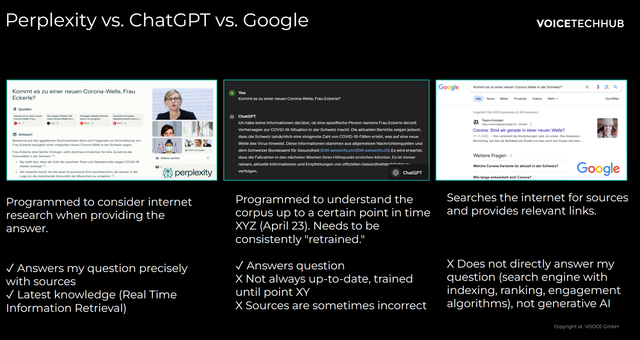
- Google’s Model: Shows links, ads and AI summaries, relying heavily on clicks for publishers to benefit indirectly.
- Perplexity’s Model: Presents ready-made answers directly on the results page, often making it unnecessary for users to click through to original websites.
From a user’s standpoint, this is fantastic and it saves time. But for publishers? It means fewer clicks, fewer ad impressions and less traffic. That is why lawsuits have piled up.
By introducing Comet Plus, Perplexity is essentially saying: “We know you’re losing clicks because of us but we will pay you directly instead.”
Is this disruptive to Google’s dominance? Perhaps. If Perplexity proves this model works, Google might be forced to consider similar publisher payouts in its Search Generative Experience (SGE) rollout.
How Much Money Is Actually at Stake?
Let’s put the $42.5 million figure into perspective.
- For large publishers like The New York Times, which generated nearly $2.5 billion in revenue in 2023, this may feel like a drop in the ocean.
- But for smaller news outlets, regional publishers or niche content creators, even a modest payout could make a difference in sustainability.
And let’s not forget, the pool is expected to grow as more users subscribe to Perplexity’s premium service. If Comet Plus scales like Netflix or Spotify once did in their early subscription phases, we could be talking about hundreds of millions in payouts down the line.
That said, I do wonder—will publishers really see this as fair compensation, or will they argue that Perplexity is simply paying pennies on the dollar compared to the value it extracts?
What About the Legal Battles?
It is impossible to discuss this without circling back to the lawsuits. Just last October, the Wall Street Journal and the New York Post filed legal actions against Perplexity, accusing it of free-riding on their work.
Perplexity’s response? It criticized publishers’ “adversarial posture,” calling it “shortsighted, unnecessary, and self-defeating.”
The company argued that publishers want to “own facts” and create toll gates around publicly reported information. “We should all be working together to offer people amazing new tools and build genuinely pie-expanding businesses,” it said.
Perplexity is now offering exactly what publishers wanted all along—compensation. It feels like a reluctant truce, one that might not erase existing lawsuits but could reduce hostility in the long run.
Will Users Pay for Comet Plus?
Another critical angle is user adoption. Will everyday users pay $5 per month for Comet Plus?
- On one hand, subscription fatigue is real. Between Netflix, Spotify and dozens of SaaS tools, another monthly charge might be a hard sell.
- On the other hand, if Perplexity positions Comet Plus not just as a premium AI service but also as a “support journalism” initiative, it could appeal to a new kind of digital consumer—one who values both cutting-edge AI and sustainable journalism.
It is not just about better features; it’s about the optics of “AI that pays back creators.” That narrative could resonate.
Could This Change the Future of AI and Media?
If Perplexity’s model works, it could inspire other AI companies to adopt similar publisher revenue-sharing models. Imagine:
- ChatGPT integrating a “publisher fund” to avoid backlash.
- Anthropic’s Claude adopting transparent content licensing deals.
- Even Google, despite its dominance, is being pressured to go beyond ad revenue sharing.
This could mark the beginning of an AI-media partnership era, where AI no longer threatens journalism but actively sustains it.
Yet, the risk is clear too. If payouts are too small, publishers will continue to litigate. If users don’t subscribe, the fund won’t scale.
And if lawsuits escalate faster than partnerships grow, Perplexity may find itself crushed between legal costs and business ambitions.
Peace Offering or Survival Strategy?
Honestly, I see this as both a peace offering and a survival strategy.
On one side, Perplexity wants to prove it’s not just a free-rider profiting off journalists’ work. On the other, it is trying to protect itself from lawsuits that could derail its rise as a Google challenger.
What we can’t deny is that this move forces the industry to confront a new reality: AI companies will need to share their success with the very publishers whose content fuels their answers.
For publishers, the real question is: will $42.5 million and whatever grows from it—be enough to keep the lights on in a world where fewer people click through to their websites?
And for users, maybe it is time to ask another question: when we enjoy AI-generated answers, are we also ready to support the journalists behind the scenes who make those answers possible?
Only time will tell. But one thing’s certain, the battle between AI and media is far from over and Perplexity just made its boldest move yet.

Dileep Thekkethil
AuthorDileep Thekkethil is the Director of Marketing at Stan Ventures, where he applies over 15 years of SEO and digital marketing expertise to drive growth and authority. A former journalist with six years of experience, he combines strategic storytelling with technical know-how to help brands navigate the shift toward AI-driven search and generative engines. Dileep is a strong advocate for Google’s EEAT standards, regularly sharing real-world use cases and scenarios to demystify complex marketing trends. He is an avid gardener of tropical fruits, a motor enthusiast, and a dedicated caretaker of his pair of cockatiels.
