2025 transformed SEO as Google moved deeper into an AI-first search experience. AI Overviews, growing personalization, and new ad placements changed how visibility works, making context, expertise, and meaningful content more important than rankings alone.
If 2024 felt like search was evolving, then 2025 proved it was changing for real.
This was the year AI stopped being an add-on and became the lens through which Google understands content, intent, and visibility.
Rankings meant less, context meant more, and SEOs had to rethink what “winning” in search actually looks like.
Here are the five stories that defined SEO in 2025—the breakthroughs, the frustrations, and the lessons that will shape how we work in 2026.
1. Google I/O 2025 shifted SEO from rankings to AI-powered answers
At Google I/O 2025, it became clear that search is no longer just about competing for the top position on a results page.
With Gemini-powered AI Mode and expanded AI Overviews, Google now breaks queries into smaller topics, layers of meaning, and conversational follow-ups.
Instead of simply matching keywords, the system tries to understand what a user really wants and then assembles answers from the most contextually relevant sources.
For SEOs, that changed the goal completely.
Instead of asking how to rank first, the real question became how to create content that AI recognizes as the most useful and trustworthy answer. That means writing with depth, structuring topics clearly, strengthening semantic relationships, and showing genuine expertise rather than relying on thin or paraphrased AI content.
The experience became smarter and more helpful for users, but it also meant that organic visibility now exists in a much more competitive and limited space.
2. The llms.txt noindex discussion reminded everyone that technical SEO is also about clarity
One of the more practical lessons of the year came when John Mueller suggested adding a noindex header to the llms.txt file.
It would only be duplicate content if the content were the same as a HTML page, which wouldn’t make sense (assuming the file itself were useful). That said, using noindex for it could make sense, as sites might link to it and it could otherwise become indexed, which would be weird for users.
— John Mueller (@johnmu.com) July 21, 2025 at 2:45 PM
Some websites noticed that this file was appearing in search results simply because other sites linked to it, even though it offers no real value to users.
While it doesn’t hurt rankings, it can clutter branded search results and create unnecessary noise in reports.
The recommendation was not about hiding information or stopping AI tools. Instead, it highlighted the fact that technical SEO is part of user experience.
Keeping search results clean, intentional, and meaningful helps protect brand credibility.
Adding a noindex header keeps the file available for future AI use while preventing it from showing up where it doesn’t belong, a small but thoughtful example of maintaining a tidy and professional search presence.
3. Personalization increased, and rankings stopped feeling universal
Throughout 2025, many marketers noticed that search results were becoming less consistent across users.
People began seeing differences between logged-in and anonymous searches, and prior browsing behavior seemed to influence what appeared on the page. Even when Google downplayed deep personalization, the reality felt more nuanced.
Instead of one fixed ranking for everyone, results started behaving more like individualized experiences shaped by context and behavior. That made search more relevant for users, but it also made measurement and reporting much harder for businesses.
Performance became more fragmented, tracking became less predictable, and engagement signals, such as how users interact with content, started to matter more.
SEO moved further away from being a static ranking exercise and closer to an experience-driven discipline.
4. AI Overviews appeared in more searches and reduced top-of-funnel clicks
A major Ahrefs study showed that AI Overviews appeared in more than half of all search queries, especially informational ones such as “what,” “how,” and “why.”
These AI summaries often pulled content from authority-driven platforms like Reddit, Wikipedia, YouTube, Quora, and expert sources, which reflects Google’s preference for depth, credibility, and discussion-based knowledge.
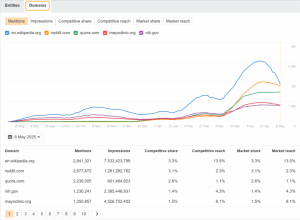
However, this shift came with a trade-off. When AI Overviews appeared, many websites experienced fewer clicks because users could find what they needed directly in the search results.
For brands, that meant success was no longer just about ranking well — it was about earning visibility inside the AI summary itself.
Content now needs to be comprehensive, expert-led, and structured for conversational, multi-layered queries.
Users benefited from faster answers, but websites felt the impact of thinner top-funnel traffic.
5. Google blended ads more deeply into search results
Another meaningful shift happened in how ads were displayed. Instead of appearing only at the top or bottom of the page, ads increasingly blended into organic sections, sometimes appearing between high-ranking results.
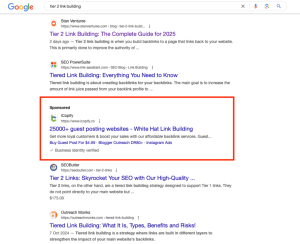
Google positioned this change as a way to improve relevance and reduce “ad blindness,” but it also blurred the visual distinction between paid and organic content.
For advertisers, this meant more visibility and often more engagement, although it may also lead to higher costs as competition increases. For businesses relying on organic traffic, it meant less available space and greater pressure to compete. And for users, it raised ongoing questions about transparency and trust.
The broader message is that SEO and paid search now operate more closely together, and brand strength, authority, and credibility matter more than ever in crowded result pages.
What 2025 Ultimately Taught the SEO World
If there was one lesson that defined SEO in 2025, it was that success is no longer about ranking pages; it is about creating substance and relevance that truly help users.
Search became more conversational and increasingly guided by how AI evaluates context and intent, rather than simple keyword matching.
The brands that performed best were the ones that invested in thoughtful content, stronger topical depth, and a clear sense of purpose instead of shortcuts or high-volume publishing.
Yes, the year brought its challenges, as informational clicks declined, measurement became harder, and visibility increasingly depended on how AI chose to surface content. At the same time, it was also a year that rewarded genuine quality.
High-trust content, credible voices, and well-structured insights began to stand out in ways automation alone couldn’t replicate.
SEO didn’t disappear in 2025. It matured into a more strategic, human-focused practice where relevance, trust, and clarity matter just as much as rankings.

Zulekha
AuthorZulekha is an emerging leader in the content marketing industry from India. She began her career in 2019 as a freelancer and, with over five years of experience, has made a significant impact in content writing. Recognized for her innovative approaches, deep knowledge of SEO, and exceptional storytelling skills, she continues to set new standards in the field. Her keen interest in news and current events, which started during an internship with The New Indian Express, further enriches her content. As an author and continuous learner, she has transformed numerous websites and digital marketing companies with customized content writing and marketing strategies.