
Elizabeth Reid, VP and head of search at Google, sat for a candid hour-long conversation with Bloomberg’s Odd Lots podcast, hosted by Joe Weisenthal and Tracy Alloway.
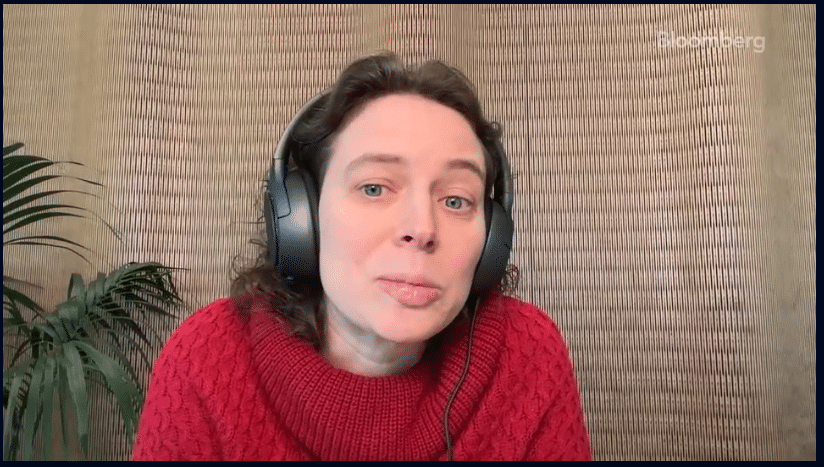
It was not a carefully scripted press release.
It was a business journalist pushing Google’s most senior search executive on the questions the entire industry has been debating for two years.
What happens to ad revenue when people stop clicking.
Whether Google can build the thing that threatens itself.
Who ends up owning search in a world increasingly mediated by AI.
Reid has been at the company for more than two decades, witnessing multiple technology transformations in that time.
She arrived with answers that were more specific than what executives at her level usually offer in public.
Here is what she said and why every SEO agency needs to understand it.
Google Has Been Doing AI for 20 Years
The first thing Reid pushed back on was the framing that AI in search is a new development.
She walked through a timeline that most of the current discourse conveniently skips.
Spell correction in the early 2000s was AI.
RankBrain arrived in 2015 and was later confirmed as the third most important ranking signal.
BERT deployed in 2019 and was applied to 100% of English queries.
Each of those was a fundamental rebuild of how search understood language.
The current period, with AI Overviews and AI Mode, is more visible to users than the earlier transitions.
But it is not the first time Google’s ranking systems were rebuilt from the ground up around new AI capabilities.
The team that built those earlier transitions is the same team running this one.
That institutional experience is something no competitor can replicate quickly.
And it is one of the reasons Alphabet’s stock did not go where the ChatGPT-will-kill-Google bears expected it to go.
The Most Important Shift Nobody Is Talking About
The section of the interview with the highest practical value for agencies and content teams was Reid’s explanation of what AI Mode has actually done to query structure.
It is not just that queries are getting longer.
It is that users have stopped pre-compressing their real intent into keyword shorthand.
Reid used a restaurant example to make this concrete.
A user who wants a restaurant for five people, one of them vegan, two kids, not expensive, in a specific neighborhood on a Saturday evening would historically type “restaurants New York.”
The gap between the actual need and the submitted query was enormous.
It existed because users had learned, through years of experience, that search engines could not handle specificity.
They had internalised the system’s limitations and filtered their own questions down to what a keyword engine could process.
Now, with AI Mode, they can express the full question. “They tell you the real problem. They don’t take their need and translate it into what the computer understands. They try to give the computer their actual need and expect us to do the translation.”
For most of search history, the cognitive work of query formulation fell on the user.
AI Mode moves that translation burden to the machine.
The user asks what they actually want to know.
What this means for SEO teams is significant.
Keyword research built entirely on short-form head terms is increasingly measuring a behavior that fewer and fewer users are actually performing.
The queries that matter are getting longer, more specific, and more intent-rich.
Content that is structured to answer a whole problem, not just target a single keyword, is the content that performs in this environment.
Why Google Is Showing More AI Overviews — And Why It Sometimes Does Not
One of the clearest explanations Reid gave was on the question of when Google chooses to deploy an AI Overview and when it does not.
The question came from Tracy Alloway, who noticed that searching “Corgi” returns a list of links while searching “What is a Corgi?” returns an AI Overview.
Reid confirmed the question mark is not doing the work.
The actual signal is whether the AI Overview adds value, as measured by user behavior. “We basically learn over time based on user signals, the same way we learn about when should you show the weather one box and when should you show local results.”
A bare keyword like “Corgi” suggests navigation intent.
Most users searching that term want pictures or breed pages.
An AI summary would add nothing and might displace the content they were trying to reach.
A question form signals inquiry intent.
The user wants an explanation.
An AI Overview reduces the effort of getting that answer without removing the ability to go deeper.
The implication for SEO is direct.
Informational content that triggers AI Overviews is not doomed.
It is the entry point to a citation.
And a citation inside an AI Overview currently drives a 35% higher click-through rate than ranking in the same position without one.
The goal is not to avoid the AI Overview.
The goal is to be the source it cites.
The Advertising Question Nobody Wanted to Ask Out Loud
Weisenthal pushed hard on the business model tension.
If users get their answers in the search results without clicking through to any website, what happens to the advertisers who depend on clicks.
Reid’s answer acknowledged the tension without deflecting it.
She pointed to what she called an expansionary moment in query volume.
The argument is that a significant number of questions people have are never asked because the person judges the effort of searching not worth the expected quality of the answer.
Reid described it directly: “There’s a whole bunch of curiosity that is people are not exploring, and they’re not exploring because they view it as too difficult or too much time.”
AI lowers that threshold.
Questions that would never have been searched before now get asked.
That growth in total query volume creates new advertising surfaces even as individual queries become less click-dependent.
AI Mode queries also run two to three times longer than traditional search queries.
The density of commercial intent in those longer queries is substantially higher than in a two-word keyword.
A user who tells Google they want a restaurant for five people on a Saturday evening in a specific price range has given advertisers a signal far richer than “restaurants New York” ever could.
The advertising opportunity in AI search is not smaller.
It is more precise, more contextual, and more expensive to buy per impression than what existed before.
The Web Is Not Dying — But What It Needs to Do Is Changing
Reid made a point that deserves more attention than it has received.
She believes the web is not dying.
She believes original, useful, experience-based content still matters enormously because AI systems need real sources to synthesize from.
A web full of nothing but AI-generated summaries would give AI nothing original to cite.
The value of being a primary source, a site that produces original research, original data, and genuine firsthand expertise, has not decreased.
It has become the prerequisite for being cited by AI systems at all.
Sites that have spent the last two years publishing commodity content, generic summaries of things already written everywhere else, are the ones losing ground fastest.
Sites that publish original data, real expertise, and structured content that AI systems can extract from and attribute clearly are the ones holding their position.
This is exactly what understanding what Google actually wants from content in 2026 means in practice.
E-E-A-T, which stands for Experience, Expertise, Authoritativeness, and Trustworthiness, is not a checklist.
It is a description of the kind of source that survives in an environment where AI decides what gets cited and what gets skipped.
What This Means for Agencies Right Now
Reid’s interview was not aimed at SEO practitioners.
It was aimed at Bloomberg’s audience of investors and economists.
That context made it more useful for anyone trying to understand the commercial logic behind Google’s product decisions, not just the product features themselves.
Three things came through clearly.
First, Google is not trying to reduce the web’s role in search.
It is trying to raise the quality threshold for what earns a place in it.
Second, the shift to longer, intent-rich queries is not a temporary experiment.
It is a permanent change in how users relate to search interfaces, and it is accelerating.
Third, the advertising model is not breaking.
It is restructuring around higher-intent signals in conversational interfaces, which creates significant opportunity for brands that build genuine authority and are structured to appear inside AI-generated responses.
The question for every agency right now is whether your clients are building for the environment Reid described, or still optimizing for a version of search that is already fading.
Building content that earns AI citations through structured answers, original data, and genuine expertise is no longer an advanced tactic.
It is the baseline for staying visible in the search environment Google’s head of search just described on live audio to a global audience.
And making sure that content is backed by the kind of authority-building link profile that signals trustworthiness to both Google’s ranking systems and its AI citation systems is what separates brands that survive this transition from those that quietly disappear from it.
The interview ran for 51 minutes.
Liz Reid spent most of it explaining, with more candor than usual, exactly how Google sees the next chapter of search unfolding.
The agencies that pay attention to what she said will be the ones who can explain it to their clients before the traffic charts tell the story for them.

Deepan Paul
AuthorDeepan Paul is a Team Lead of the Internal Marketing Department at Stan Ventures, with four years of experience helping brands recover, grow, and hold on to organic traffic across global B2B, B2C, and D2C markets. He's known as a ranking revival expert. When traffic drops, pages fall out of the index, or visibility disappears after an update, he finds the cause and fixes it. Today he runs Stan Ventures' own organic presence, and that goes well past Google. He tracks and grows how the brand shows up in AI Overviews and across AI tools like ChatGPT, Perplexity, and Gemini, where citations decide who gets mentioned and who doesn't. His work covers technical SEO, content strategy, indexing, and building growth systems that hold up when algorithms shift. He has managed international clients and led cross-functional teams, keeping every SEO decision tied to what the business actually needs. Outside of client work, Deepan trains SEO professionals, speaks at industry events, and contributes insights to digital marketing publications. His approach is simple: build systems that keep working, instead of chasing quick wins.
