A new study suggests marketers may be overthinking how to structure pages for Google AI Mode, as evidence shows the system does not care where information sits on a page.

As Google rolls out AI Mode in the UK, marketing teams thinking about AI SEO are scrambling for answers. How should content be structured? Does page layout matter? Is there a new set of rules for being cited by AI answers?
According to research from SALT, the answer to most of those questions is simpler than many would like.
The study finds no meaningful link between page structure and visibility in Google AI Mode, undermining a fast-growing market of AI-focused templates and optimization advice.
Why Salt Decided To Test Common AI SEO Advice
Search the web for guidance on “optimising for AI search” and a familiar theme appears again and again. Put key information above the fold. Use specific layouts. Follow AI-friendly templates.
SALT wanted to see whether any of this advice actually holds up. Rather than testing every possible layout or design element, the team focused on one clear and measurable claim. That content placed near the top of a page is more likely to be surfaced by AI Mode.
If that claim were true, marketers could justify reshaping pages around it. If not, it would suggest a lot of current advice is built on assumptions rather than evidence.
How The Research Was Carried Out
The study analyzed 2,318 unique URLs that had already appeared in Google AI Mode responses for high-value queries across travel, e-commerce, and SaaS.
When AI Mode cited a page, it sometimes included a text fragment link. Clicking that link takes users directly to the exact passage AI pulled from the page. These fragments made it possible to measure how far down the page the cited content appeared.
Using a desktop Chrome setup with a standard viewport, SALT recorded the pixel depth of each highlighted fragment.
The team also noted page layouts and common elements such as hero sections, FAQs, and accordions to see if any patterns emerged.
What The Data Revealed
Here are the key insights drawn from the data, showing how Google AI Mode selects content based on relevance and structure rather than where information appears on the page.
-
Placement does not influence AI citations
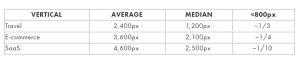
The clearest finding was also the most surprising for many marketers. Content buried deep within a page was just as likely to be cited as content near the top.
In the SaaS sector, cited passages typically appeared around 2,500 pixels down the page. In e-commerce and travel, they appeared even higher. Some outliers were found tens of thousands of pixels below the fold.
This is not a glitch or an anomaly. Google breaks pages into sections during processing and retrieves relevant fragments based on meaning, not position. AI Mode may look new, but the technology behind it has been in use for years.
- Layout changes depth, not visibility
Page design still affects how far users must scroll to reach information. A short FAQ page naturally surfaces answers earlier. A long-form article with large visuals pushes them further down.
What the data does not show is any preference from AI Mode for one layout over another. The variation in pixel depth reflects design choices, not an advantage baked into the AI system.
Even popular structural elements did not perform as expected. FAQs made up just over one percent of all citations, and most of those came from a single website. There was no broad signal that FAQs, accordions, or similar features attract AI attention.
- Headings still matter for navigation
One pattern did repeat across industries. AI Mode often selected a subheading followed by the sentence immediately beneath it.
This suggests that headings help the system move through a page and evaluate relevance quickly. Clear, descriptive subheadings combined with strong opening sentences make it easier for AI to identify useful sections.
That insight will sound familiar to experienced content teams. It reflects long-standing best practice rather than a new rule invented for AI search.
What This Means For Marketers And Seo Teams
The research challenges the idea that there is a special layout or template designed to win AI Mode citations. For large language models, visual design, markup, and formatting are stripped away before text is processed.
AI Mode also relies on the same core search systems that power traditional Google results. That means authority, relevance, and clarity still do the heavy lifting.
Teams chasing AI-specific shortcuts risk missing the bigger picture. Writing clear, trustworthy content that answers real questions remains the strongest approach.
Practical Ways To Apply These Findings
Instead of restructuring pages around speculative AI rules, teams should focus on fundamentals that serve both users and search systems.
Use subheadings that clearly describe what follows. Make the first sentence under each heading do real work. Add summaries near the top for readers who want a quick answer, not because AI demands it. Break complex topics into focused sections that stand on their own. There is no proven AI-optimised template
Most importantly, invest in subject knowledge and accuracy. AI Mode pulls from content it trusts and understands, regardless of where that content sits on the page.
Key Takeaways
- Google AI Mode does not favour above-the-fold content.
- Page layout affects scrolling, not AI visibility.
- Clear subheadings help AI navigate content.
- There is no proven AI-optimised template.
- Strong content fundamentals still outperform design tricks.

Zulekha
AuthorZulekha is an emerging leader in the content marketing industry from India. She began her career in 2019 as a freelancer and, with over five years of experience, has made a significant impact in content writing. Recognized for her innovative approaches, deep knowledge of SEO, and exceptional storytelling skills, she continues to set new standards in the field. Her keen interest in news and current events, which started during an internship with The New Indian Express, further enriches her content. As an author and continuous learner, she has transformed numerous websites and digital marketing companies with customized content writing and marketing strategies.