Around January 21, 2026, Google Search rankings experienced one of the sharpest volatility spikes seen since the December core update, strongly indicating an unconfirmed algorithmic change that disproportionately affected self-promotional listicles, weak review content, and large-scale AI-generated pages.
Between January 20 and January 21, nearly every major SERP tracking platform recorded abnormal movement.
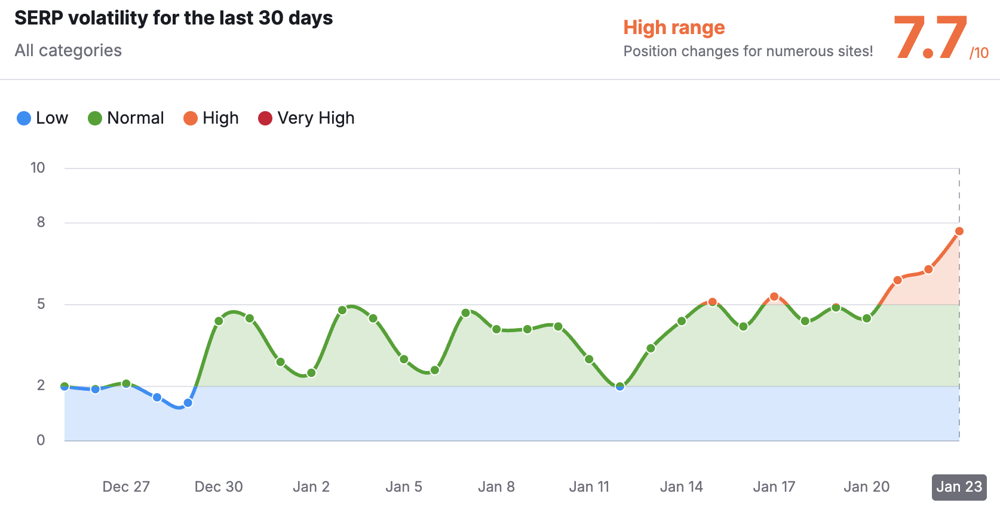
SEMrush Sensor surged into the high 7 range on a 0–10 scale, far outside its normal fluctuation band. MozCast registered temperatures above 115°F, a level typically associated with major ranking reshuffles rather than routine tuning. Algoroo, Sistrix, AccuRanker, and SimilarWeb reflected the same pattern within the same 24-hour window.
SEMrush Sensor volatility around late January 2026, with a clear spike on Jan 21:
MozCast “algorithm temperature” (December 2025 – January 2026) showing an extreme spike (~116°F) on Jan 21:

Google made no announcement. There was no confirmed core update, spam update, or reviews update. Yet the alignment across tools, combined with sustained ranking losses reported by site owners, ruled out normal volatility.
Why This Was Not Random Turbulence
The impact was uneven, and that unevenness is the most important clue.
Sites that lost visibility shared specific traits. Many had invested heavily in blog-driven SEO rather than product or service pages. The hardest-hit sections were often resource hubs filled with “best X” or “top tools” articles where the publisher ranked itself first.
According to Lily Ray’s analysis, visibility losses of 30% to 50% were common, while core commercial pages on the same domains frequently remained stable.
At the same time, Glenn Gabe documented a related pattern. Sites that had rapidly expanded with AI-generated content experienced dramatic ranking surges followed by sudden collapses around January 21.
Yes, IT’S HAPPENING! With the latest volatility, Lily saw a bunch of sites dropping, but it was their blog content dropping heavily. And when digging into that, there were self-serving listicles all over the place. I have seen the same thing and have been digging in heavily with… https://t.co/HxKwl3VBFP
— Glenn Gabe (@glenngabe) February 3, 2026
He described this repeated rise-and-fall behavior as a predictable outcome of publishing volume without durable quality signals.
These were not isolated cases. The same behaviors appeared across multiple industries and domains.
The Review Problem Google Appears To Be Correcting
Several observers independently reached the same conclusion: the volatility behaved like a tightening of review and trust evaluation.
Lily Ray described the update as unusually severe and ongoing, noting that affected sites continued to decline days after the initial hit. She pointed to AI-assisted content, self-promotional rankings, and thin informational pages as common traits among losers.
Glenn Gabe suggested the change resembled a review system update, even if Google never labeled it as one. He also raised the possibility that this was part of Google’s shift toward continuous adjustments rather than discrete updates, meaning ranking reassessments may now happen more frequently and with less public signaling.
Yep, that was a big unconfirmed update. Looked like a reviews update to me, but could also be part of Google moving towards continuous updates. I shared about that the other day. Regardless, many sites dropped with that update… Here’s another. https://t.co/FLkl6v3jv5
— Glenn Gabe (@glenngabe) February 23, 2026
Barry Schwartz’s reporting reinforced both views, noting that January had already seen multiple smaller volatility waves before the much larger movement on the 21st.

[Source: Search Engine Roundtable]
How This Differs From A Broad Core Update
This did not look like a sitewide quality reset.
Recent core updates have tended to affect a wide range of industries, with pronounced effects in health, finance, and major publishing verticals. The January 21 volatility was more selective. It targeted specific content structures and monetization tactics rather than entire domains.
Older sites with a clear topical focus and long-standing authority appeared more frequently at the top of results after the shake-up.
Newer sites built around aggressive publishing velocity struggled to maintain gains. That contrast suggests refinement of existing systems rather than a wholesale redefinition of quality.
The AI Connection That Cannot Be Ignored
While no direct confirmation exists, the timing matters.
Google is increasingly surfacing AI-generated answers that rely on indexed content as input. That raises the stakes for what remains in the top positions.
Allowing biased listicles or lightly edited AI pages to rank well creates downstream problems for AI-driven search features.
Several analysts noted that cleaning up review and comparison content improves not only classic search results but also the reliability of AI outputs that draw from those rankings. The January changes align closely with that incentive.
What This Means For Publishers Right Now
The sites that held their ground shared a few consistent practices.
They separated marketing claims from editorial content clearly. Their reviews explained methodology and limits. Their AI use was controlled and supported by human oversight. Most importantly, their content answered real questions rather than manufacturing pages to occupy keywords.
By contrast, sites that treated search as a distribution hack rather than a trust system paid a visible price.
Actions Worth Taking Before The Next Wave
Here are steps that can help reduce exposure and clarify where real risk sits before further changes roll out.
- Audit “best of” and comparison pages first. If a page loses credibility the moment a reader realizes the publisher benefits financially from the ranking, it is exposed.
- Reduce reliance on templated AI pages. Fewer pages with a clearer purpose tend to perform better than large libraries built on repetition.
- Evaluate content sections independently. January data showed that blogs and guides can decline sharply even when product pages remain stable.
- Track changes calmly. Several sites worsened their situation by reacting too quickly instead of identifying which sections were actually being re-evaluated.
What January 21 Tells Us About What Comes Next
This event fits a pattern that is becoming harder to ignore. Google appears to be moving toward frequent, targeted adjustments that refine trust signals without formal announcements.
For site owners, that means fewer clear update names and more ongoing scrutiny. The upside is predictability. The same behaviors that failed on January 21 are unlikely to succeed in future iterations.
Key Takeaways
- January 21 showed extreme volatility across all major tracking tools.
- Self-promotional listicles and weak review pages were hit hardest.
- AI-driven content spikes proved unstable without strong oversight.
- Established authority offered meaningful protection.
- Ongoing, unannounced adjustments appear increasingly likely.

Zulekha
AuthorZulekha is an emerging leader in the content marketing industry from India. She began her career in 2019 as a freelancer and, with over five years of experience, has made a significant impact in content writing. Recognized for her innovative approaches, deep knowledge of SEO, and exceptional storytelling skills, she continues to set new standards in the field. Her keen interest in news and current events, which started during an internship with The New Indian Express, further enriches her content. As an author and continuous learner, she has transformed numerous websites and digital marketing companies with customized content writing and marketing strategies.