
Welcome to the 2026 Reality Check. For over a decade, the digital marketing industry marched to a single, unwavering beat: “Content is King.”
We operated under the assumption that if we built massive content mills, churning out endless 2,000-word blog posts for every conceivable “What is…” and “How to…” query, the traffic (and the revenue) would inevitably follow.
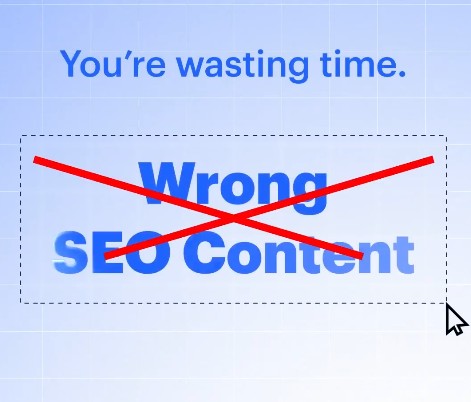
But as we navigate the landscape of 2026, the dictionary era of SEO is officially over. As industry pioneer Nathan Gotch recently highlighted in a provocative framework, the traditional content treadmill is no longer a viable moat; it has become a budget sinkhole.
You’re wasting your time creating SEO content pic.twitter.com/eZfDCH2BmD
— Nathan Gotch (@nathangotch) January 1, 2026
With Google’s AI Overviews (SGE) and ChatGPT Search now resolving upwards of 80% of informational queries directly within the search interface, top-of-funnel (ToFu) traffic has effectively plummeted into a zero-click abyss.
Users no longer need to click your link to learn the basics. The Large Language Model (LLM) gives them a synthesized, perfectly formatted answer in three seconds. The painful truth? Most brands are still wasting 80% of their marketing budget on content that AI summarizes for free.
SEO didn’t stop working, but its objective has fundamentally changed. In 2026, success belongs to brands that position themselves as the default commercial answer when AI needs to recommend a provider. We call this shift Commercial Rankability.
Step 1: Why “AI-Easy” Keywords Are a Silent ROI Killer
The primary reason most SEO strategies are failing today has nothing to do with writing quality. It is a fundamental mismatch between keyword intent and search reality.
An “AI-easy” keyword is any query a large language model can fully answer without referencing a specific brand, a local provider, or real-world experience. Queries like “Benefits of cloud migration” or “How does remote heart monitoring work?” fall squarely into this category.
By 2026, this behavior is measurable: tech, finance, and healthcare websites still rank for these terms, but their click-through rates (CTR) have collapsed because AI resolves the query before the user ever reaches the organic results.

In this environment, search intent has split into two distinct layers:
- Resolution Intent: The user wants an explanation, definition, or basic instruction. (AI dominates this).
- Decision Intent: The user is evaluating options, providers, or complex outcomes.(Brands still dominate this).
For example, “What is B2B payments automation?” is entirely solvable by AI. However, “B2B payments API implementation for global cross-border transactions” is not. The latter requires pricing context, delivery models, and proof of execution. To answer this, AI must cite real, authoritative sources.
The 2026 Rule: If an AI can answer the query completely without sending a click, that keyword should not be the center of your growth strategy. Informational content still supports topical authority, but it no longer deserves primary budget allocation.
Step 2: The Commercial Pillar is the New Core SEO Asset
Once “AI-easy” keywords are deprioritized, your strategy becomes leaner and exponentially more effective. At the heart of a high-performing 2026 SEO strategy is the Commercial Pillar Page.
This is not a generic service overview. It is a page engineered to rank for high-intent queries, convert qualified traffic, and be cited by AI systems as a trusted provider.
Examples include “Enterprise workflow automation for logistics companies” or “Specialized cardiology clinics in Austin for heart valve replacement.” These queries indicate a readiness to engage, not casual research.
What separates a high-performing commercial pillar from a legacy page is Rankability. In 2026, a rankable page must demonstrate:
- Target Precision: A clear definition of who the service is for (e.g., “Best for Series B SaaS Startups”).
- Problem-Solution Alignment: Explicitly tied to real-world use cases (e.g., “Solving low-latency data sync in hybrid clouds”).
- Engagement Transparency: Clear pricing signals, implementation timelines, or “next step” workflows.
- Trust Anchors: Deep-dive case studies, live industry certifications (ISO, SOC 2), and verified client outcomes.
AI search systems are no longer asking if a page contains keywords; they are asking if the page represents the safest commercial choice. By using precise service language and Natural Language Processing (NLP) optimized terminology, you make your brand easier for AI agents to classify and recommend.
Step 3: The “Solar System” Strategy – Why One Page Can’t Rank Alone
A common failure point in modern SEO is assuming a strong service page can rank in isolation. In 2026, algorithms evaluate topical ecosystems, not individual URLs.
Your Commercial Pillar must be surrounded by supporting assets, a “Solar System” of content. We advocate for the 10:1 Rule: for every 1 Commercial Pillar, you need 10 Supporting Assets that funnel “Equity” and “Relevance” back to the core through internal links and backlinks.
Internal Linking 2.0
Internal linking in 2026 is about descriptive, entity-based anchors. Your supporting assets must include things AI cannot fake:
- Original Data: “We analyzed 1.2 million B2B transactions to identify 2026 payment trends.”
- Execution History: “How we migrated [Specific Brand] to a headless architecture in 90 days.”
- Human-First Narrative: Content that uses an active voice (“We discovered,” “Our engineers solved”) rather than passive, generic “AI-speak.”
Backlink Building 2.0
When you build high-authority links to your supporting assets (the “Satellites”), you are increasing the “mass” of your entire cluster. As these sub-pages gain authority, they pass that power back to the Pillar through your internal entity-based links.
This creates Topical Gravity: the sheer weight of your authoritative sub-topics makes your Commercial Pillar the “mathematically inevitable” winner for high-intent searches.
How to Execute: The 3-Step Satellite Link Workflow
- Identify the “Power Satellites”: Look at your 10 supporting assets. Which ones contain Proprietary Data or Unique Case Studies? These are your “Link Magnets.” It is much easier to secure a high-authority niche edit for a research paper than for a “service” page.
- Target “Aged Authority” Pages: Stan Ventures specializes in finding existing content on high-DR sites that is already ranking for secondary terms. We “edit” your link into these pages using Entity-Anchors (e.g., instead of linking “best SEO,” we link the phrase “2026 search behavior data”).
- The Authority Funnel: Once that Satellite asset receives the “jolt” of PageRank from the Niche Edit, the internal links you built in Step 3 (Action Item #4) automatically funnel that power directly into your Commercial Pillar
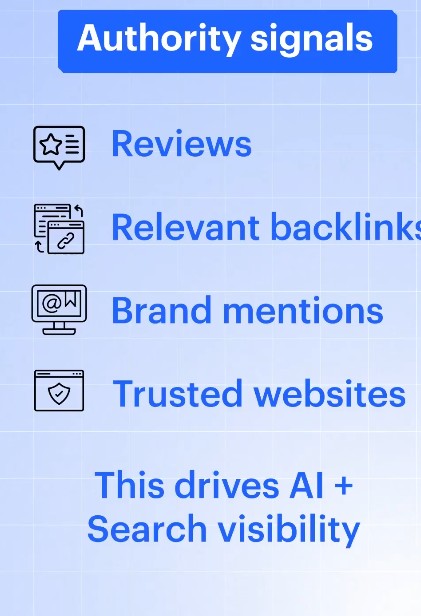
AI systems prioritize first-party experience. They cannot invent execution history; they must cite it. Internal linking and backlink building ties this ecosystem together, creating “topical gravity” that makes your Commercial Pillar unshakeable.
Step 4: The 20/80 Content Budget Reality
If your SEO strategy still spends 80% of its resources on writing new content, you are optimized for 2023. In 2026, the Pareto rule applies aggressively: 20% of your budget goes to creation; 80% goes to making it rankable.
That 80% is invested in:
- Promotion & Backlinks: AI prioritizes brands with real industry validation. Niche-relevant brand mentions and contextual links from authoritative industry journals are the only signals AI cannot easily fabricate.
- Content Refreshing: Up-to-date data, current pricing models, and updated tech specs keep your pages aligned with AI “freshness” requirements.
- Technical & Schema Infrastructure: Schema is no longer “technical SEO”; it is your AI communication infrastructure. Without structured data mapping your entities, you are invisible to AI agents.
Stan Ventures’ Blueprint for 2026 Success
As AI moves from answering questions to shaping decisions, SEO must evolve into Search Everywhere Optimization. Visibility in 2026 depends on whether AI systems can clearly understand, trust, and recommend your brand across all conversational and search interfaces.
Stan Ventures delivers Managed AI SEO Services built specifically for this shift. Our approach replaces content-heavy maintenance with high-intent Rankability Hubs that AI systems can interpret, validate, and surface at the moment of decision.
- Commercial Intent focus: We eliminate “AI-easy” keywords that drain your budget without driving deals.
- Managed Trust Signals: We build authority through verified, niche-relevant brand mentions that AI treats as legitimacy indicators.
- Compressed Funnels: We ensure your brand is visible where decisions are made, not just where searches begin.
Stop Wasting Time, Start Ranking
If your strategy looks like it did three years ago, you’re already invisible. The shift to Commercial Rankability is the only way to survive the AI-driven consolidation of the SERPs.
Is your website “Rankable” for 2026? Stop donating your budget to AI summary machines. Get a Free Audit from Stan Ventures today and claim your edge in the age of commercial intent.

Dipti Arora
AuthorDipti Arora is a Senior Content Writer with over seven years of experience creating impactful content across Digital Marketing, SEO, technology, and business domains. She has a strong background in managing news verticals and delivering editorial excellence. Dipti has contributed to leading publications such as The Times of India and CEO News, where her research-driven storytelling and ability to simplify complex subjects have consistently stood out. She is passionate about crafting content that informs, engages, and drives meaningful results.
