The latest episode of SEO on Air by Stan Ventures brought together two agency leaders with very different journeys but one strikingly similar lesson.
In SEO, success depends less on flashy tools and more on niching down, listening to clients, building transparent processes and adapting to AI-driven search and AEO.
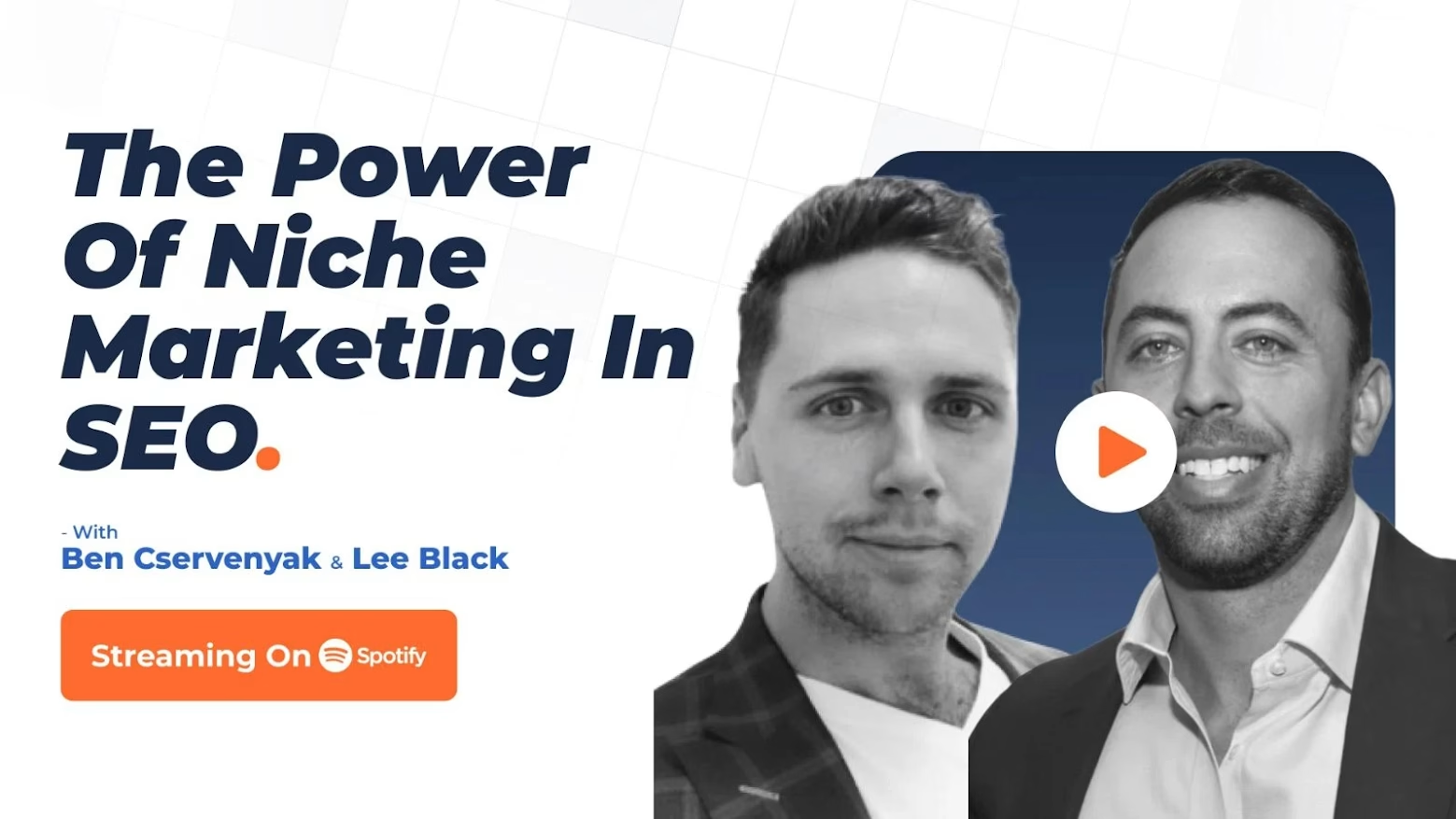
The roundtable featured Ben Cservenyak, Founder and CEO of Crown Point Media and Lee Black, Owner of Antilles Digital Media.
Over the course of their conversation, they unpacked how their backgrounds in banking, IT and healthcare shaped the way they approach SEO today, and why agencies that fail to pivot often struggle to survive.
Who Were the Guests at SEO on Air?
The discussion opened with quick introductions:
- Ben Cservenyak, Crown Point Media
Ben’s story started in banking and IT before he launched Crown Point Media, an agency now specializing in SEO for small to mid-sized businesses.
His client base spans law firms, e-commerce, music venues, and home services. His focus: refining repeatable SEO and CRO systems that can scale across industries.
- Lee Black, Antilles Digital Media
Lee’s path was deeply personal. After losing a family friend to overdose, he left banking to start his own substance abuse treatment facility.
When COVID halted in-person outreach, he ranked his facility online and soon found other centers reaching out for help. Today, he works with over 80 facilities across the U.S., providing SEO and consulting services to addiction treatment and recovery clinics.
Two founders from very different industries, yet both arrived at SEO through real-world challenges rather than marketing degrees or traditional routes.
What Do New Agency Owners Wish They Knew Sooner?
Aaron’s opening question was simple yet powerful: “When starting out, what’s something you wish you had known?”
Ben’s answer was quick: “Your first plan is never your last plan.”
Think about that for a moment. How often do we lock ourselves into a business plan, believing it’s bulletproof, only to discover reality forces us to constantly tweak?
For Lee, the answer was all about niching down. Early on, he tried to help “any business that needed SEO.”
But soon, he realized being a jack of all trades meant being a master of none. By focusing on rehab facilities, he not only spoke the same language as his clients but also built a competitive SEO advantage.
For example using interlinked websites within the same industry to cut down backlink costs.
It raises a self-question: Am I spread too thin across audiences or is my focus sharp enough to stand out?
Why Is Niching Down So Critical in SEO?
The discussion kept circling back to niching but why?
Lee explained it well:
“When you run multiple websites in the same industry, you start to understand their pain points, create relevant content, and even cross-use backlinks.
Most importantly, you stop being just a ‘vendor’ and become a trusted partner who speaks their language.”
That is not theory but lived practice. In fact, many of Lee’s clients had worked with “big marketing agencies” before, only to walk away burned, paying premium prices for generic, cookie-cutter SEO.
His hyper-focus allowed him to rebuild that trust.
Ben agreed, adding that transparency and simplifying complex jargon are just as important.
As he put it: “Less is more. Don’t throw SEO lingo at clients—they don’t care about meta tags or CTR percentages. They want to know: does it work, and what’s my risk versus reward?”
So maybe the better question for all of us is: Are we speaking our client’s language, or just ours?
How Do Listening and Transparency Close More Deals?
The most striking part of the discussion was how both Ben and Lee described their sales process.
Lee broke it down:
“I’ve had clients come to me frustrated—they were getting decent results, but had no reporting, no calls, no clarity. I just listened, repeated their concerns back, and said: let’s make sure you get bi-weekly calls, CRM-linked reporting, and proactive updates. Their reaction? ‘Yes, that is exactly what I want.’ And then they sign.”
It is easy to overcomplicate sales. But what Lee highlights is simple: reflective listening + proactive transparency = trust.
Ben echoed this, emphasizing how long-term relationships matter more than quick wins.
“We are here to drive long-term success. That begins with listening. Clients don’t want buzzwords—they want clear plans, proof, and partnership.”
Let us pause here. How often do agencies truly listen vs. rush to pitch their process?
What Differentiates Successful Agencies from Cookie-Cutter Ones?
Aaron pressed both leaders on what sets them apart from “cookie-cutter agencies.”
- Ben’s differentiator: Process clarity.
His agency provides a week-by-week roadmap in the very first client meeting. It means no guessing, mystery and just accountability. - Lee’s differentiator: Industry fluency.
Because he owned a facility himself, he understands insurance codes, Medicaid billing and operational bottlenecks. That credibility opened new revenue streams and he now consults facilities on scaling, hiring and expanding beyond SEO.
Both agreed: cookie-cutter agencies fail because they sell generic services. Agencies that succeed offer proof, transparency and language clients understand.
Should Agencies Stay in Their Niche or Expand?
This was one of the most practical questions asked: Do you plan on expanding outside your niche?
Lee’s approach: let case studies open new doors. For example, after crushing results for a dental practice that owned 25 clinics, he is now branching into dentistry and using client testimonials and referrals as his proof.
Ben’s approach: gradual scaling with systems. Starting with law firms, his team has expanded into e-commerce and home services. The key? He said, was building a replicable system that works across industries.
The underlying theme? Expansion is not about chasing random clients. It is about using proof of success and scaling with discipline.
What Can Agencies Learn from This Discussion?
Listening to Ben and Lee, the core lessons are clear:
- Niche down strategically. Generalists get lost in the noise; specialists build authority.
- Simplify communication. Cut the jargon. Clients want results, not acronyms.
- Lead with transparency. Clear processes and reporting replace guesswork with trust.
- Listen first, pitch later. Reflecting client concerns often closes the deal faster than selling features.
- Build replicable systems. Expansion works only when your process scales predictably.
Or as Lee summarized:
“Every facility owner understands this: more clients, qualified leads, or your money back. Simple promises beat complicated pitches every time.”
Final Takeaway: What’s Next for Agencies Like These?
SEO agencies are everywhere but the ones that thrive in 2025 and beyond won’t just be the ones with the best keyword research tools or the flashiest dashboards.
They will be the ones that:
- Niche down strategically.
- Build relationships through listening.
- Maintain radical transparency.
- Create systems that scale across industries.

Dileep Thekkethil
AuthorDileep Thekkethil is the Director of Marketing at Stan Ventures, where he applies over 15 years of SEO and digital marketing expertise to drive growth and authority. A former journalist with six years of experience, he combines strategic storytelling with technical know-how to help brands navigate the shift toward AI-driven search and generative engines. Dileep is a strong advocate for Google’s EEAT standards, regularly sharing real-world use cases and scenarios to demystify complex marketing trends. He is an avid gardener of tropical fruits, a motor enthusiast, and a dedicated caretaker of his pair of cockatiels.
