
Google has begun rolling out a new “Sign in to customize” button inside the Top Stories section of Search, prompting logged-out users to sign in and select their preferred news sources.
If you spend any time searching for breaking news on Google, you know how prominent the Top Stories box is. It often sits at the very top of the page, serving up headlines within seconds of a major event.
Now, there is something new sitting inside that box.
Google has added a “Sign in to customize” button that appears when users are not logged into their accounts. Tap it, and Google invites you to sign in so you can choose preferred news sources that influence what shows up in Top Stories.
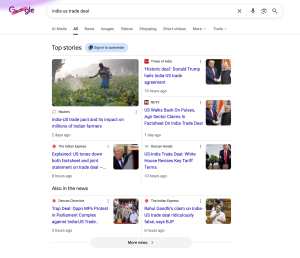
The change was first noticed by Sachin Patel and shared on X. Based on early observations, the update seems widely available, not limited to a small test group.
Google has made Preferred Sources available in Incognito mode, displaying a sign-up message for users @rustybrick @brodieseo @gaganghotra_ pic.twitter.com/Z1mGe5Pjeo
— Sachin Patel (@SachuPatel53124) February 10, 2026
Given the placement of Top Stories at the very top of many search results, the new prompt is hard to miss, especially during breaking news moments.
Top Stories has long served as Google’s fastest route to headlines, surfacing articles from multiple publishers within seconds of major events. Until now, however, logged-out users had little visibility into how personalization could affect what appeared there.
What Changes After Signing In
Once users tap the new button and log in, they are invited to select preferred news sources. Those selections influence which publishers are more likely to surface in Top Stories for that user.
Google has offered forms of news personalization before, but this update makes the option explicit and immediate. Instead of adjusting settings buried elsewhere, users encounter the choice at the exact moment they are consuming news.
It is a gentle nudge that says, “Tell us what you like, and we will show you more of it.”
Why Google Is Surfacing This Now
Google has long relied on personalization across its products. From YouTube recommendations to Discover feeds, the company has steadily encouraged users to engage with content that reflects their interests.
By adding a visible sign-in prompt directly inside Top Stories, Google is highlighting a benefit that many users may not have realized existed.
There are a few likely motivations behind the move:
- Increasing user sign-ins, which strengthens Google’s broader ecosystem.
- Giving users more control over their news consumption.
- Enhancing engagement by showing content from sources users are more likely to click.
From a business perspective, encouraging sign-ins also helps Google deliver more relevant advertising and better understand audience preferences. That said, the visible framing of this feature focuses on customization rather than data collection.
What This Means for Readers
For everyday users, this could be a meaningful shift.
If you often find yourself scrolling past sources you do not recognize or trust, selecting preferred publishers may create a more comfortable experience. You can prioritize outlets you rely on for accurate reporting, local coverage, or specific expertise.
At the same time, there is a trade-off worth considering. Personalization can improve relevance, but it can also narrow exposure. If you only see news from a small group of favored outlets, you may miss alternative perspectives or emerging voices.
Personally, I see value in using the feature thoughtfully. Choosing a mix of national, local, and perhaps even international sources can help maintain a broader view of events while still benefiting from customization.
Implications for News Publishers
The addition of user-selected preferences introduces a new factor into Top Stories visibility. Traditional signals such as freshness, authority, and technical performance still matter, but explicit user choice may now shape outcomes more directly.
Publishers with strong reader loyalty could benefit if audiences actively select them as preferred sources. For smaller or niche outlets, this creates an opportunity to compete on trust rather than scale alone.
At the same time, the change increases the importance of brand recognition. Being chosen requires that readers know who you are and value your reporting.
Search Continues to Evolve
This update fits a broader pattern in how Google Search is changing. The platform is moving away from a one-size-fits-all experience toward results shaped by individual preferences and behavior.
By embedding personalization inside Top Stories itself, Google is positioning Search as both an information tool and a customizable news hub. The shift is incremental, but the placement makes it significant.
Key Takeaways
- Google has added a “Sign in to customize” button to the Top Stories section.
- The feature encourages users to log in and select preferred news sources.
- The rollout appears to be global.
- Personalization may influence which publishers gain more visibility.
- Readers should balance customization with exposure to diverse viewpoints.

Zulekha
AuthorZulekha is an emerging leader in the content marketing industry from India. She began her career in 2019 as a freelancer and, with over five years of experience, has made a significant impact in content writing. Recognized for her innovative approaches, deep knowledge of SEO, and exceptional storytelling skills, she continues to set new standards in the field. Her keen interest in news and current events, which started during an internship with The New Indian Express, further enriches her content. As an author and continuous learner, she has transformed numerous websites and digital marketing companies with customized content writing and marketing strategies.
