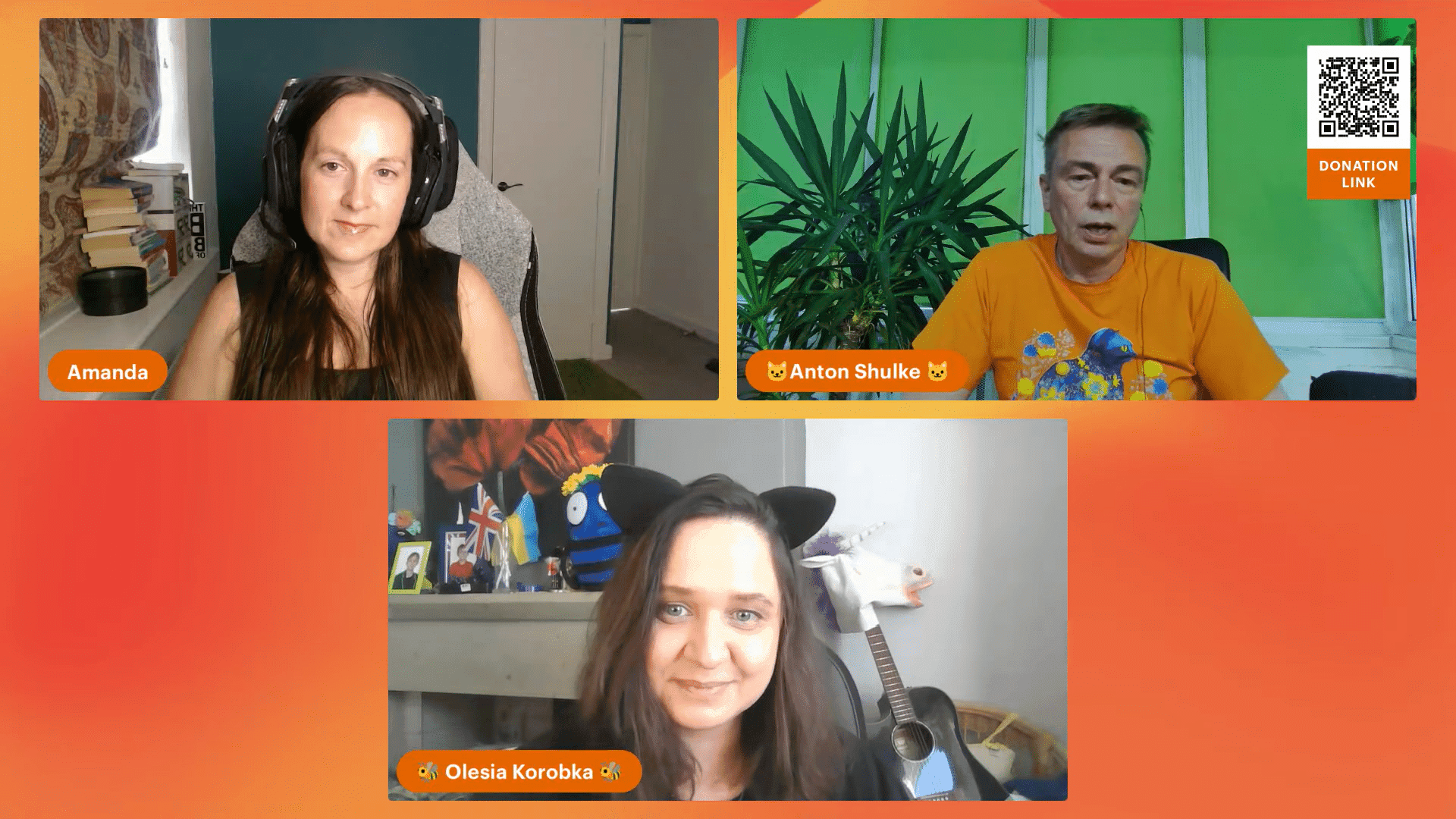
On a recent episode of the SEO Charity podcast, digital strategist Amanda Walls challenged conventional thinking about search engine optimization.
Walls, the founder of Cedarwood Digital, discussed prioritizing human connection and brand credibility in SEO, a strategy that is gaining traction among marketing professionals.
Central to this change is an age-old idea, Aristotle’s persuasion framework, revived as a means to influence not only rankings but also genuine customer behavior.
Instead of obsessing over algorithms and technical hacks, Walls urges businesses to focus on building authentic signals that reflect expertise, trust, and authority.
“SEO is more than just bringing in traffic,” Walls said on the podcast. “If people land on your site and don’t convert, you’ve lost the point. It has to be about value, trust, and results.”
Rethinking EEAT
Google’s EEAT signals (expertise, experience, authority, and trustworthiness) are widely discussed, but often misunderstood.
In a recent statement, Google’s John Mueller clarified that EEAT is not something that can be simply added to a site like a checklist. Walls agrees, suggesting that EEAT should be viewed as an outcome of meaningful actions, rather than a formula.
During the podcast, she explained how applying Aristotle’s three pillars of persuasion — ethos (credibility), pathos (emotion), and logos (reason) — can lead to stronger external signals, which Google interprets as indicators of a trustworthy brand.
Walls translates these principles into practical action: focus on reviews, thought leadership, emotionally resonant storytelling, and data-backed arguments that build trust with potential buyers.
Sales First, Rankings Later
SEO, Walls argues, must support business goals. That means moving beyond traffic reports and focusing on conversions, leads, and bottom-line growth.
In the olden days, many SEO efforts were driven just by metrics like backlink counts and keyword rankings. Walls says this focus is outdated.
A link is only helpful if it brings qualified traffic that results in action. Her approach is to view SEO through the lens of sales strategy, asking how each tactic contributes to customer acquisition.
Reputation Is the Real Metric
One of Wall’s main messages is the value of brand perception. She encourages businesses to treat their online reputation as a core part of their SEO strategy. This means regularly monitoring what’s being said, published, and reviewed.
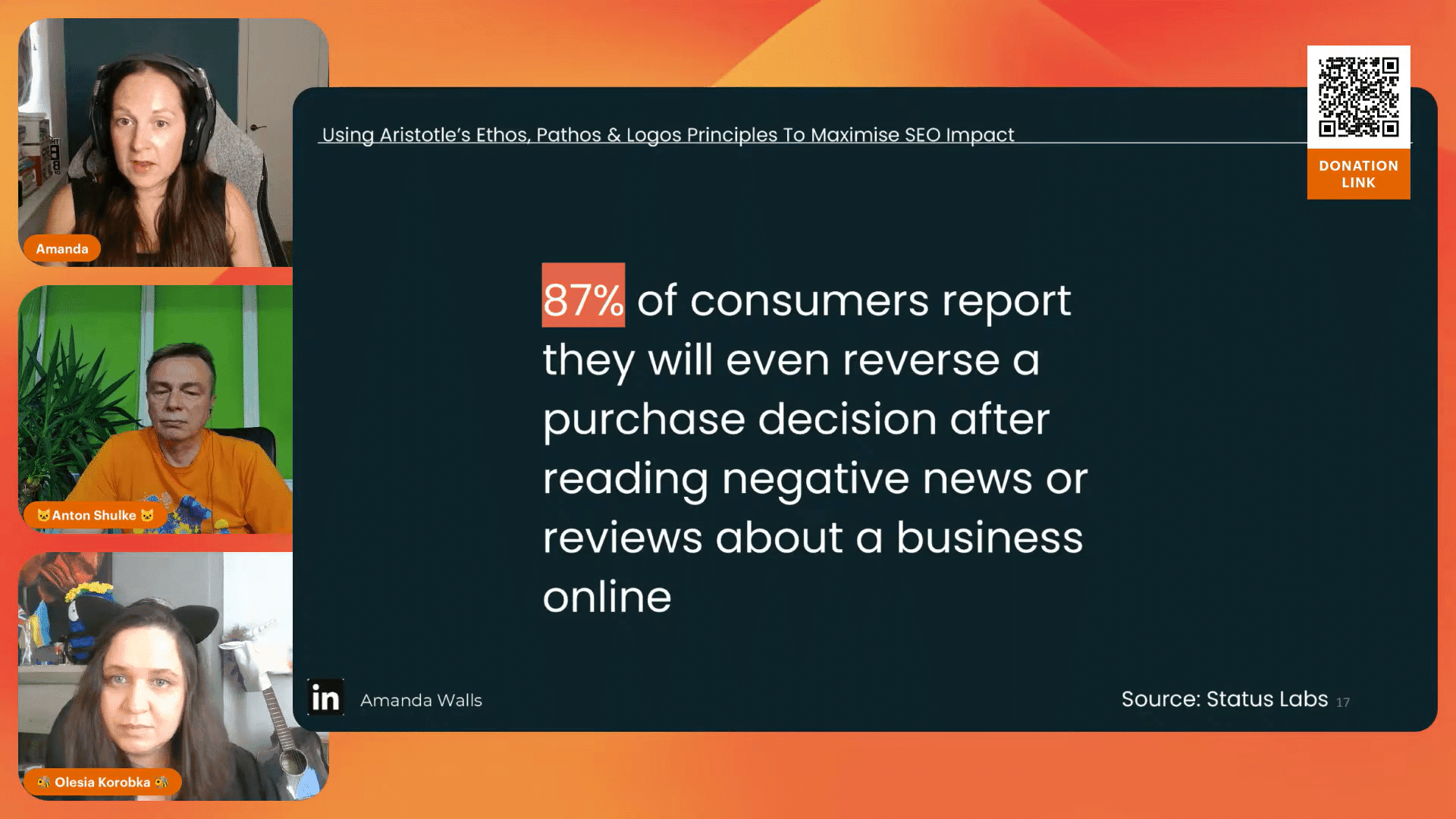
She cited research showing that 87% of consumers will abandon a potential purchase if they read something negative about the brand.
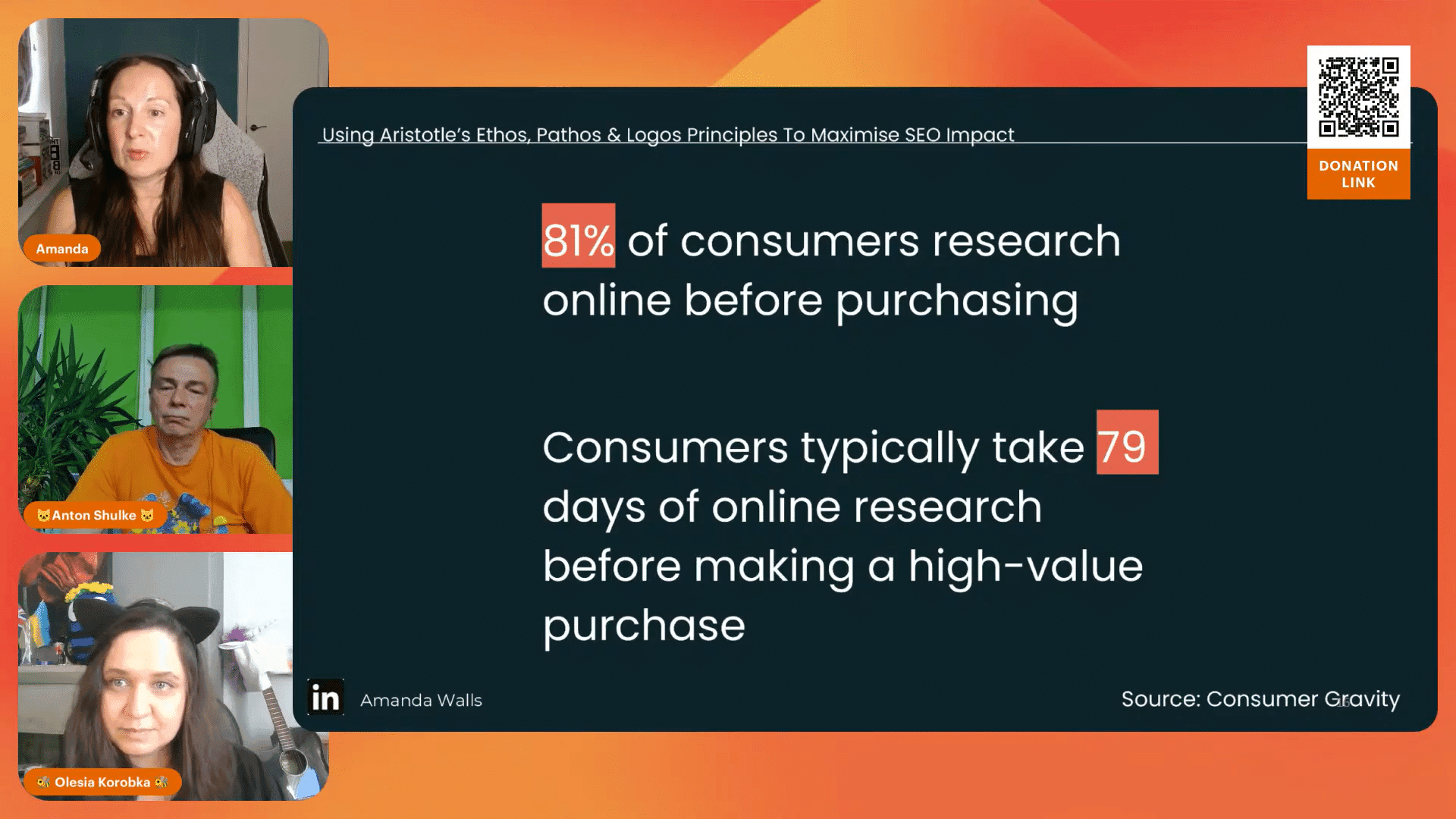
Another study shows 81% of shoppers spend more than two months researching before they buy. That kind of cautious behavior makes it critical to control the narrative.
Tell a Better Story or Be Forgotten
Walls also emphasized the importance of storytelling in building emotional trust.
One often-overlooked area is the About page, which is treated as an afterthought. Instead, Walls views it as a key opportunity to forge emotional bonds with visitors.
This emotional appeal is a strategic move that fosters loyalty and confidence, two qualities that significantly influence purchasing decisions over product specifications.
Let Your Customers Be Your Marketers
Customer voices can be considered as another powerful signal. Walls highlighted the growing impact of user-generated content, from reviews to shared product photos and testimonials.
She believes businesses should actively encourage customers to share their experiences, as this type of authentic content builds trust in a way that polished marketing copy cannot.
Want Coverage? Know the Audience Before the Journalist
Walls also spoke about the frequent missteps companies make when engaging with journalists. Too often, public relations efforts are driven by the desire to earn a backlink. She proposes a new approach, which emphasizes the narrative.
She referenced a key statistic: 92% of journalists say they’re more likely to cover a story if it speaks directly to their audience. The takeaway? Understand not just the journalist, but who they’re writing for.
That audience-first mindset, Walls said, is the real secret to successful outreach and better long-term search visibility.
A Human-Centered SEO Playbook
Walls’ philosophy reflects a larger movement in digital marketing. While technical optimization remains relevant, SEO is evolving in 2025. Google favors brands that real people trust, discuss, and revisit.
Applying Aristotle’s framework, businesses should evaluate content not by keyword count, but by its connection with the reader. Does it establish credibility? Does it evoke emotion? Does it provide a logical call to action?
These signals are really important, and they’re much tougher to fake!
Action Steps for SEO That Actually Converts
Here’s how brands can apply Amanda Walls’ principles to strengthen credibility and visibility:
Research Your Brand Like a Customer
Google your business regularly. Read what people are saying on forums, blogs, and social media. Take note of recurring concerns or praise and respond accordingly.
Rework Your About Page With Emotion and Purpose
Share your origin story. Highlight challenges, values, and the human side of your team. Keep it honest, clear, and conversational.
Encourage Real Reviews and Shared Experiences
Make it easy for customers to leave reviews and post images. Feature their content where appropriate. Celebrate their voices publicly.
Craft PR Stories That Serve the Reader
When reaching out to the media, think less about links and more about what their readers will gain. If your story has relevance and resonance, the visibility will follow.
Audit Content Using Ethos, Pathos, Logos
Before publishing, ask: Does this content show credibility? Is it emotionally engaging? Does it make a logical argument for action?
Key Takeaways
- SEO without sales is a failed strategy.
- Emotional storytelling builds brand trust faster than data alone.
- Off-site perception is as important as on-site optimization.
- Human endorsements carry more weight than keyword-stuffed content.
- Publicity works best when the focus is on the audience, not the backlink.

Dileep Thekkethil
AuthorDileep Thekkethil is the Director of Marketing at Stan Ventures, where he applies over 15 years of SEO and digital marketing expertise to drive growth and authority. A former journalist with six years of experience, he combines strategic storytelling with technical know-how to help brands navigate the shift toward AI-driven search and generative engines. Dileep is a strong advocate for Google’s EEAT standards, regularly sharing real-world use cases and scenarios to demystify complex marketing trends. He is an avid gardener of tropical fruits, a motor enthusiast, and a dedicated caretaker of his pair of cockatiels.
