The conversation around SEO is shifting and fast. In a recent episode of the “SEO On Air” podcast by Stan Ventures, e-commerce strategist Charlee and host Aaron uncovered an important truth.
SEO is no longer just about ranking higher, it is about laying the foundation for everything else your digital business does.
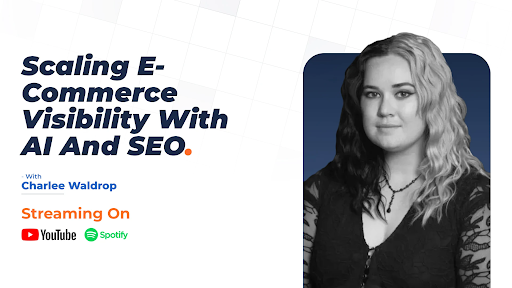
Charlee, who has spent years guiding Amazon and DTC (direct-to-consumer) brands, made it clear in 2025, success is not about chasing clicks or hacks. It is about building smart, sustainable SEO that fuels both organic and paid growth.
Let’s see what her insights tell us about the state of SEO this year and what brands can do differently before their competitors figure it out.
Why SEO Should Come Before PPC, Even for Amazon Sellers
“Lay your groundwork first,” Charlee emphasized right from the start. “Before you start spending on ads, make sure your SEO is solid because it is the groundwork for everything you will build on later.”
She is right. Many brands today jump straight into Amazon ads or Google PPC without ensuring their product listings, titles or site metadata are properly optimized.
But as she explained, “SEO takes about three months to start ranking organically and that is when we even begin thinking about paid.”
On Amazon, you can rank faster but your long-term results depend on conversion. It is not just about visibility; it is about how well you perform once you are visible. And that, Charlee said, “comes down to having background data and organic terms baked into everything you do.”
For startups or small brands with limited budgets, her logic is simple: SEO is an investment and PPC is a multiplier. Build the base first, then accelerate it with ads. Otherwise, you will end up paying for inefficiency.
How Long Does It Take to See SEO Results for E-Commerce?
One of the most common misconceptions among new e-commerce founders is expecting SEO to deliver instant results.
Charlee clarified this:
“When building websites, it takes about three months for us to really start to get organic rank from SEO. That is the point where paid efforts actually make sense because now you are optimizing on top of something that’s already converting.”
In contrast, Amazon SEO behaves slightly differently. You can rank faster but only if your conversion rate and review credibility support it. Amazon’s algorithm (A9) weighs sales velocity and relevancy as heavily as keywords.
In short, SEO is slow-burn growth but the kind that lasts.
What Are the New SEO Trends for E-Commerce in 2025?
Aaron asked Charlee what major e-Commerce SEO 2025 shifts she’s seeing and her response was one that many brands need to pay attention to.
“AI is changing everything,” she said. “Where we used to publish content constantly to rank, now Google’s paying attention to how often content is updated or edited, not just how much you publish.”
That means one blog post refreshed with new data every few months may outperform 10 brand-new AI-written posts.
Charlee also noted another critical shift: authority. She is seeing brands and especially in sensitive niches like supplements bring in real practitioners or doctors to write or verify their content.
“It’s about showing that it is human-authored, not just AI-generated,” she said.
In other words, SEO in 2025 is not just about keywords, it is about credibility and freshness.
How Should Brands Use AI Tools Without Losing Authenticity?
When Aaron brought up tools like ChatGPT and Amazon’s “Brewfest” AI integrations, Charlee smiled knowingly.
She’s seen it too and brands overusing AI in ways that disconnect them from customers. “People are plugging AI into everything, even ovens and electronics that don’t need it,” she joked.
Her warning was simple: “AI should be a supplement, not a replacement.”
Too many brands are generating AI lifestyle graphics or product visuals without considering brand tone and customer emotion. The result? Polished but soulless content.
Charlee’s recommendation: use AI for efficiency, not identity. Proofreading emails, editing blog drafts, or generating first-pass keyword ideas is fine but creative storytelling, brand voice, and visuals still need the human touch.
As she put it: “If it’s not broken, don’t try to fix it with AI. Use it to speed up what already works.”
How Is Amazon SEO Different from DTC SEO?
This was one of the most valuable parts of the conversation.
According to Charlee, Amazon SEO operates in a world of its own. “It used to be that Amazon cross-checked your site SEO with your product listings,” she said. “Now they’ve moved away from that but it is still an entirely different ecosystem.”
On DTC sites, you focus more on brand terms, storytelling, and UX signals. On Amazon, it’s purely data-driven: titles, bullet points and backend keywords define your ranking.
Charlee summed it up well: “Amazon is its own universe. It’s easier to start on Amazon and expand into Google and Meta than it is to go the other way around.”
Her reasoning? Amazon gives you instant product validation, customers either buy or they don’t. Once you understand your conversion metrics there, you can scale that data to your broader SEO strategy.
What Outdated Amazon SEO Practices Should Brands Stop Doing?
Charlee was blunt here: “Paid review strategies are dead.”
Years ago, brands used Facebook groups or incentives to generate Amazon reviews containing target keywords but today, that can get your account suspended.
Amazon now tracks review manipulation through IP and device data, even across family networks. “They can see if your mom’s Wi-Fi connects to someone who bought your product,” she explained. “That’s enough to flag your listing.”
Her advice? “If you want feedback, include honest review cards in your packaging or use Amazon’s Vine program. Don’t buy fake love, earn it.”
Vine, however, limits you to 30 reviews, so it’s best for early-stage products.
What About Common SEO Myths and Mistakes in 2025?
Charlee pointed out that some brands are still stuck on “spray-and-pray” marketing, doing too much, too fast, without focus.
She prefers a concept she calls “strategic throwing.” Instead of trying every keyword and campaign, pick a few, test deeply and double down on what works.
Another mistake she highlighted: relying only on PPC while ignoring upper-funnel awareness.
“Amazon is becoming a pay-to-play platform. But while everyone’s fighting for $24-per-click keywords, few are investing in display ads or streaming TV, the new upper funnel where competition is still light.”
So if you are not experimenting with Amazon DSP, brand videos, or OTT ads, you’re already behind.
How Can E-Commerce Brands Drive High-Converting SEO Traffic?
This was where Charlee got practical. She recommended starting with retail readiness metrics and the basics every e-commerce listing should have:
- A complete image carousel with at least six images
- Clear titles and bullet points using every available character
- A product video
- A+ content or enhanced descriptions
But the real differentiator, she said, is competitive awareness. “If you sell journals, type in ‘journals’ on Amazon. See who is ranking in the top four, what their keywords look like, and how their listings are structured. Then ask yourself, “Are you competitive?”
Once that is clear, focus on winning top-of-search placements through smart PPC and optimized content. Because, as she reminded us with a laugh:
“The best place to hide a dead body is on page two of Amazon, same as Google.”
SEO Isn’t Dead, It’s Just Growing Up
By the end of their discussion, one truth stood out: SEO in 2025 is about balance.
Yes, AI is changing how we create. Yes, Amazon is evolving. But the fundamentals including authority, authenticity and consistency still win.
Charlee summed it up perfectly: “SEO is the foundation. PPC is the cherry on top. Build your house before decorating it.”
So if you are an e-commerce brand wondering where to start, here is your roadmap:
- Invest in solid SEO before scaling ads.
- Use AI as an assistant, not an architect.
- Understand each platform’s ecosystem.
- Build trust the old-fashioned way, through honest content and credible reviews.
Because as Charlee reminds us, in the new digital landscape, it’s not the AI that will take your job, it’s the person who knows how to use it better. Let’s see which brands learn that lesson first.

Dileep Thekkethil
AuthorDileep Thekkethil is the Director of Marketing at Stan Ventures, where he applies over 15 years of SEO and digital marketing expertise to drive growth and authority. A former journalist with six years of experience, he combines strategic storytelling with technical know-how to help brands navigate the shift toward AI-driven search and generative engines. Dileep is a strong advocate for Google’s EEAT standards, regularly sharing real-world use cases and scenarios to demystify complex marketing trends. He is an avid gardener of tropical fruits, a motor enthusiast, and a dedicated caretaker of his pair of cockatiels.
