In a surprising moment of candor on Reddit, Google Search Advocate John Mueller dissected the SEO flaws of a “vibe-coded” website.
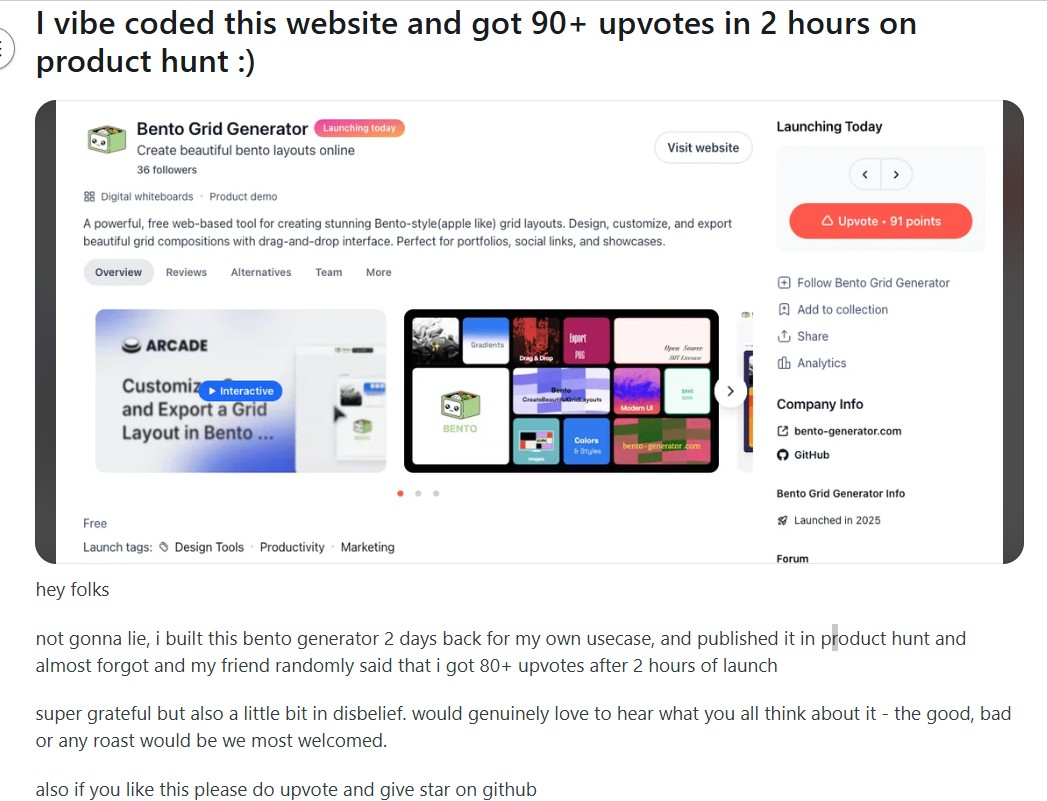
It is a fast-built Bento Grid Generator that went viral on Product Hunt within hours of its launch.
At first, the whole conversation seemed simple: a developer built a small project in two days, posted it online and caught Google’s attention.
But what Mueller’s comments revealed runs deeper and it is a reflection of a growing web culture where design and feel trump SEO fundamentals.
Let’s see what really happened, what went wrong technically and what this means for the growing generation of indie developers embracing “vibe coding.”
What Exactly Happened on Reddit?
A developer posted on r/vibecoding, sharing that they had created a Bento Grid Generator for personal use which is a simple, self-contained web tool designed in just two days.
When published on Product Hunt, it took off, gathering 90+ upvotes in under two hours. The community loved it. The site looked modern, worked seamlessly and captured the important message of the “build fast, ship faster” indie hacker movement.
But soon after, John Mueller chimed in with detailed feedback on the project’s technical SEO. His tone was encouraging but honest: “I love seeing vibe-coded sites, it is cool to see new folks make useful & self-contained things for the web.”
Then came the list of issues and it was not short.
What SEO Problems Did Mueller Highlight?
Mueller’s review revealed a familiar pattern: sites that look great for users but remain invisible to search engines.
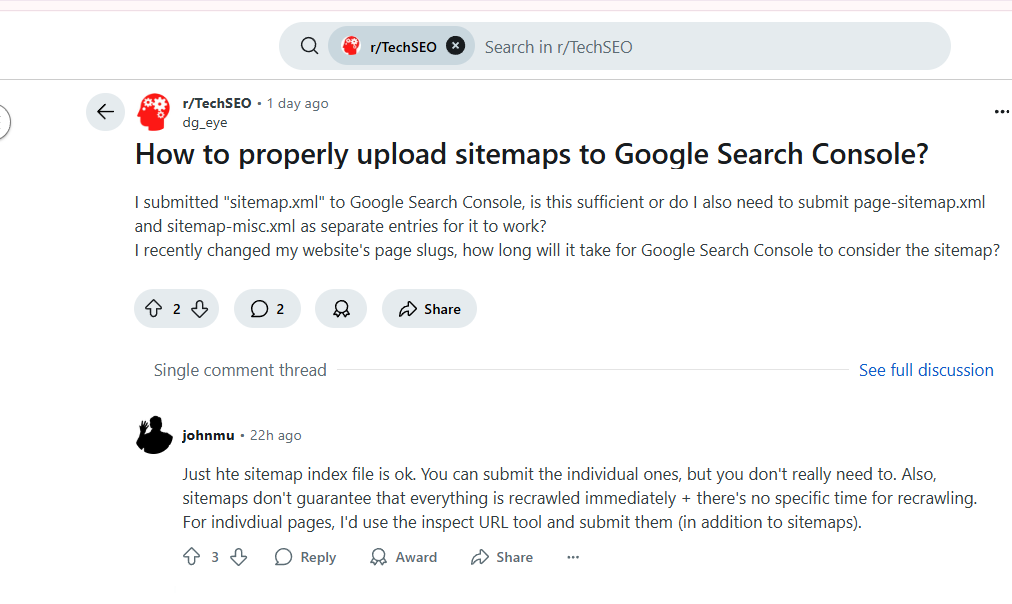
Here’s what he flagged, simplified and analyzed:
1. Crawlability and Content Accessibility
The developer had stored key homepage content inside a JavaScript file like llms.txt. Mueller pointed out that Google and other search engines don’t use this file at all.
That means, from a crawler’s perspective, the homepage was nearly blank. His recommendation? Keep your core content directly in the HTML and ideally in a simple, readable div or visible section.
He suggested adding a popup welcome div in HTML containing essential info about what the site does. The goal: make your content instantly understandable to both users and bots.
2. Meta Tag Misuse
Mueller noticed multiple redundant meta tags. While older SEO guides often list tags like “keywords” and “author,” Google has not used these for ranking in years.
He clarified that only two matter:
- Title tag
- Meta description
Everything else such as including “keywords,” “robots,” and “author” can be skipped.
3. Unnecessary hreflang Tags
Even though the site supported just one language, it still had hreflang tags added. Mueller advised removing them, noting that hreflang is only needed for multilingual or regionalized websites.
4. Broken or Unsupported Structured Data
The developer had implemented JSON-LD structured data but not the kind Google recognizes. Mueller noted that the markup didn’t match any structured data types currently supported in Google Search’s documentation.
His suggestion:
“Check out Google’s ‘Structured data markup that Google Search supports’ for the types supported by Google.”
Essentially, if you are going to use schema markup, make sure it is from the list of supported types otherwise, it adds no SEO value.
5. Hidden Headings
The homepage featured hidden h1 and h2 tags, presumably added to “help” SEO. Mueller was clear:
Hidden headings are “cheap and useless.”
Instead, he recommended placing visible, descriptive text within the site such as a dismissable banner or hero section that actually helps users and provides clear context for search engines.
6. Overcomplicated Robots.txt and Sitemap Setup
The developer had added unnecessary directives to their robots.txt file and included a sitemap despite the site having just one page.
Mueller’s advice was straightforward:
If your site is small, keep your robots.txt minimal and skip the sitemap altogether.
He also recommended connecting the domain to Google Search Console, to track indexing and performance issues early.
Why These Mistakes Are Common in “Vibe-Coded” Sites
The term vibe coding refers to a growing subculture of developers who build small, design-forward web apps rapidly focusing more on aesthetic and UX than on infrastructure or optimization.
It is a refreshing movement that celebrates creativity and speed. But as Mueller’s analysis revealed, this creative freedom often comes at the cost of discoverability.
For these projects, everything works visually but fails technically.
- The website is functional, but Google can’t “see” it.
- The interface feels intuitive, but content is not in the right format for bots.
- The design is polished, but metadata and structure are missing or incorrect.
In short, “vibe-coded” sites work for people but not for crawlers.
And that is a growing problem. Because even though social traction can drive traffic initially (as seen on Product Hunt), long-term visibility still depends on search compatibility.
Did Mueller Promise Better Rankings After Fixes?
No and that’s one of the most important parts of his feedback.
Mueller clarified that technical SEO fixes aren’t instant traffic boosters. Instead, they lay the groundwork for better discoverability and performance over time.
He summed it up perfectly:
“Will you automatically get tons of traffic from just doing these things? No, definitely not. But it makes it easier for search engines to understand your site, so they could send you traffic later.”
The point? SEO is infrastructure, not magic. Implementing the fundamentals today prevents you from rebuilding tomorrow.
A Lesson for Indie Developers and Startups
This exchange reveals a deeper trend: the trade-off between building fast and building right.
In the rush to launch, developers often skip foundational SEO work and treat it as something to “fix later.” But as Mueller’s feedback shows, those skipped steps compound quickly: missing metadata, broken markup, and unreadable JavaScript can limit how your site scales online.
And while many “vibe-coded” apps don’t need organic traffic right away, they eventually hit that ceiling when they want visibility beyond Product Hunt or Reddit.
The fix is not complicated but it requires a shift in mindset: Design for humans and search engines at the same time.
What Can We Learn from This?
If you are a developer or startup founder experimenting with fast-launch web apps, here’s the takeaway:
- Keep your primary content in HTML, not external JS files.
- Use only essential meta tags (title + description).
- Remove unsupported or irrelevant schema.
- Don’t hide your headings or key information.
- Connect your site to Google Search Console early.
These aren’t “advanced” SEO tips, they are the foundation of online visibility.
Because as creative as web design has become, search engines still rely on structured, accessible data to interpret your intent.

Dileep Thekkethil
AuthorDileep Thekkethil is the Director of Marketing at Stan Ventures, where he applies over 15 years of SEO and digital marketing expertise to drive growth and authority. A former journalist with six years of experience, he combines strategic storytelling with technical know-how to help brands navigate the shift toward AI-driven search and generative engines. Dileep is a strong advocate for Google’s EEAT standards, regularly sharing real-world use cases and scenarios to demystify complex marketing trends. He is an avid gardener of tropical fruits, a motor enthusiast, and a dedicated caretaker of his pair of cockatiels.