A new study finds that most brands showing up in AI search results aren’t being cited from their own websites. Instead, they’re being recognized through others—trusted reviews, articles, and comparisons. It’s a wake-up call for marketers still relying on owned content alone and ignoring brand mentions and community mentions.
Ask ChatGPT or Perplexity to list the “best CRM platforms,” and the answer probably won’t come from a brand’s official website. Instead, you’ll see references from blog posts, product roundups, and reviews written by others.
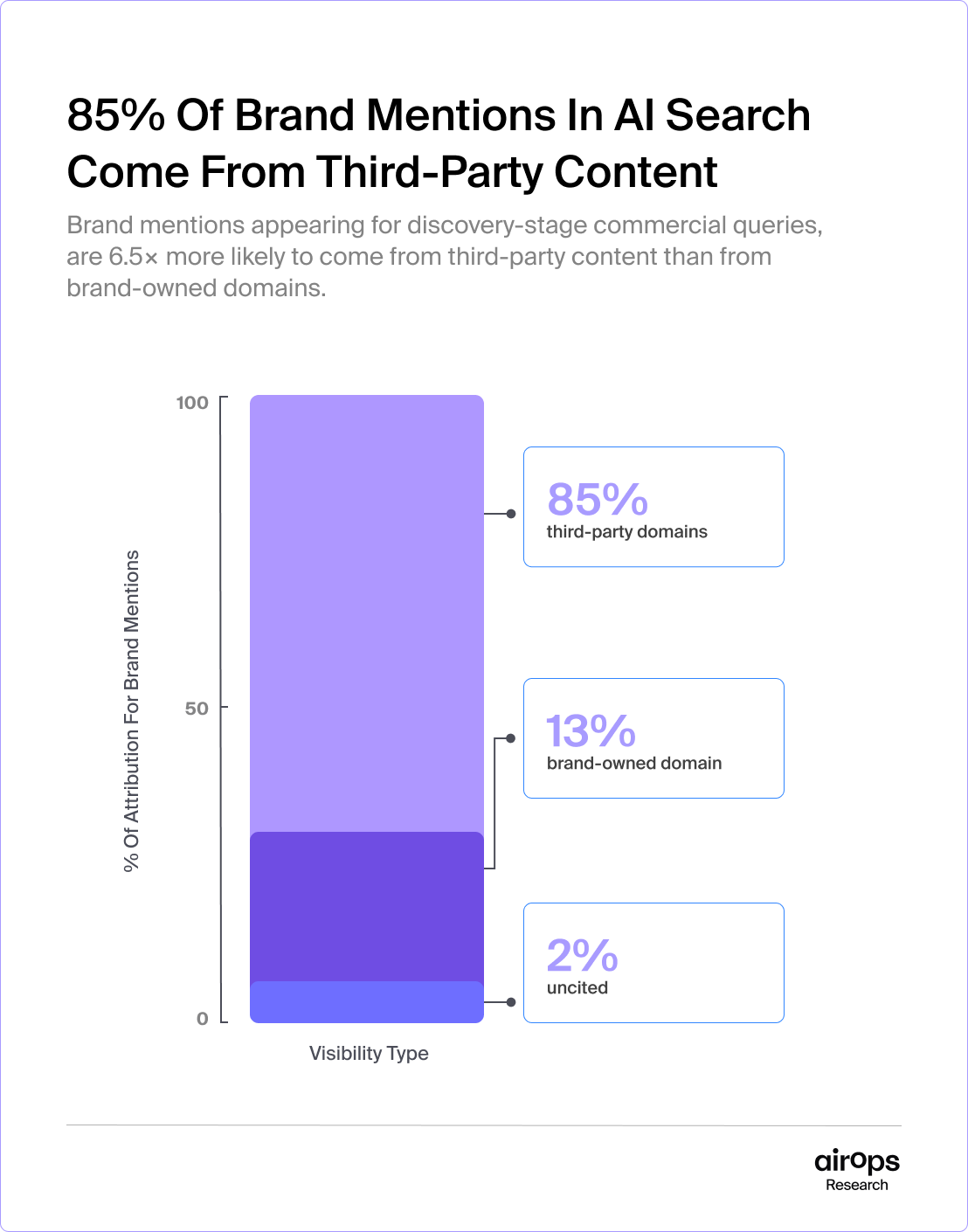
A new analysis of 21,311 brand mentions across major AI systems, including GPT-5, Claude Sonnet 4.5, and Perplexity Sonar, found that 85% of all brand citations come from third-party sources.
Only 13% trace back to the brands themselves. In other words, your brand’s visibility is now mostly determined by what others say about you and not what you publish.
Inside the Study: Who Gets Cited and Why
The research team analyzed more than 500 commercial-intent queries, questions people ask when exploring new products or services. They wanted to see which brands the AI tools mentioned and where those mentions came from.
Brand mentions was classified as one of three things:
- First-party: directly from the brand’s own domain.
- Third-party: from an external site such as a review, article, or industry blog.
- Uncited: when the AI mentioned a brand without naming a source.
What stood out was the overwhelming dominance of third-party references.
When AI systems generate responses, they lean on credibility echoed across the web. If multiple trusted sources mention your brand, AI considers you reliable. If not, you’re invisible.
The Hidden Influence of Listicles in AI Visibility
It turns out that listicles and product roundups, the same content formats marketers often overlook, are shaping AI visibility.
Nearly 90% of third-party mentions came from list-style or comparative articles.
And 80% of cited brands appeared within the top three positions of those lists. Placement clearly matters.
These findings suggest that AI doesn’t just scan the internet randomly; it picks up on hierarchy and frequency of mentions.
A brand consistently featured in respected publications, especially near the top of “best of” lists, is far more likely to show up in AI-generated recommendations.
It’s a reminder that reputation in the digital space still depends on the same principle as in real life: people (and AI) trust what others trust.
The Role of Owned Content
Does this mean your own content doesn’t matter anymore? Not at all.
While third-party mentions dominate discovery, owned content remains essential for accuracy and depth.
The study found that 26% of first-party mentions came from product and homepages.
AI tends to cite these sources when a user query shifts from “Who should I consider?” to “Tell me more about this specific brand.”
Think of owned content as the anchor. It ensures the facts about your product are clear, current, and easy to verify, so when AI references your brand, it’s pulling accurate, well-structured information.
Every AI Model Sees You Differently
No two AI platforms see brands the same way.
Across the study, 68% of brand mentions were unique to a single AI model. In other words, what shows up in Claude might be missing in GPT-5 or Perplexity.
Each system interprets authority differently, based on its own data, sources, and training signals.
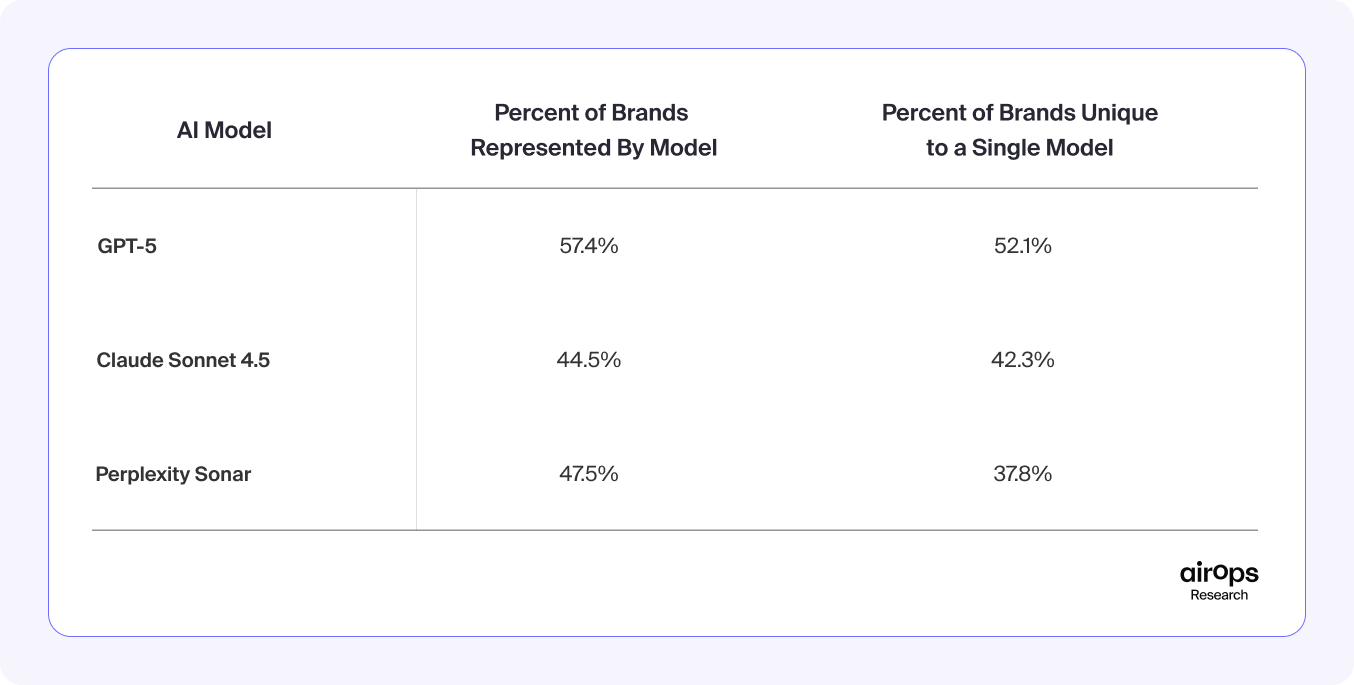
That makes visibility a moving target. A brand can’t rely on being “found once.” To stay relevant, marketers must ensure a consistent presence across multiple channels and sources that AI systems actually reference.
Building Credibility That Compounds
The most successful brands in the study shared one common trait that is, they aligned what they say about themselves with what others say about them.
When owned and earned channels tell the same story, the effect multiplies. AI systems recognize the consistency, reinforcing authority from both directions.
Brands that coordinate their PR, SEO, and content teams see better results because their messaging and reputation move in sync.
What This Means for Marketers
Visibility in AI search isn’t about keyword density or content quantity anymore. It’s about how well your brand is represented beyond your own borders.
To stand out, marketers need to focus on four key actions:
- Treat Owned and Earned as One Strategy: Don’t isolate SEO, PR, and content efforts. Make sure they reinforce each other’s messaging and data points.
- Publish Information People Want to Cite: Create content that offers value others can reference—research, comparisons, data, or insights that spark conversation.
- Show Up Where Trust Already Lives: Secure mentions on credible sites your audience relies on—industry publications, expert blogs, and verified directories.
- Stay Consistent Across Channels: The language, tone, and claims about your brand should align everywhere. Consistency helps AI identify you as a reliable source.
- Monitor Your AI Visibility: Track not just how you rank on Google, but how often and where you’re mentioned in AI-generated responses.
Brands that don’t adapt to this reality may find themselves missing from the first impression stage of the buyer journey—the place where awareness begins.
The Bigger Picture
AI search isn’t just changing how people find brands; it’s redefining who controls visibility.
Instead of competing for clicks, brands are competing for credibility. The spotlight is moving from “what you say” to “what others confirm.”
That means the most valuable marketing currency in 2025 isn’t content volume, it’s trust. Or as the study puts it, “Your content needs gravity.” In a web where AI tools decide what to surface, gravity comes from recognition, repetition, and resonance.
The brands that master that balance will own visibility in 2026, not because they shouted the loudest, but because their story was echoed by others who mattered.
Key Takeaways
- 85% of AI brand mentions come from third-party sites.
- Visibility favors validation, not self-promotion.
- Listicles and reviews drive most discovery.
- Consistency builds credibility across all AI systems.
- Owned content remains the anchor for accuracy and trust.

Zulekha
AuthorZulekha is an emerging leader in the content marketing industry from India. She began her career in 2019 as a freelancer and, with over five years of experience, has made a significant impact in content writing. Recognized for her innovative approaches, deep knowledge of SEO, and exceptional storytelling skills, she continues to set new standards in the field. Her keen interest in news and current events, which started during an internship with The New Indian Express, further enriches her content. As an author and continuous learner, she has transformed numerous websites and digital marketing companies with customized content writing and marketing strategies.
