Key Takeaways
- The first website any SEO agency has to rank is its own. If you can’t show up for the service keywords you sell, skeptical buyers notice fast.
- AI Overviews appeared in roughly 18% of US Google searches by March 2025 (Pew Research). Getting cited inside those answers is now its own lead channel, not a side project.
- “We do everything” loses to “we do this one thing.” A page built for a single industry converts better than a generic SEO page.
- Proof closes deals. A case study with real numbers beats ten promises about page one.
- Inbound (audits, content, referrals) compounds over months. Outbound (cold email, ads) fills the pipeline this week. You need both lanes running.
- Retention is lead generation. Happy clients refer, and a referral closes in a fraction of the time a cold lead takes.
Here’s the uncomfortable truth about selling SEO: most of your prospects have already been burned.
They paid an agency that swore they’d hit page one. They watched the rankings sit still for six months. Now they read every pitch with one hand on the “back” button, and they’ve got an Ahrefs trial open in another tab to fact-check you.
That’s the buyer you’re actually marketing to. Not someone who needs convincing that SEO works, but someone who needs convincing that you won’t waste their money like the last guy did. Every strategy below is built around that one problem: proving you’re worth the risk before anyone signs anything.
These aren’t just theories. They’re the channels working right now for agencies that stay full, organized into the order you’d actually build them.
Pick your lane: inbound or outbound
Before tactics, one decision. Are you going to make clients come to you, or are you going to go get them?
Inbound means you build assets (a ranking site, content, free tools, referrals) and prospects show up pre-sold. It’s slow to start and almost free to run once it’s going.
Outbound means you reach out first (cold email, ads, direct messages). It costs more per lead but it works the week you turn it on.
Most agencies that struggle are trying to do a little of both, badly. If you’re a one-person shop or just starting, pick one channel from each lane and get good at it before adding a third.
The list below is roughly sorted from “compounds slowly” to “works today” so you can choose based on how fast you need the phone to ring.
1. Rank your own site for what buyers actually type
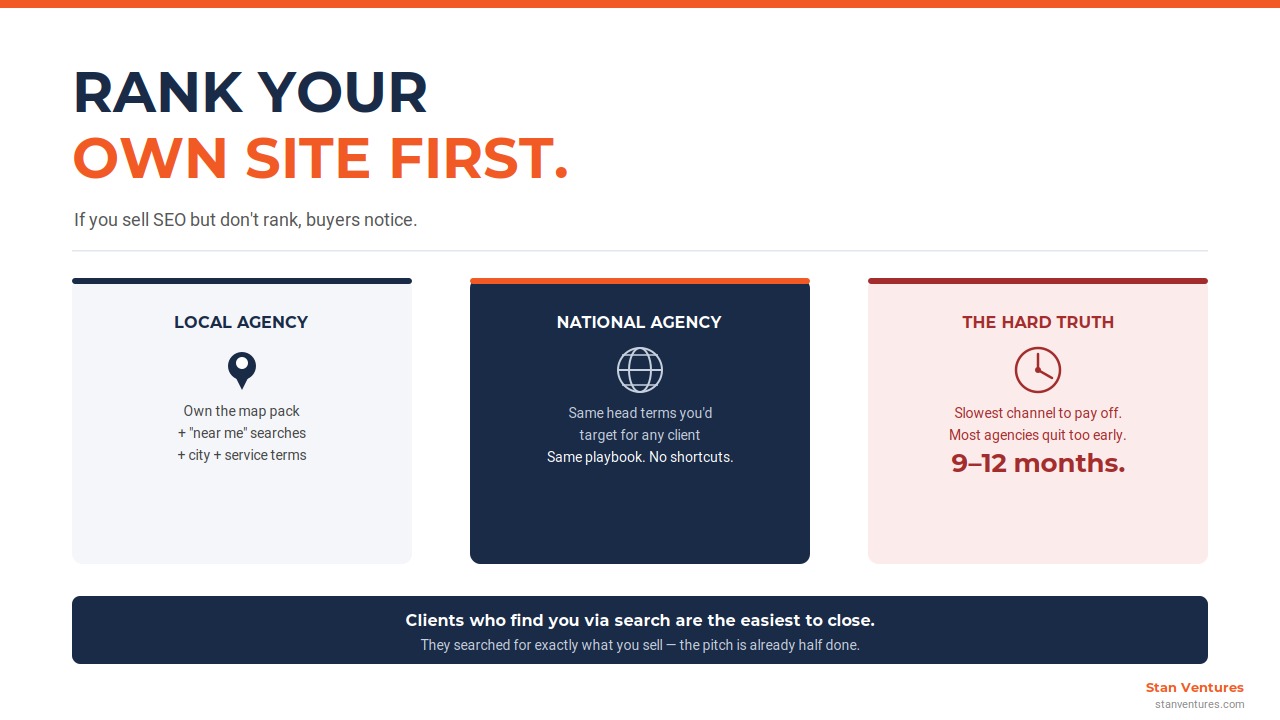
You’re in the business of ranking websites. So the agency that isn’t ranking for “seo services in [city]” looks exactly as bad as a personal trainer who’s out of shape. Buyers run the search. They notice.
Start with the keywords your buyers use, not the ones you wish they’d use.
A local agency should own the map pack and the organic results for “near me” and city-plus-service searches. A national agency competes on the same head terms it would target for a client, which means the same playbook: a clean technical foundation, content that answers the buyer’s real questions, and a backlink profile that holds up.
That’s where strong on-page SEO and a steady habit of earning high-quality backlinks do the heavy lifting.
A practical note from doing this for years: Ranking your own site is the slowest channel to pay off and the one most agencies quit on. Give it nine to twelve months before you judge it. The clients it brings are the easiest to close because they found you by searching for exactly what you sell.
2. Get cited in AI Overviews and chatbots
This is the channel almost nobody had on their list a few years ago, and it’s the one quietly stealing clicks today.
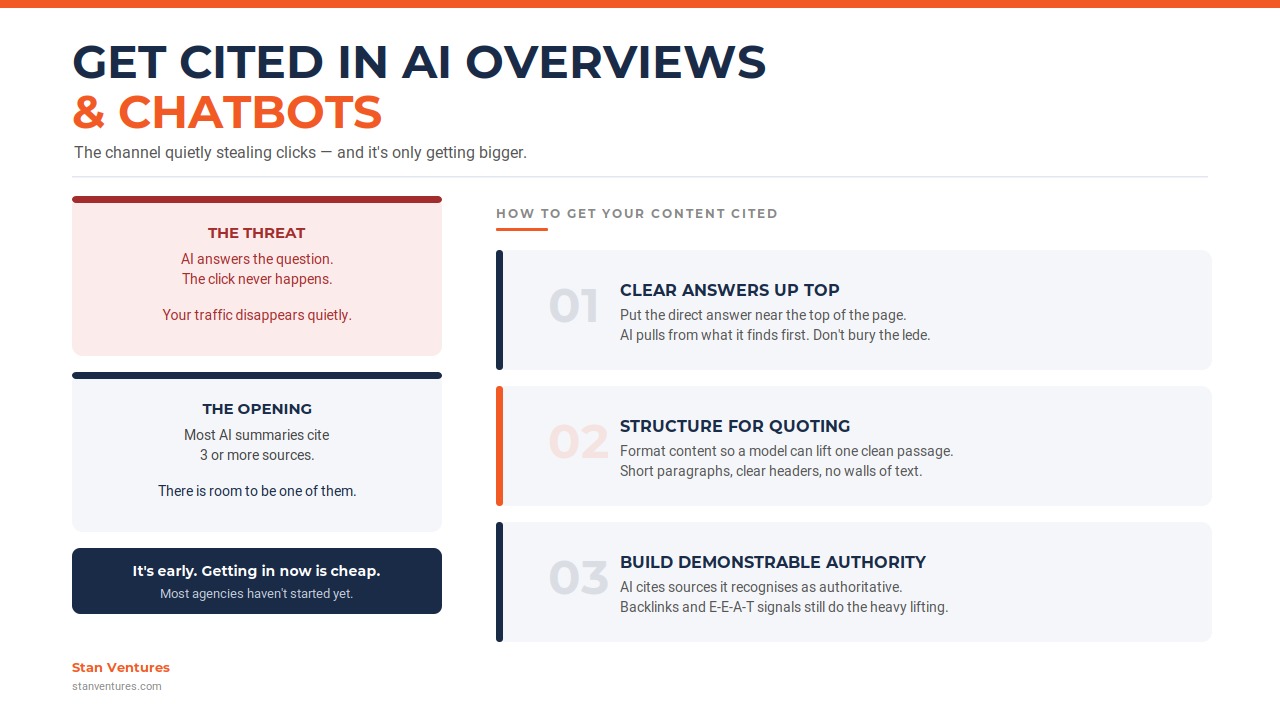
According to an industry studies, by March 2025, about 18% of US Google searches were showing an AI Overview, and people who saw one clicked through to a website only 8% of the time, versus 15% when there was no summary. Read that again. The summary often answers the question, and the click never happens.
For an agency, that’s a threat and an opening. If a business owner asks ChatGPT or Google “how do I find a good SEO agency for dentists,” you want to be one of the sources that gets named.
88% of AI summaries cite three or more sources, so there’s room to be one of them. The way in is the same content discipline that wins traditional search: clear answers near the top of the page, content structured so a machine can quote a single passage cleanly, and demonstrable authority on the topic. There’s a full playbook on getting your content cited in AI Overviews worth working through.
Search your target queries, note whether your content shows up in the AI answer, and watch your analytics for sessions referred by AI tools.
- Pick a niche and become the obvious choice
“We do SEO for everyone” is a pricing problem disguised as a positioning choice. When you’ll take any client, you compete on price with every other generalist, and that’s a race to the bottom.
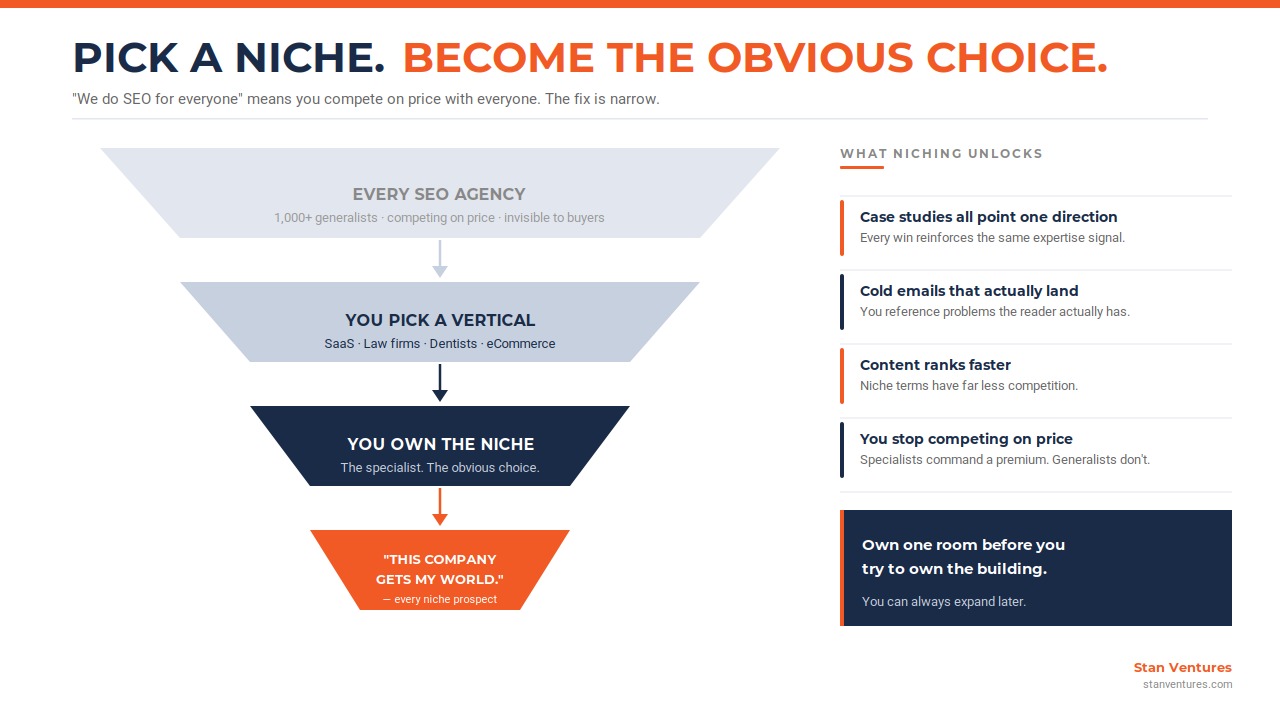
The fix is narrow. Don’t try to rank for “SEO agency.” Be the agency for SaaS companies, or for dentists, or for personal injury law firms. The moment a prospect lands on a page built for one industry, they think “this company gets my world” before you’ve said a word. That single belief does more closing than any sales script.
Niching also makes everything else on this list easier. Your case studies all point the same direction. Your cold emails reference problems the reader actually has. Your content ranks for terms with way less competition. You stop being one of a thousand options and start being the specialist.
You can always expand later. Start by owning one room before you try to own the building.
4. Offer a free SEO audit that’s worth paying for
Every business owner wants to know one thing: how bad is it? A free audit answers that, and it pulls in exactly the people who already suspect they have a problem worth fixing.
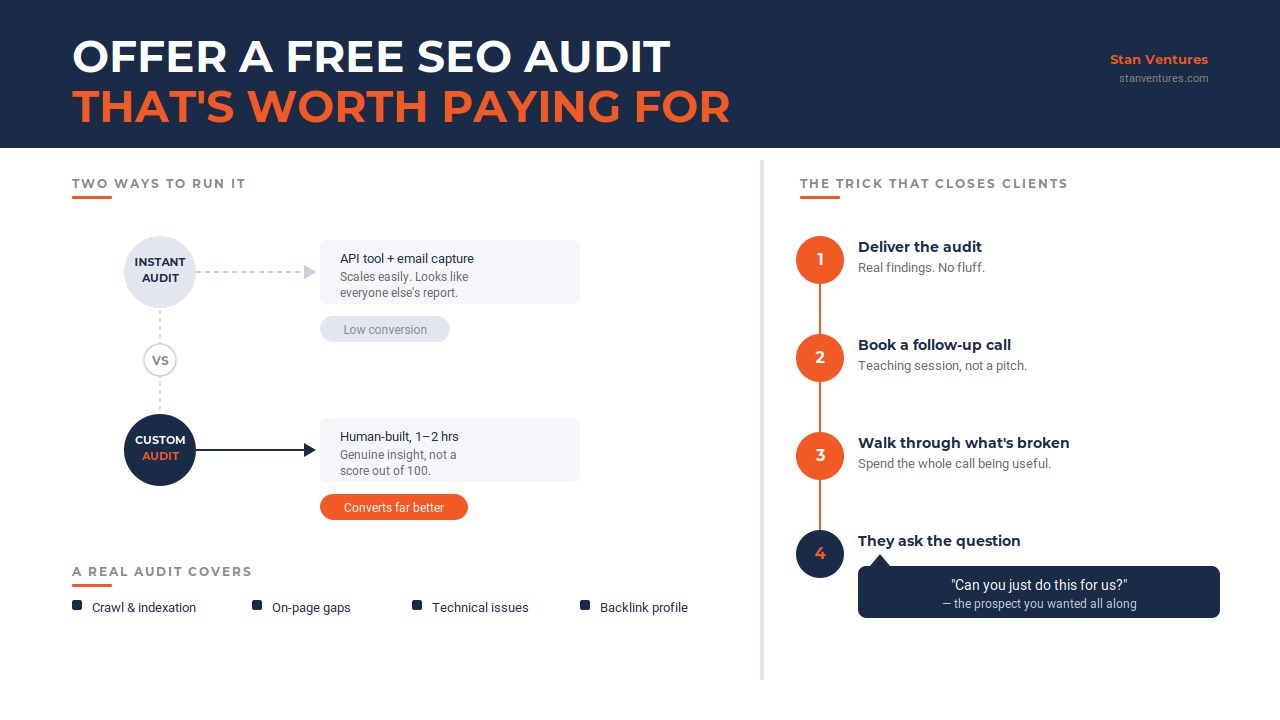
There are two ways to run it: instant and custom.
The instant version plugs a tool’s API into your site, and a visitor gets an automated report in exchange for their email. It’s easy and it scales, but the report looks like everyone else’s.
The custom version takes a human an hour or two to put together, covering the things a real audit checks (crawl and indexation issues, on-page gaps, technical problems, the backlink profile). It doesn’t scale. It also converts far better, because you’re handing over genuine insight instead of a score out of 100.
How to turn audits into clients:
- Make the follow-up call a teaching session, not a pitch.
- Walk your prospects through what’s broken and how a competent team would fix it.
- Spend the whole call being useful.
A good chunk of those calls end with the prospect asking the question you wanted all along, “can you just do this for us?” Pair the audit with live chat or a simple contact form on your site so the people who don’t book a call still have a way to raise their hand.
5. Build lead magnets people actually finish
Most website owners think SEO is something they’ll do themselves. They download the checklist, they read three pages, and then their actual job gets in the way. That gap is your opening.
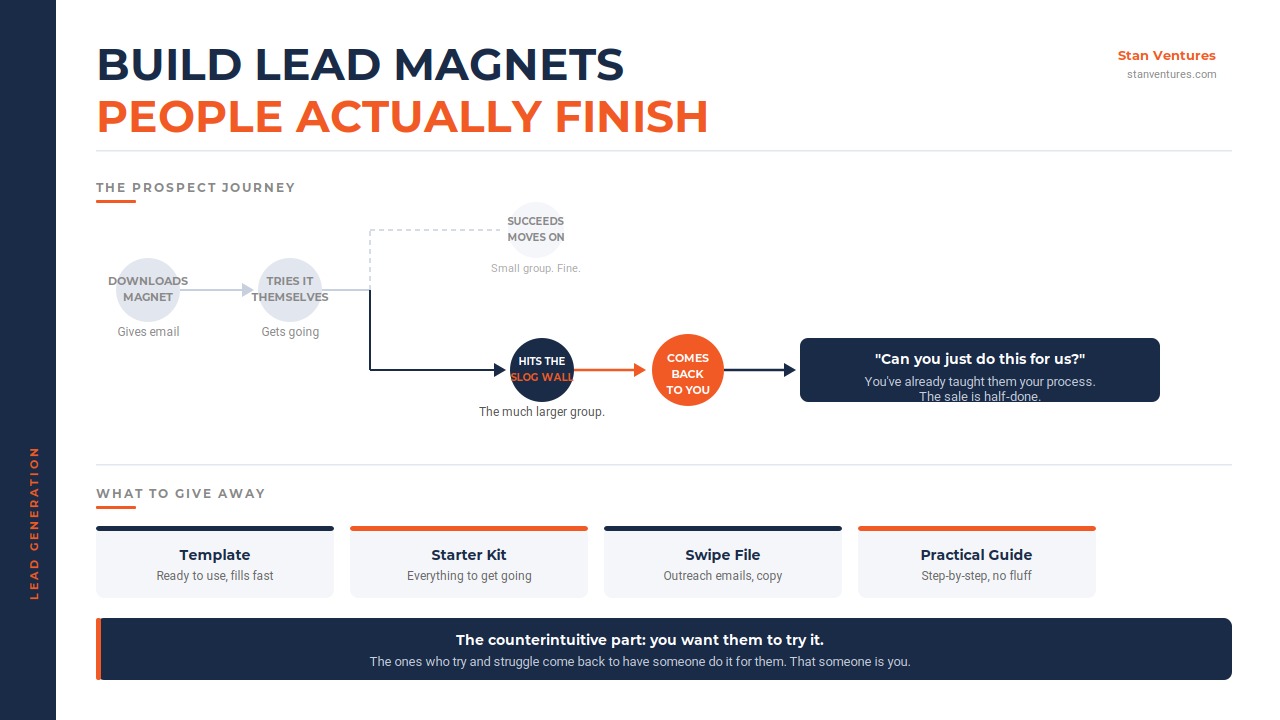
Give away something genuinely useful (a template, a starter kit, a genuinely useful guide, a swipe file of outreach emails) in exchange for an email address.
Here’s the part that feels counterintuitive: you want them to try it. The ones who succeed pat themselves on the back and move on, fine. The much larger group tries it, realizes it’s a slog, and comes back to have someone do it for them. By then you’ve already taught them your process, so the sale is half-done.
One word of caution on case studies as lead magnets, which leads to the next point.
6. Publish case studies with real numbers
A case study is the single most persuasive asset you own, because it’s proof instead of a promise. But it’s a double-edged sword, so handle it carefully.
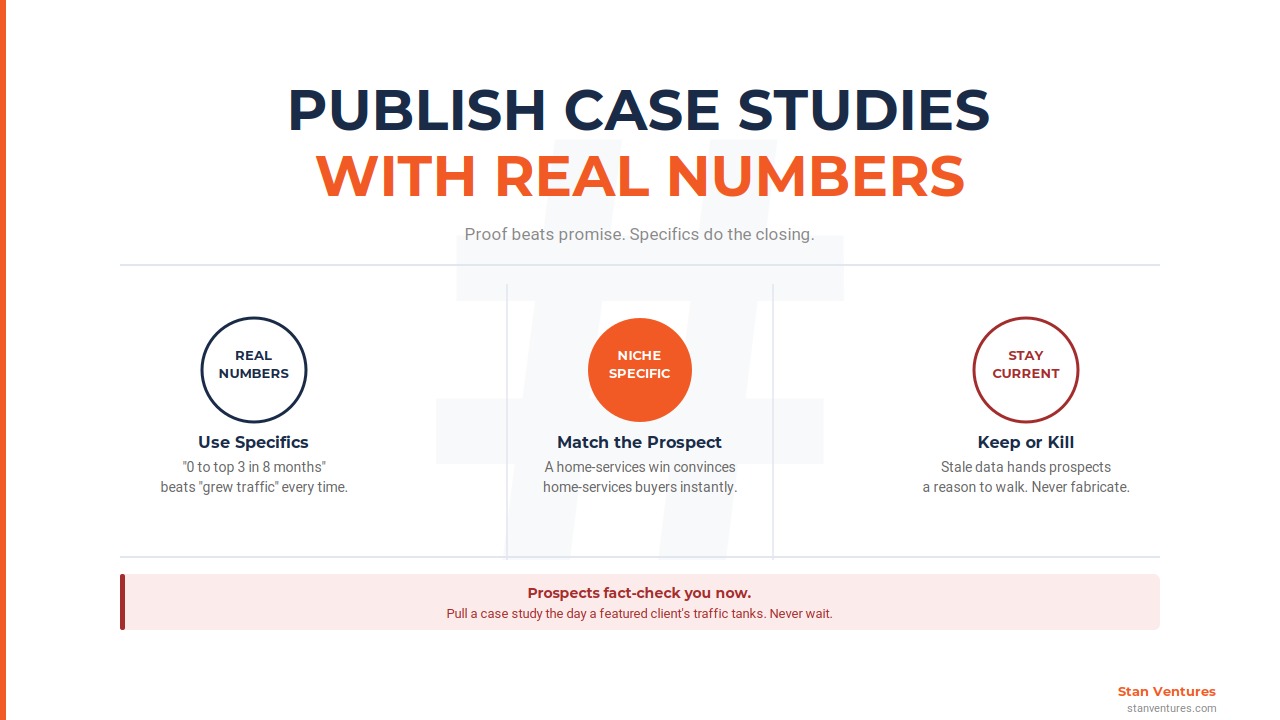
Show specifics. “Grew traffic” is a yawn. “Took an eDiscovery firm from 0 to the top 3 for a cluster of high-intent commercial terms in eight months” makes a similar prospect lean in. Use real figures, real timelines, real before-and-afters.
Google’s quality guidelines explicitly reward content that shows first-hand experience and demonstrated expertise, and a detailed case study is experience on the page.
The catch: Your prospects can fact-check you now. If a case study claims a site is crushing it, someone will run that domain through a tool. If the data’s gone stale or the rankings dropped, you’ve handed them a reason to walk. So keep them current, and the day a featured client’s traffic tanks, pull the study down. And never, ever fabricate one.
Build niche-specific case studies where you can. A home-services prospect believes a home-services result in a way they’ll never believe a generic one.
7. Turn your blog into a lead engine
A blog isn’t a lead engine because you publish. It’s a lead engine because you publish about the specific problems your buyers are stuck on, and you give them a clear next step.
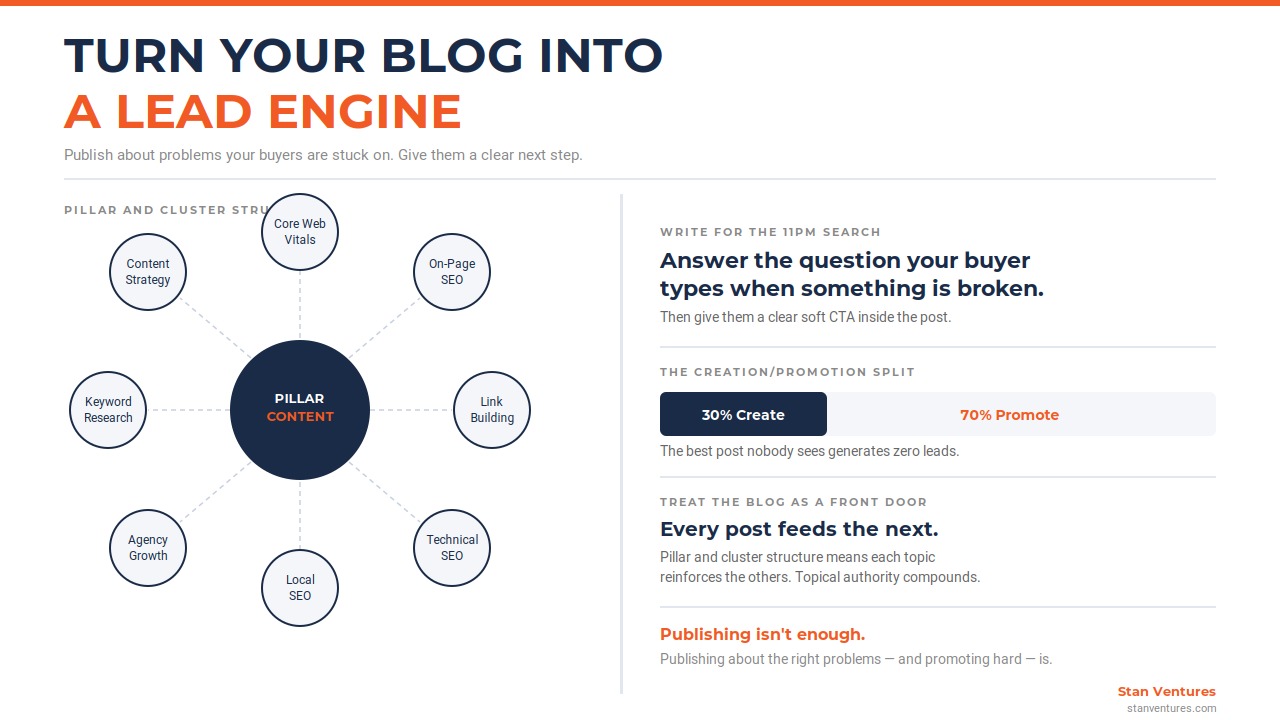
Find the question your ideal client types at 11pm when something’s broken, and answer it better than anyone.
Page speed is the classic example. An owner watches their site crawl, searches for help, and lands on a thorough piece about fixing Core Web Vitals. Inside that piece, a soft call to action (“having a technical team look at this? here’s what to check first”) catches the ones who realize they’re in over their head.
Organize the whole blog around a pillar-and-cluster structure so each topic reinforces the others, and treat the blog as the front door for everything else in your content marketing.
Spend less time writing and more time promoting. A rough split that works: 30% creating the post, 70% getting it in front of people. The post nobody sees generates zero leads.
8. Show up where buyers watch and listen
For “how to get SEO clients,” look at who Google’s AI Overview actually cites, and you’ll see a wall of YouTube videos. That’s a tell. A lot of buyers would rather watch you explain something for four minutes than read 2,000 words about it.
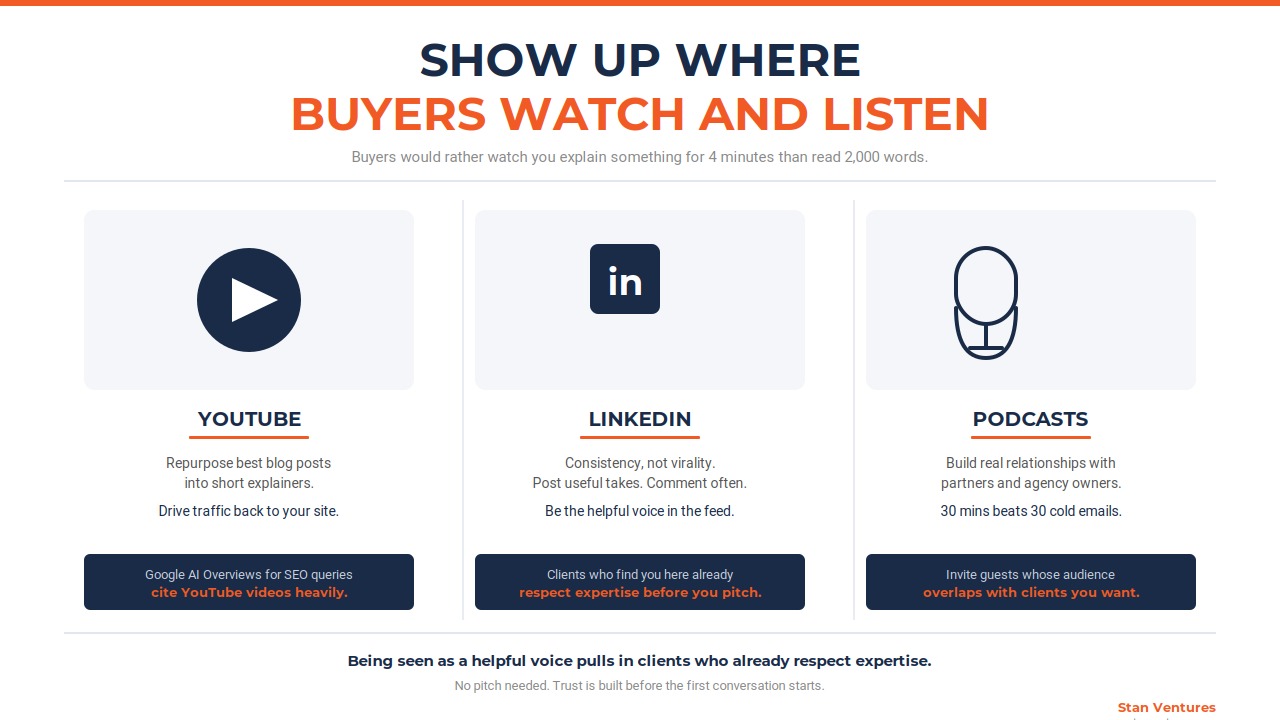
LinkedIn and YouTube are the two that pay off for SEO agencies. On LinkedIn, the move is consistency, not virality. Post useful takes, comment on other people’s, and let your team engage with each other’s posts to build early traction.
Being seen as a helpful voice in the feed pulls in the kind of client who already respects expertise. (“How to get SEO clients on LinkedIn” is a search with real volume, which tells you other agencies are figuring this out too.)
On YouTube, repurpose your best blog posts into short explainers and feed the traffic back to your site.
Podcasts belong here too. They won’t rank for generic search terms, but they’re unmatched for one thing: building real relationships with other agency owners and potential partners. A 30-minute conversation does what 30 cold emails can’t. If you run one, invite guests whose audience overlaps with the clients you want, and put a relevant lead magnet in every episode.
9. Send cold outreach that doesn’t get deleted
Plenty of agencies say they hate cold outreach, usually right after sending a “Hey, want SEO services?” email that got ignored. The channel isn’t dead. The lazy version of it is.
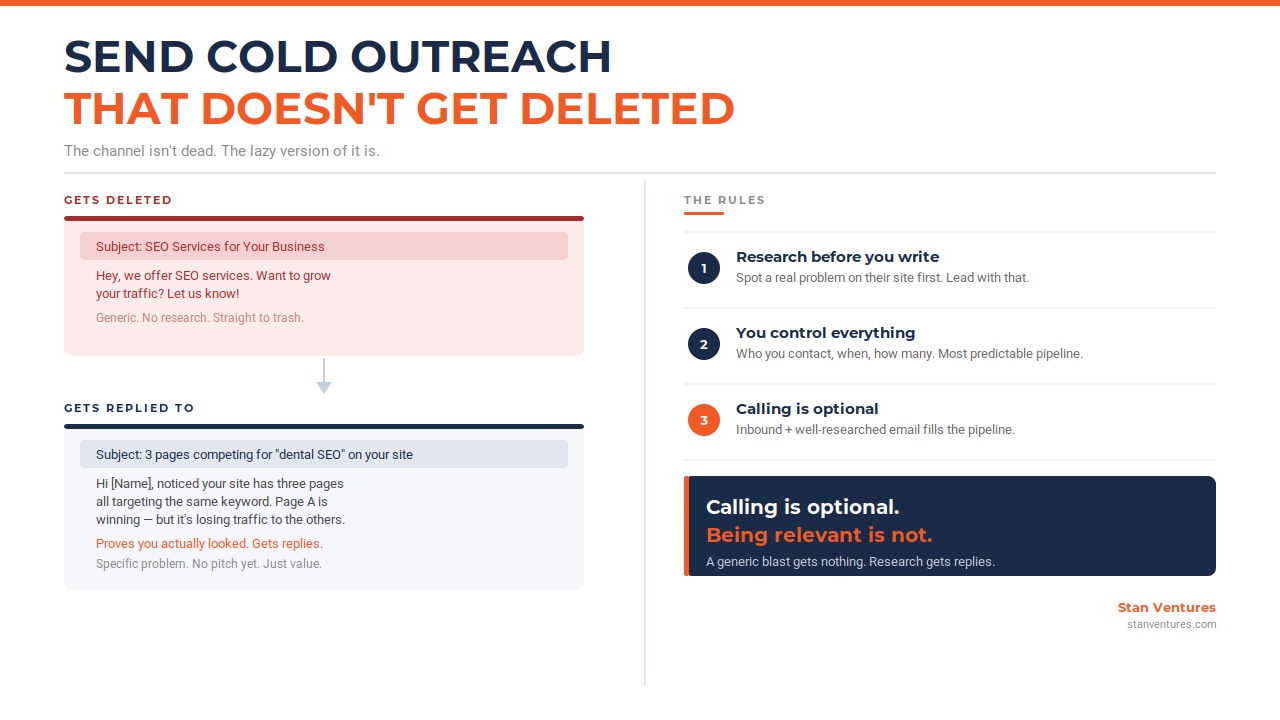
Cold email is the one channel where you control everything: who you contact, when, and how many. That makes it the most predictable line in your pipeline. The difference between deleted and answered comes down to research.
A generic blast gets nothing. An email that opens with a specific problem you spotted on their site (“you’ve got three pages competing for the same keyword, here’s which one’s winning”) gets replies, because it proves you actually looked. The same outreach tools agencies use to find link prospects work just as well for finding and contacting potential clients.
You don’t need cold calling to fill a pipeline. “How to get SEO clients without cold calling” is one of the most common things agencies search, and the honest answer is that inbound channels plus well-researched cold email will carry you. Calling is optional. Being relevant is not.
10. Build a referral and partnership engine
The internet is full of people who serve your exact clients but don’t do SEO: web designers, developers, branding shops, PR firms. Every one of them is a door to your next client.
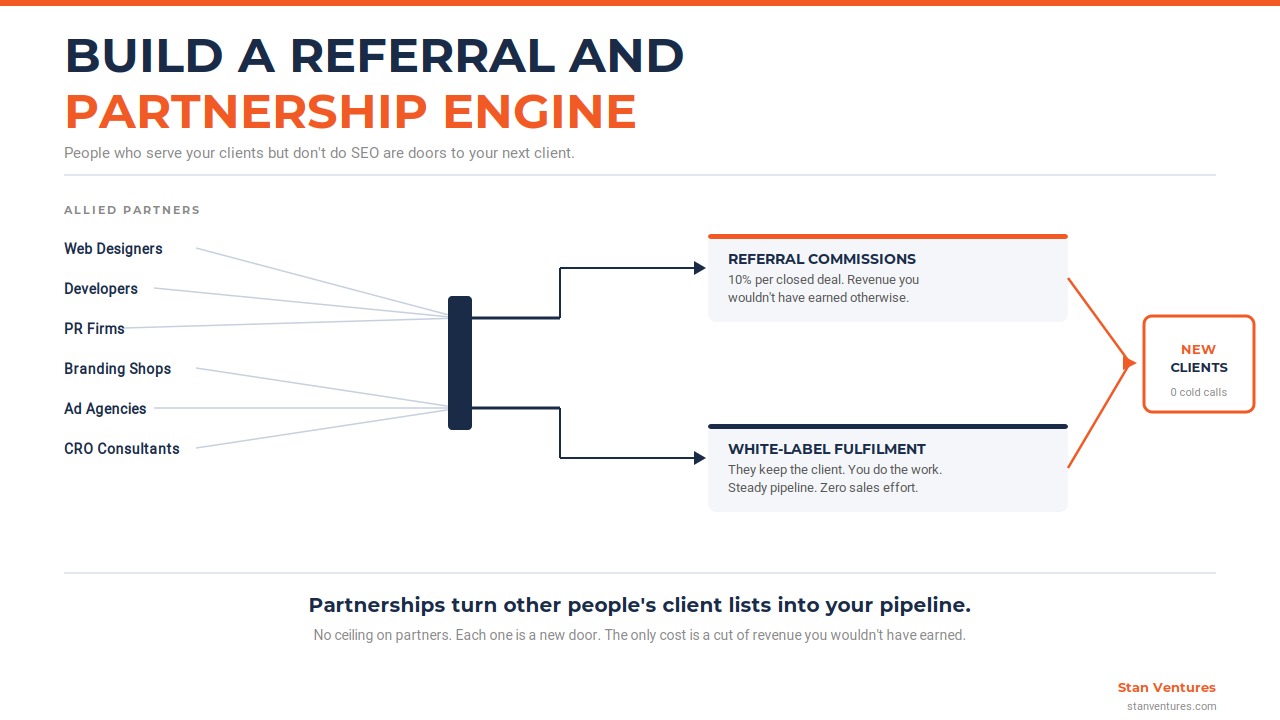
Set up a referral arrangement, a flat commission (10% per closed deal is common) for anyone who sends business your way. It feels slightly awkward the first time you propose it. Do it anyway. Your competitors already are.
The math is simple. You can partner with as many allied agencies as you want, and the only cost is a cut of revenue you wouldn’t have earned otherwise.
The bigger version of this is white-label. A web design service provider whose client suddenly needs SEO can either turn the work away or hand it to a white-label SEO partner and keep the relationship under their own brand.
If you’re the one fulfilling, you get a steady stream of work with zero sales effort. If you’re the one selling, you get to say yes to more clients than your team could deliver alone. Either way, partnerships turn other people’s client lists into your pipeline.
11. Run paid social to fill the top of your funnel
When you’re starting and the inbound channels haven’t kicked in yet, paid ads buy you a pipeline while you wait. The question is which platform.
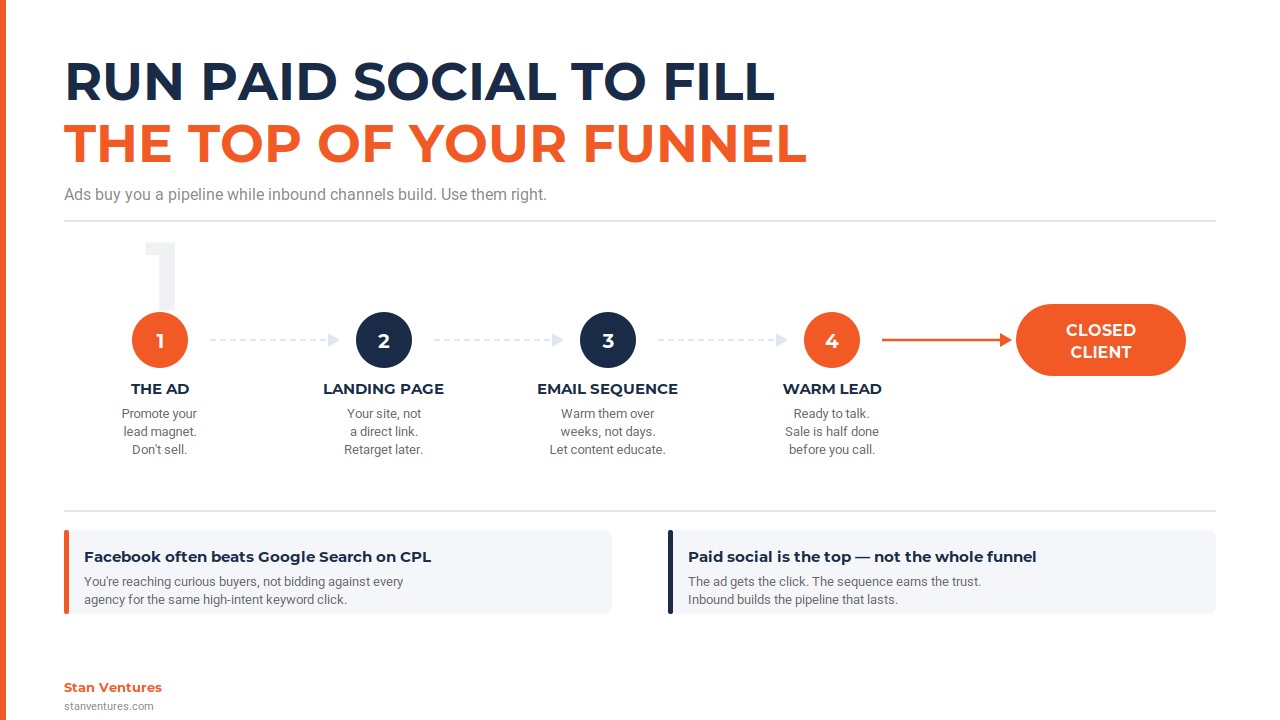
For SEO leads, social ads (Facebook especially) usually cost less per lead than Google search ads, because you’re casting wider to people who are curious about SEO rather than bidding against every agency for the same high-intent click.
The catch is that those leads are colder. Someone who downloads your free kit from a Facebook ad isn’t ready to buy. They’re ready to learn.
So don’t sell ads. Promote your best lead magnet, capture the email, and let a follow-up sequence do the warming over the next few weeks. Send them to a landing page on your own site (not straight to a download) so you can retarget the ones who don’t convert the first time.
Treat paid social as the top of the funnel, never the whole thing.
12. Win local clients
If you serve one region, local lead generation isn’t one strategy among twelve. It’s your number one. The leads are higher quality and they close more often, because “the SEO company in my city” beats “an SEO company somewhere” in a nervous buyer’s head.
Ranking in the map pack and for “near me” searches matters most, and there’s a full guide to local SEO that doubles as your own to-do list. A few things move the needle specifically for agencies chasing local clients:
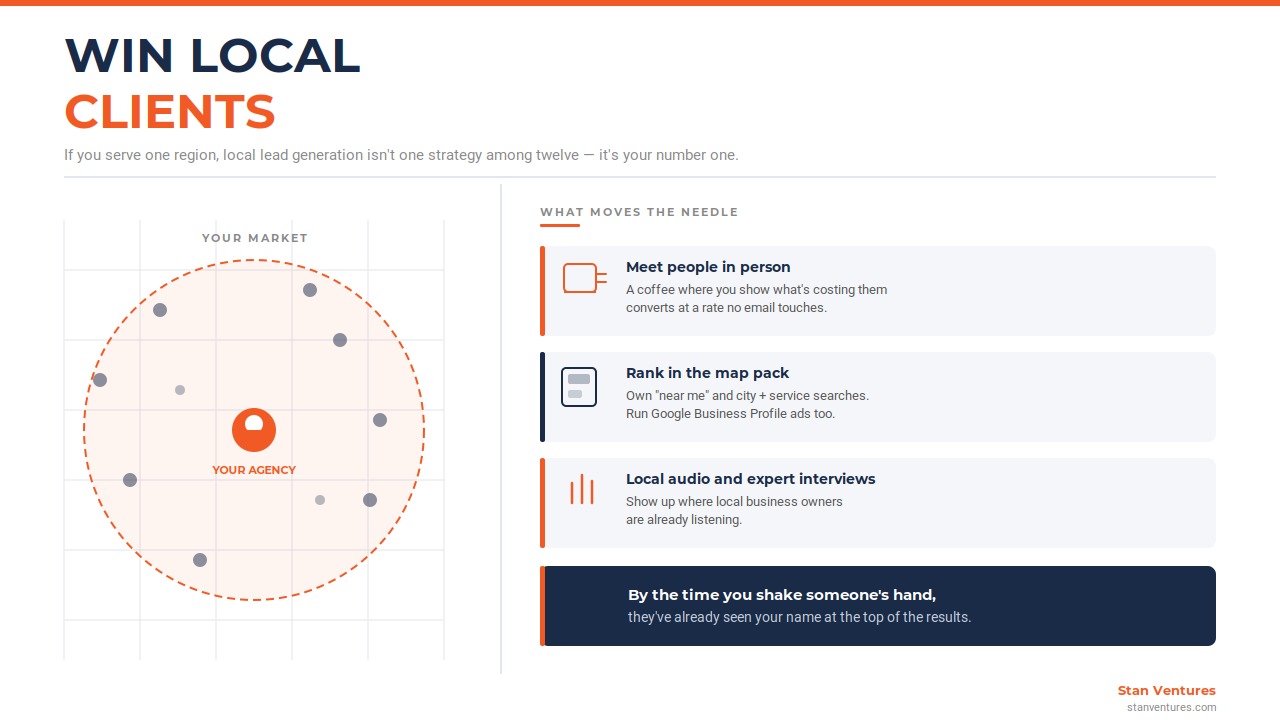
- Meet people in person. Digital marketers forget this one. A coffee with a local business owner, where you show them what’s costing them customers, converts at a rate no email touches.
- Run Google Business Profile ads to get featured at the top of the map pack and pull in phone calls.
- Use local audio and FM-style spots or expert-interview platforms where business owners in your area are already listening.
Strong local search visibility is the asset that makes every one of those easier, because by the time you shake someone’s hand, they’ve already seen your name at the top of the results.
How to land your first SEO client with zero case studies
Every agency hits the same wall at the start: you need results to win clients, and you need clients to get results. Here’s how people actually break it.
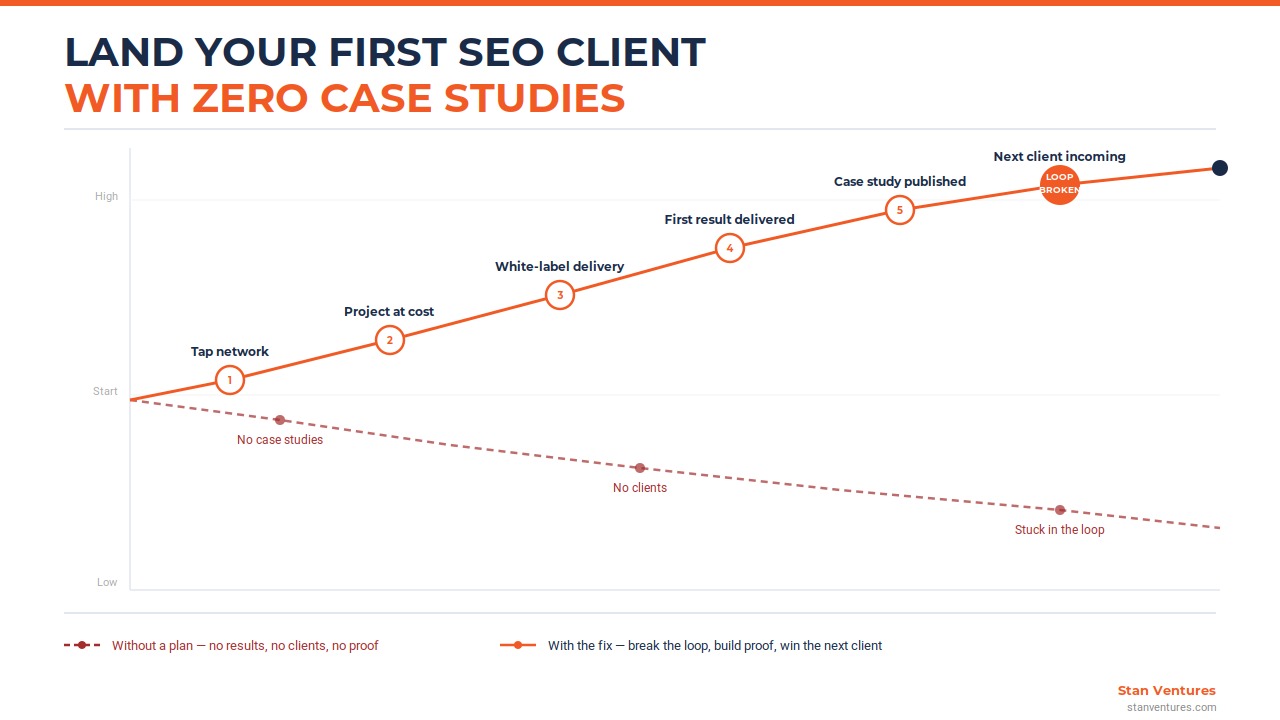
Take one project at cost, or close to it, in exchange for permission to publish the results and a testimonial. You’re not discounting your service, you’re buying your first case study. Offer it to a business in the niche you want to own, so the proof you walk away with is the proof your future buyers care about. Tap your own network first; the people who already trust you are the easiest “yes” you’ll ever get.
The delivery problem is the other half of this. What if you land a client before you’ve built a full team? Don’t reveal that you’re scrambling, and don’t say no to the work.
This is exactly when a white-label fulfillment partner comes in: you keep the client and the relationship while an experienced team handles execution behind the scenes. You grow into your own delivery capacity instead of turning away the revenue that would fund it.
Nail the pitch so your leads actually close
Generating leads is half the job. The other half is the conversation where a lead becomes a client, and plenty of agencies pour effort into the first half and wing the second.
Two things separate pitches that close from pitches that don’t.
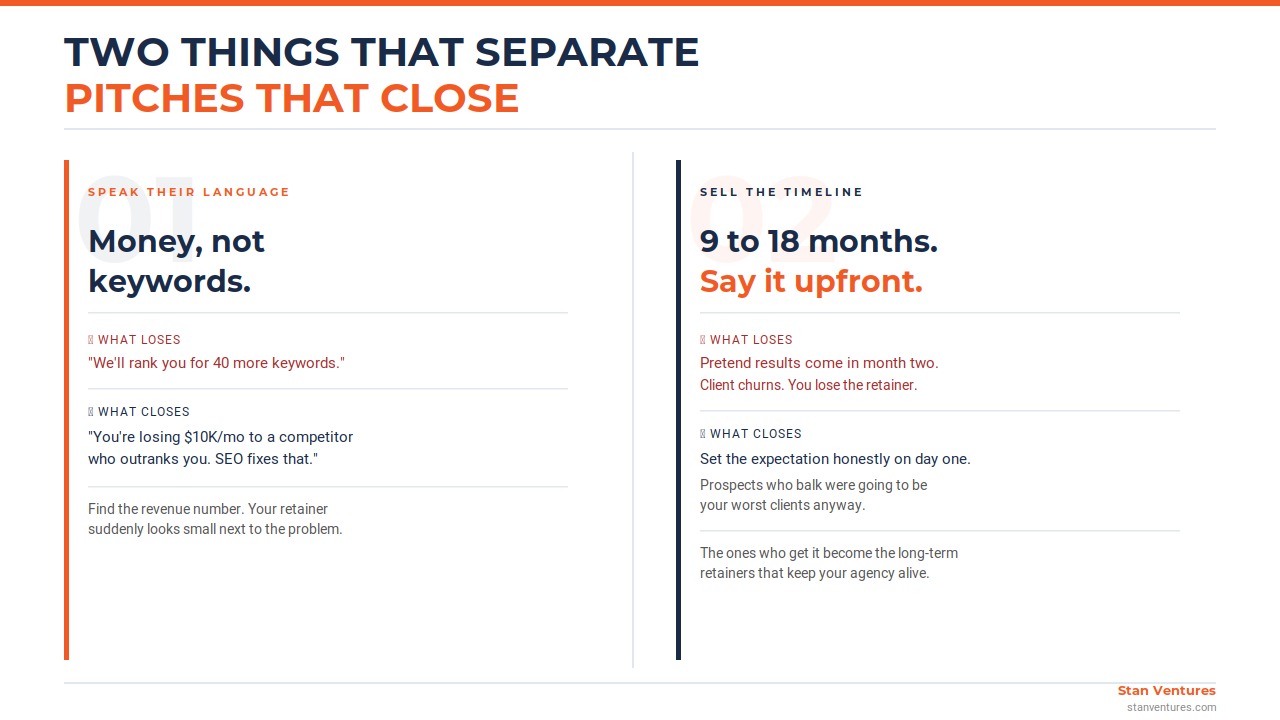
First, speak the client’s language, which is money, not rankings.
Owners don’t lie awake thinking “I wish I ranked for forty more keywords.” They think “I’m losing customers to the competitor who shows up above me.” Lead with the business problem and the revenue at stake, then position SEO as the fix.
Here’s an example. An e-commerce client doesn’t want “better rankings,” they want to stop losing $10,000 a month to a competitor outranking them. Find that number and the price of your retainer suddenly looks small.
Second, sell the timeline honestly. SEO is a 9-to-18-month investment, and pretending otherwise creates clients who churn the second results don’t appear by month two. Set the expectation up front. The prospects who balk at a long timeline were going to be your worst clients anyway. The ones who get it become the long-term retainers that actually keep your agency alive.
Keep the clients you already have
You can run all twelve plays above and still go nowhere if your clients quietly leave through the back door while you’re busy chasing new ones at the front.
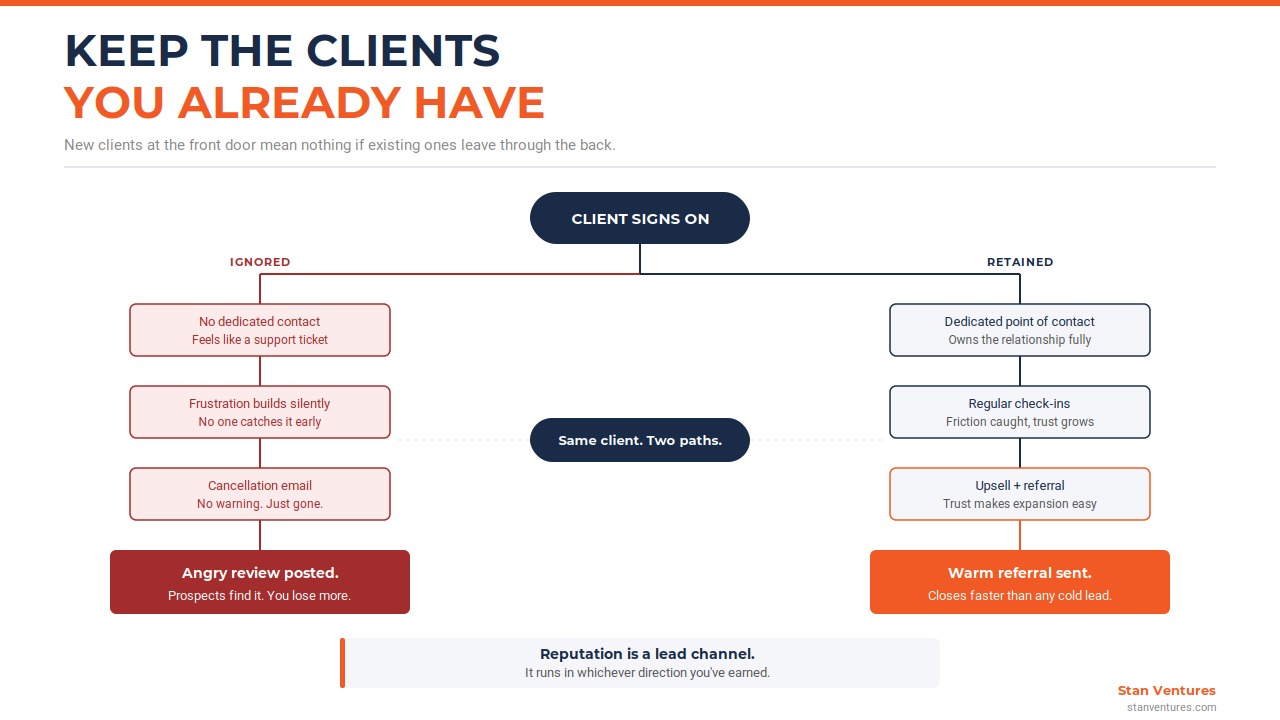
Picture a restaurant that fawns over every new walk-in while the people already seated wait forty minutes for someone to take their order. They don’t complain. They just don’t come back. Agencies do this constantly, pouring energy into acquisition while existing clients feel ignored.
The fix is structural, not heroic. Give every client a dedicated point of contact who’s responsible for keeping them happy, not just keeping them billed. Someone who talks to them regularly catches small frustrations before they become cancellation emails, and the relationship makes upselling almost effortless, because you’re expanding work with someone who already trusts you instead of selling to a stranger.
And remember which way reviews cut. A happy client recommends you to their friends, and that referral closes faster and cheaper than any cold lead you’ll ever chase. An angry one posts about it, and a prospect doing their homework will find that post.
When a client is unhappy, the agencies that own the mistake and fix it keep the relationship. The ones that pass the buck watch other dissatisfied clients pile onto the thread. Reputation is a lead channel too. It just runs in whichever direction you’ve earned.
The bottom line
You’re not in a saturated industry. You’re in a crowded one, which is different. The demand for ranking higher isn’t going anywhere, and AI search is creating brand-new ways to get found even as it eats old ones.
The agencies that win aren’t the ones that have been around the longest. They’re the ones that picked a couple of these channels, got genuinely good at them, and kept their existing clients happy enough to send the next batch. Pick your lane. Pick one inbound play and one outbound play. Run them long enough to judge them honestly. Then add the next.
The leads are out there. The only question is whether you’ve given a skeptical, already-burned buyer a reason to trust you before they trust anyone else.
Found this useful, or running a play that’s working for you that isn’t on the list? Drop it in the comments.

Dileep Thekkethil
AuthorDileep Thekkethil is the Director of Marketing at Stan Ventures, where he applies over 15 years of SEO and digital marketing expertise to drive growth and authority. A former journalist with six years of experience, he combines strategic storytelling with technical know-how to help brands navigate the shift toward AI-driven search and generative engines. Dileep is a strong advocate for Google’s EEAT standards, regularly sharing real-world use cases and scenarios to demystify complex marketing trends. He is an avid gardener of tropical fruits, a motor enthusiast, and a dedicated caretaker of his pair of cockatiels.


